A Seat at the Grownups Table
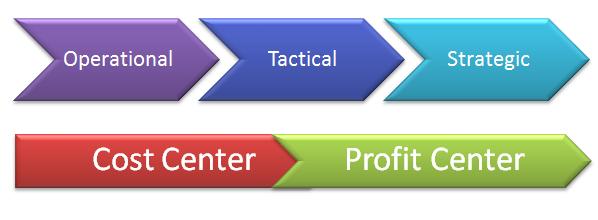

The short history of the training or education department within corporate organizations is an interesting mirror of the shift in economic paradigms from the Industrial Economy to the Knowledge Economy. These departments have moved from the operational level as cost centers to profit centers with their own “C” level leadership that in many cases reports directly to the CEO. It’s a glimpse into the future of where these “Departments of Learning” will be in the corporate hierarchy and how they will be perceived.

Let me back up a bit. The global economy has undergone three major and notable economic paradigms each with an attendant educational system. They can be summed up simple in the following list:

Agricultural Economy: We managed backs – we basically learned on-the-job.

Industrial Economy: We managed hands – we primarily learned in the formal classroom.

Knowledge Economy: We manage minds – we learn continuously in an ever-growing variety of ways.

Here’s a story that sums up the changes:

In 2007,  I gave a presentation to the annual gathering of CIO’s at Boeing in Southern California. As the top CIO was leading me into the conference room, she told me that the building itself has an interesting history. Originally an orchard grove for oranges, the building was first used as a giant manufacturing facility for the production of airplanes. When the demand for planes was reduced, the building was cut up into floors, offices and cubicles and people spent their workdays in front of computers producing, refining, defining, revising, discussing, an communicating ideas. Ideas for new planes. Ideas for improving production of planes. Ideas about related projects that had something to do with planes. One piece of land, three economic paradigms.

The point is all they did all day was produce ideas, work with ideas, think about ideas, write and talk about ideas. There were still a small group of people who ultimately made those ideas into things – planes. But they were followed by the people who had more ideas about how to market it, sell it, teach people to fly it and so on and so on. So the Knowledge Economy is all about the mass production of ideas. Success in the Knowledge Economy is the ability to sift through all those ideas to come up with the ones that can be produced and sold. Turning ideas into money.

These workers are literally the corporate brain. In a flat digitally-interconnected world where 24×7 marketplaces are open to all and as a result  are hypercompetitve, the Corporate IQ separates the winners from the losers, the successes from the failures. So making sure that all the employers can learn as much as they need to know and know-how to do, anytime and anyplace, become a strategic fact. Learning has become the most critical differentiator in this newest Knowledge Economy. And the “Department of Learning” is at the center of it all.

In a recent report by SABA Transforming Learning into a Strategic Business Enabler, the following facts emerged from interviews with over 612 leaders from the Director level and above:

  • Overall 52.7% of respondents report that the learning function at their organization is seen as a strategic enabler for the business
  • Only 13.7% report that the learning function at their organization is seen as a cost center.

With regard to the way these newly perceived strategic organizations are operating, here are some vital statistics:

  • 4-6% more likely to deliver training to customers.
  • 8-9% more likely to deliver training to partners/channels.
  • 4-6% more likely to deliver training to suppliers.
  • 25-42% more likely to report that training is aligned with business strategy.
  • Twice as likely to use objective measures of employee performance to align their learning to the business strategy.
  • Twice as likely to do formal learning requirements planning.
  • Four times more likely to have a learning advisory board with members from the business and the learning function.
  • 26-43% more likely to have an annual process of mapping the learning strategy to the business strategy for the year.
  • 39% more likely to have been demonstrating the impact that training has on the core business.

The study goes into much greater depth if you’re interested in getting into the weeds. The point for me was that the training department in which I started only 30 years ago has moved from a cost center focusing on operational training that often was the first to be cut during a downsizing, rightsizing or capsizing, to being viewed as a critical strategic component to the core business. All those early discussions about ‘getting a seat at the table’ are finally being realized.
Education, Not Guns and Bombs, Creates The Future


Other people around the world pray

for what we take for granted.

From the article:

“As the recent Taliban assassination attempt on Malala Yousafzai, the 15-year-old Pakistani champion of girls’ education, shows: The Taliban are most scared of books, not bombs. Establishing an educational infrastructure in Afghanistan is the most cost effective long-term strategy for grassroots change.

The cost effectiveness could be shown in multiple ways. “For the cost of just one soldier in Afghanistan for one year, we could start about 20 schools,” said Nicholas Kristoff in a July 2010 column in the New York Times.”

Education is the most powerful weapon

which you can use to change the world. 
                                                   Nelson Mandela 

Education is a better safeguard of liberty

than a standing army. 
                                                     Edward Everett 

Give Afghanistan Schools Today (or Don’t Blame Islam Tomorrow)

Posted: 11/08/2012 10:39 am
After a gruesome reelection campaign, President Obama should unwind. And instead of playing basketball, he should watch a movie. How about the 2007 biographical drama, “Charlie Wilson’s War”? It’s about the period when the United States was leaving Afghanistan after wrapping up its covert anti-Soviet operation there. Tom Hanks, who played the role of Congressman Charlie Wilson in the movie, pleaded with lawmakers, “$1 million for school reconstruction. … Did you hear me say? It was a million, not a billion, for a school construction?”

This is what he got in return: “Nobody gives a sh** about a school in Pakistan.” Or Afghanistan.

Caution: A quarter century later, America is about to make the same mistake. President Obama and Mitt Romney both pledged to leave Afghanistan by 2014. But neither discussed the importance of establishing schools for the children of a war torn nation where nearly half the population is now under the age of 15.

As the recent Taliban assassination attempt on Malala Yousafzai, the 15-year-old Pakistani champion of girls’ education, shows: The Taliban are most scared of books, not bombs. Establishing an educational infrastructure in Afghanistan is the most cost effective long-term strategy for grassroots change.

The cost effectiveness could be shown in multiple ways. “For the cost of just one soldier in Afghanistan for one year, we could start about 20 schools,” said Nicholas Kristoff in a July 2010 column in the New York Times.

Kristoff says Greg Mortenson, the author of “Three Cups of Tea,” told him that “for the cost of just 246 American soldiers in Afghanistan for a year, we could pay for a higher education plan for all Afghanistan.”

Can you imagine the global impact of educating a tribal society over the next decade, all for less than 0.1 percent of our annual military spending?

“Why build,” some push back, “when the Taliban are going to destroy these schools anyway?” Again, ask Greg Mortenson who reported that the Taliban have not destroyed even one of his schools.

To be fair, the U.S. government has made some strides. In December 2011, an Afghan version of “Sesame Street” — a program funded by the U.S. State Department and produced in consultation with Afghanistan’s Ministry of Education — was launched. Afghanistan has one of the highest proportions of school-age children in the world, yet less than half are in school.

This leaves millions of young Afghans, mostly girls and women, vulnerable to poverty and Taliban influence. As the U.S. withdraws its troops and the Taliban regain control, which they will in varying degrees, they are likely to enforce misogynistic policies with impunity and recruit 14-year-olds for suicide bombings.

Some will blame Islam itself for this inhumanity. But their reasoning doesn’t hold up. Why don’t American Muslims blow themselves up? Primarily, because such acts of cowardice are an affront to Islam and its prophet. But they have this understanding because they are educated. They have a good life. They have plans for tomorrow. For an Afghan kid, it’s different.

About 12,000 Afghan civilians were killed just between 2007 and 2011. Think about their orphan children who could be recruited by a Taliban run madrassah (school) to fight in “God’s army against the infidel.” This army is funded in part by Saudi oil money to nurture the extremist Wahhabi and anti-western mindset in the religious madrassahs. In the 1980s, the Saudis matched America’s anti-communism budget of $500 million to uproot the Soviets in Afghanistan. Now, their motivations for funding the Taliban are different.

Helping Afghanistan establish schools today, Mr. President, would prevent American lives tomorrow. It shouldn’t be this way. But sadly, it is.

Before declining to help the Afghans, we should remember that the Taliban have other help anyway — notably from the Pakistani Army, politicians and mullahs. Recently, even a relatively liberal ex-cricketer-turn-Pakistani-politician, Imran Khan, publicly gave legitimacy to their cause by declaring the Afghan conflict “a holy war” justified by Islamic law. Ignore this paradigm of support, and America’s decade-long gains will be washed away within a year.

“This is what we always do. We always go in, with our ideals to change the world. And then we leave. We always leave,” Charlie Wilson lamented. Mr. President, regarding Afghanistan, please don’t display the body language of a leader who just wants to leave.

Before leaving Afghanistan, Washington should pledge at least $1 billion to establish secular schools for boys and girls in Afghanistan. And policymakers should work with Islamabad to help fund and establish schools in the tribal areas of Pakistan. The funds should go toward hiring qualified teachers, developing standardized curricula, and constructing a robust infrastructure to support these schools, their staff and their students. If armed protection for such schools is required, it should come from locally hired forces.

Spent right, these dollars could achieve what counterinsurgency missions, bombers and drones could not.

Dr. Faheem Younus is a clinical associate professor at the University of Maryland School of Medicine and the founder of Muslimerican.com. Follow him on Twitter at @FaheemYounus.

Into The Age of the Smart Things


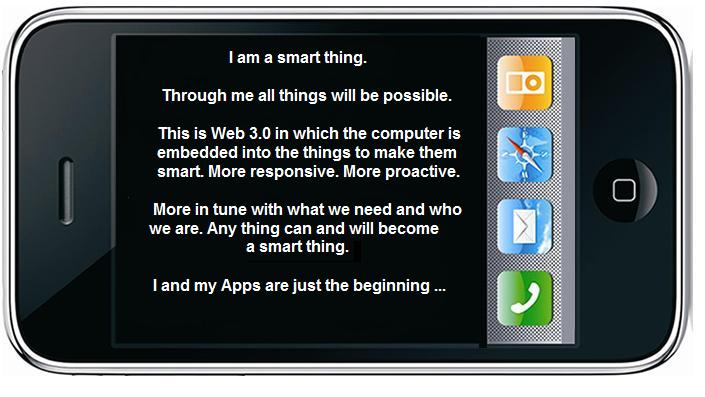
It’s almost a New Year – 2013 – and already the Next Big Thing is upon us. Actually that’s ironic since the Next Big Thing is all about things, Smart Things.

Refrigerators that scan bar codes and tell us what we have, which items we need, send shopping lists to our networked printers and suggest recipes from The Food Channel on our iPads.

Cars that use electricity and call our Smartphones to tell us  how they are doing and what they need.

Entertainment systems that scan the Network and record the programs we like, or instant message us to ask if we want to watch a movie we listed.  And before the movie starts, this Device2Device (D2D)  networked cyber universe sends a signal to the microwave to zap the popcorn.

There’s actually a lot more than I know about or can imagine right now. The question I always come back to is how will all these smart things impact upon our ability to learn what we need to know and know-how to do?

Neuroscientists and others who study how we learn are already discovering a long list of activities and approaches that enable and disable the learning process (e.g. Brain Rules by John Medina). Will they be embedded as rules into the Smarter Learning Things that will help us learn? Can we develop a Smart LMS?  And what about the innovative new methods and approaches that are being adopted by the people who develop the learning tools we already have? AI tutors and new formative assessment analytics?  Will these Smarter Learning Things help enable our learning process and help us to be smarter? Does the next step in our evolution involve linking our brains to these machines?

And has it already started …

Will we become embedded as part of these Smarter Learning Things?

I don’t have the answers. I’m simply asking the questions. I was born before computers started appearing everywhere and the Internet became the digital brain of the world. Things were dumb. Now thanks to embedded computers, things are “smart”. What does smart mean? If you are smart,  is a computer embedded in you? Is that the new meaning of being a “Smart Person”.

What do you think about the impact of smart technology on the future of learning? Can it enable the learning process and make learning easier, more enjoyable and more effective by using ‘smart’ technology? Or does it. as some early studies indicate, disable the learning process and dumb us down?

Let me know.  I’d like to hear what you think as we charge inexorably into this Brave New World of Learning and Smart Things …