Too Many Children Left Behind


tedtalk

This is a wonderful talk by Sir Ken Robinson at TED. In a most delightful and engaging way he rips the current educational system to small shreds. Especially the fact that the system is missing the 3 most vital parts that drive any real learning – individuality, curiosity and creativity.

“Why don’t we get the best out of people? Sir Ken Robinson argues that it’s because we’ve been educated to become good workers, rather than creative thinkers. Students with restless minds and bodies — far from being cultivated for their energy and curiosity — are ignored or even stigmatized, with terrible consequences. “We are educating people out of their creativity,” Robinson says. It’s a message with deep resonance.”

And if you have the time and want to ‘go to school’ on what Sir Ken has to say here are a few more gems to watch:

Case Study: Flipped Classrooms Work for Financially Challenged Students


flipp

I’ve been advocating for the flipped classroom since I first read Daniel Pink’s article in the UK Telegraph 3 plus years ago. Since then some amazing changes have been happening (see previous post). This case study grabbed my attention for several reasons. It is written by the Greg Green, the Principal at Clintondale High School in Clinton Township, Michigan. It talks about how he flipped what he terms “… a financially challenged school near Detroit”. The flipped version of the school way out-performed the standard model that was failing in almost every respect. And he wraps it up with the following statement:”Instead of placing blame on each other, we need to recognize the solution, which has been right in front of us the whole time. It’s time to change education forever.”

Thank you Greg Green, my new Education Hero of the Week! You showed us that money is not the problem, teachers are not the problem, unions are not the problem, and the kids are certainly not the problem.
The problem is the lack of vision and ability of people running the schools to change the educational model from the traditional disabling approach to one that is truly enabling for all. The answer really has been in front of us for several years now. Time for the people who control the schools and administer the districts to learn the lesson.

Courtesy Troy Steinby Greg Green,

Greg Green is the principal at Clintondale High School in Clinton Township, Michigan.

I’m a principal at Clintondale High, a financially challenged school near Detroit. I’m in charge of doing my best to make sure that Clintondale students get the best education possible when they walk through our doors.

There are constant hurdles to making this happen. We are a school of choice, so not all students come in with the same skill levels in reading, math, science or other subjects. Almost 75% of our students receive free or reduced-price lunch because of today’s economic climate, and a large part of our student population commutes from Detroit, which often times takes an hour or longer, especially if the bus is late.

Every year, our failure rates have been through the roof.  The students weren’t paying attention, they weren’t doing their homework, they were being disruptive, or they weren’t coming to school at all. Sadly, these issues are not that uncommon, particularly in this economic climate, where the percentage of students who fall into the poverty category is increasing by the day.

It’s no surprise that these issues are happening in our schools. Everyone from politicians to parents admit that our educational system isn’t working, and we’re all screaming for change.  But no one gives advice on what changes are needed to improve education. The time has come to realize that the problem isn’t simply lack of effort or money, but the misalignment of our school structure.

To watch this happen every day, where it is your responsibility to try to provide the very best you can for the students, is beyond frustrating. It’s heartbreaking.

Our staff agreed that our failure rates were not good. But how do you go about addressing these issues with no money, no additional resources and no clear solution from the experts who already know the system is broken?

How do you get your staff on board with change you want to implement, but no one else has ever tried it on a mass scale? How do you get your students excited about learning when they’ve never shown much interest before?

You flip it. Here’s how it works:

At Clintondale High School, our education model wasn’t working, and the people suffering most were students. We recognized that a change was needed and applied for a grant from TechSmith, a local company that makes screen and lecture recording software. They provided us with some technology licenses and helped us create a flipped class structure, which we first implemented in the ninth grade and eventually put into action for the entire school.

Our flipped school model is quite simple. Teachers record their lectures using screen-capture software (we use Camtasia) and post these lecture videos to a variety of outlets, including our school website, and YouTube. Students watch these videos outside of class on their smartphone, in the school computer lab (which now has extended hours), at home or even in my office if they need to. Now, when students come to class, they’ve already learned about the material and can spend class time working on math problems, writing about the Civil War or working on a science project, with the help of their teacher whenever they need it. This model allows students to seek one-on-one help from their teacher when they have a question, and learn material in an environment that is conducive to their education. To change the learning environment even further, we’ve used Google Groups to enable students to easily communicate outside of class, participate in large discussions related to their schoolwork and learn from each other.

In addition to flipping the classroom, we wanted to give our students the opportunity to learn about each subject or topic from someone who is a recognized expert in each area. So we decided to team with other schools across the country and world. Now, some of our calculus students are able to watch video lectures from a math teacher in a private school in Virginia, and our students learning about the Holocaust can watch videos made by a teacher in Israel who just brought her class to Auschwitz. This type of learning network will enable us to close the gap of inequality that schools are subjected to because of their financial standing, and provide all students, no matter what district they’re from, with information from the best teacher or expert in any field.

At Clintondale High School, we have been using this education model for the past 18 months. During this time, our attendance rate has increased, our discipline rate decreased, and, most importantly, our failure rate – the number of students failing each class – has gone down significantly.  When we first implemented this model in the ninth grade, our student failure rate dropped by 33% in one year.

In English, the failure rate went from 52% to 19%; in math, 44% to 13%; in science, 41% to 19%; and in social studies, 28% to 9%. In September of 2011, the entire school began using the flipped instruction model, and already the impact is significant. During the first semester of the year, the overall failure rate at the school dropped to 10%. We’ve also seen notable improvement on statewide test scores, proving that students’ understanding of the material is better under this model.

Our schools have long been structured so that students attend class to receive information, and then go home to practice and process this information. When many students go home after school, they don’t have the resources necessary to understand, and sometimes don’t complete their homework. Many families are not able to provide the expertise and technology needed to help with their children’s homework, so when we send kids home at the end of each day, we’re putting them into environments that are not capable of supporting their learning needs.

By reversing our instructional procedures so that students do their homework at school, we can appropriately align our learning support and resources for all of our students, and eliminate the inequality that currently plagues our schools. When students do homework at school, they can receive a meal and access to technology (during a declining economy), and an overwhelming amount of support and expertise. When students do their homework at school, we can ensure that they will be able to learn in a supportive environment that’s conducive to their education and well-being.  For the first time in history, we can provide a level playing field for students in all neighborhoods, no matter what their financial situation is.

As we continue to expand and improve the flipped school model, it’s important for educators to come together and work with each other toward a common goal of fixing our education system through teamwork and collaboration, so all students can have access to the best information and materials. Instead of placing blame on each other, we need to recognize the solution, which has been right in front of us the whole time.

It’s time to change education forever.

[NOTE: Part of an online article first printed January 18, 2012 –  http://schoolsofthought.blogs.cnn.com/2012/01/18/my-view-flipped-classrooms-give-every-student-a-chance-to-succeed/]

The Three-Minute Lesson that Saved My Life


 chunky

The Three-Minute Lesson that Saved My Life

The last new thing I learned was last week. I was sitting in the parking lot at the shopping center, vaguely listening to “Car Talk” on NPR. One of the Tappet brothers said something like “I bet you really never learned to fix those side view mirrors you use all the time.” I perked up when he said “So listen up, well fix that right now.” The lesson was realtime and took all of three minutes. After 20 or so years of driving, I learned how to adjust my side view mirrors perfectly (a revelation!), and realized that I had been dancing with a collision for years, from driving with huge blind spots on BOTH sides of my car since cars now pass on the left and right.

The point is not that I learned to save myself and my precious passengers from a screeching metal crunching accident (or worse).  The point is that learned something important in 3 minutes. I took a radio course on “Correctly Using Your Side View Mirrors 101”. No test. No classroom. No clock. No computer in sight.

What does that say about chunking courses into smaller units? What shall we call them? We don’t have a good agreed-upon name for these chunks yet. And I’ve heard them referred to as “learning nuggets”, “courselets”, “learnlets” ,”microlearning”, and more. For now let’s just determine what they are, and if they might be a useful part of learning in your future.

Some background

Chunking is a concept that was originally coined by Harvard psychologist George A. Miller in 1956[1]. Simply stated George discovered that the human memory can most easily shuttle 5 plus or minus 2 numbers and/or letters from short-term to long-term memory. It was most famously used by AT&T who, in 1957 when phones were no longer a ‘new’ technology and were exponentially increasing, changed the alphanumeric phone dialing system from 2L-4N numbers to 2L-5N. Five numbers preceded by two letters.[2]

Until the close of the 20th century, with the growth of the neurosciences and cognitive psychology, learning was a phenomenon observed from the outside in. The ideas for pedagogy and andragogy resulted more from the needs of teachers than their students. Did you ever notice that every classroom in the world has a clock? The course length was set in the late 1800’s and was called a Carnegie Unit[3]. Each unit was 55-minutes during which a single subject was taught. There have been many attempts to change it since then, and they all failed for a variety of reasons. The reason that seems to be the most important is the lack of supporting tools.

Today, we have a host of tools to make that ‘chunkier’ vision of learning a reality. And with the disappearance of the Carnegie Unit, we also can now let go of the long form course, and replace it with short chunks of learning. Chunks that take a few minutes, and teach 5+-2 things you need to know or know how to do.

The world used to be my oyster. Today it has become my classroom. Technology is transforming the way we find knowledge and know-how. “Google it” for example is now a phrase spoken around the world. The old model (actually not really even that old) was bricks and mortar solid, tradition-bound, and all too often hierarchical (Pre-K – 12 schools, 2-year colleges, 4-year universities, corporate universities). It was an impediment to learning, and often disabled the much older natural learning process. Until a few years ago it was the best we could do.

Some Foreground

Then along came the internet and what followed was an explosion of new ways to learn that did not use the long form course. The list is already long and getting longer every day. Social learning, online cohorts, mLearning, Communities of Practice, performance support systems, expert locators, podcasts and videocasts. Now there’s augmented reality showing you how a place looked like before you were born, you can take a picture of a leaf and use those pixels to find the name of the plant, record a birdsong and use it to bring up a picture with information about the bird. And don’t forget Khan Academy and MOOCs with some subjects taught in 1-2 minutes, and most others in 10-15 minute chunks. I cannot wait for what’s next ….

The new model is all about continuous learning and learning moments, like sitting in your car learning to properly adjust you side view mirrors.  I may not get any certificate or other rewards but I may just save my life. Now that’s one chunk worth learning.

Do You Chunk?

Let us know what you think. Are you using a course-o-matic to divide your learning into more palatable chunks? Would you want your learning anytime and anywhere to also be any size you decided to put together, from smallest coherent piece to longer sit downs? Be part of the many that have an opinion about chunking and let us know what you think. Thanks

How-To Adult Learning


This show was developed in 2010 for an NGO in South Africa has been used all over the place since then. It contains some Nuggets of Truthiness that most people developing learning programs for adults Anywhere and Everywhere would be well advised to learn. Amazing how we miss the basics in our quest for faster, cheaper, mobile … .

Why?


images (2)

Dripping Wet

This story starts with me in the shower …

Dripping wet, drops of water on my relatively impervious skin, I grab a towel and begin to dry off. That’s when it happens.

“Why am I using a towel to dry off?” I wondered.

I looked at the towel. Little pieces of towel sticking up everywhere. “Little towelettes” I thought.

So why, I wondered does this work? Then I realized … transference. The little towelettes were grabbing the drops of water from my skin and moving them to the towel. Now I knew what the ratings for towels meant. The more little towelettes, the better the transfer. I had just learned the simple answer to why I was using a towel.

Real Learning Starts with “Why?”

In the second half of the 5th century BC, Socrates developed a new method of searching for answers. Sounds silly now but it was codified by Plato as The Socratic Method and involved one question – Why? At some point it developed into the “The 20 Why Questions” and is a very simple to game to play. If you dare to ask the first question, and continue with another “Why?” for every answer, you will find yourself going to Google and Beyond. By the way, the answer is never “Because I said so.” and playing dumb or lazy equals “I have no idea why.”

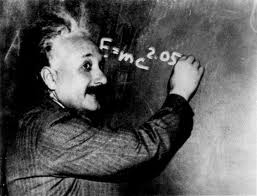
Simple knowledge goes to about Question Number Two on the Socratic – Plato Scale. If you get to Question Number Four you must be scientist. Einstein, who seemingly spoke to The Creator during what has become known as Einstein’s “Miracle Year”, asked “Why do things have mass?”

The answer was probably the most famous physics formula ever written in white chalk on a dusty blackboard.

images (1)

The answer to that why was probably somewhere up near Question Number 20 on the Socratic – Plato Scale. Yet if you study the origins of the theory you start to realize that there were many “Why?” questions and answers that led up to what is still an amazing leap of human imagination.

Learning is Not Educating

And that’s what this is all about – learning results from asking “Why?”. Learning is not education where the answers are already known and are graded as correct or incorrect. Learning is as simple as asking “Why?” every time you think you have the answer. It’s hard brain work.

And that’s why the question “Why?” is hardly ever heard in classrooms in schools, corporations, congress or almost anywhere else. Asking the “Why?” question is not displaying how smart you are with the correct answer; it makes most people feel stupid to ask “Why?”; In some situations it’s even consider impolite or impolitic. Yet that “Why?” is at the root of all critical thinking, and drives innovation, invention, scientific inquiry, and the answers we currently have today to everything we think we know today. It is the real meaning behind the often used quotation by William Butler Yeats “Education is not filling a bucket, but lighting a fire.”

If you think it’s a dumb game to play, try it once. Try the most basic “Why is the sky blue?” and see how high you can climb on the Socratic -Plato Scale. Just keep asking and answering “Why?”.

If you hit Question Number 20 with a good answer, please let me know since I’ve been wondering “Why are we here?” since I was old enough to formulate abstract questions. Maybe The Creator will whisper that secret to you the same way Einstein heard E=MC2.

Learning at the Water Cooler and Everyplace Else


Water Cooler

I cannot believe how duped we’ve been to think of learning as an event. That idea is artifact of the Industrial Revolution and a terrible conceit on the part of the educational institutions we developed. Learning starts BEFORE we are born and (for all we actually know) continues AFTER we are dead. We are in a very real sense Continuous Learning Organisms.

Here’s a piece from Annie Murphy Paul’s The Brilliant Blog which is aptly named and , and if you’ve missed, it I recommend putting it on your weekly ‘must read’ list.

“Bersin by Deloitte, a human resources firm, has an interesting report out on the future of learning in organizations. The language in which it’s written is turgid, to put it kindly (“Our new High-Impact Learning Organization Framework® shows organizations have moved from ‘talent-driven learning’ to a focus on ‘continuous capability development’ . . . “), but there are some good insights to be had. Here, translated from corporate-speak, are its main findings and predictions:

“Continuous Learning” and “Capability Development” will likely replace the buzz around “Informal Learning.” Our new High-Impact Learning Organization Framework® shows organizations have moved from “talent-driven learning” to a focus on “continuous capability development.” Driven by these changes, the L&D market grew 12 percent last year, the highest growth rate in more than eight years. The buzzword of “informal learning” is giving way to a whole architecture of L&D programs that are social, mobile, continuous and highly integrated with talent management strategies.”

Cognitive scientist Allan Collins and his coauthors John Seely Brown and Susan Newman in Rethinking Education in the Age of Technology, notes that digital tools are creating a transformation as profound as the one that swept the apprenticeship model of learning into the Industrial Revolution. It is a transformation that is causing many people to rethink the idea of education. “In the apprenticeship era, most of what people learned occurred outside of school,” they note. “Universal schooling led people to identify learning with school, but now the identification of the two is unraveling.”

Finally we are starting to get to the bottom of learning things! I must admit, I’ve been as culpable as anyone feeding the maw of the formal vs. informal learning debate. My head was stuck in an academic box and stayed there even as I moved into a corporate environment. It was the same problem that corporate learners inherited. As we developed formal learning in our workplaces, we simply grabbed what we knew and were comfortable with from the schoolplace. Learning as an event. Formal, scheduled, instructed. We often went so far as to copy the old physical layout of the classroom – seats facing forward, instructor on the stage, quiet until called upon (yikes!) or recognized by a single hand held waving in the air .

What has been called ‘informal’ learning was really nothing more than a way of naming all the interstices,  the spaces in between the formal learning events. Well, time to move on. There is no “formal” or “informal” learning. There is only, and always has been, continuous learning. And accepting that changes everything.

It means that the definition, design, development and delivery of learning changes. It alters the way learning is managed and measured. The endless conversation about formal versus informal stops. Naming conventions like “courses” and “programs” and “corporate universities” goes away. We start to see learners in a new way – as individuals moving through a world in which they – we – are always learning something new because there is always something new to learn.

We tried to formalize this natural process, and managed to do a really good job disabling it. We took learning out of any real context, gave the onus of the experience to the instructor who provided a predigested often canned helping of facts, heaped upon a PowerPoint slide, removed any chance for serendipity, social interaction or creativity. Rewarded remembering instead of discovering. Punished failure  And we expected people to sit through these massive knowledge dumps and actually learn something.

In a funny way, I was correct years ago when I wrote “At the Water Cooler of Learning“. I think the definition of real learning – the ability to adopt and adapt what we’re taught – is still valid. And I still believe we really do learn most of what we need in between the events that we are told to attend. Yet I was guilty of the same bifurcation of learning into “formal” and “informal” as everyone else. There is no versus, just a flow through the day, learning as you go, remembering what you need to know and know how to do, and forgetting what you knew and knew how to do. It all adds up – from scheduled events to chance water cooler moments – to continuous learning.

So what will this mean to the way you approach learning? As a student? As an instructor or teacher? What will you do differently?

Who is training the online teachers to teach online?


article-0-0BC05DB5000005DC-354_468x328

NEWSFLASH: Online Education is Here to Stay.

Okay so tell me something I don’t know. When I start to see articles and stories appearing in the NY Times, NPR, WSJ, on TV and lots of other places I start to think “mainstream”. What every one of you reading this already knows has become The Latest Big News. Online education is here to stay.

So that begs an important question. The more traditional onground version of education has been around since Moby Dick was a minnow. As in forever. And formal education was truly formalized when Teacher’s Colleges were started and teacher’s were taught to teach.

From Wikipedia:

Generally, Teacher Education curricula can be broken down into four major areas:

  1. Foundational knowledge in education-related aspects of philosophy of education, history of education, educational psychology, and sociology of education.
  2. Skills in assessing student learning, supporting English Language learners, using technology to improve teaching and learning, and supporting students with special needs.
  3. Content-area and methods knowledge and skills—often also including ways of teaching and assessing a specific subject, in which case this area may overlap with the first (“foundational”) area. There is increasing debate about this aspect; because it is no longer possible to know in advance what kinds of knowledge and skill pupils will need when they enter adult life, it becomes harder to know what kinds of knowledge and skill teachers should have. Increasingly, emphasis is placed upon ‘transversal’ or ‘horizontal’ skills (such as ‘learning to learn’ or ‘social competences’, which cut across traditional subject boundaries, and therefore call into question traditional ways of designing the Teacher Education curriculum (and traditional school curricula and ways of working in the classroom).
  4. Practice at classroom teaching or at some other form of educational practice—usually supervised and supported in some way. Practice can take the form of field observations, student teaching, or (U.S.) internship.

All this leads to a certification and ongoing teacher education to make sure the level of quality of the teaching is maintained. We would not let our kids go to a school where the teachers were not certified to teach. We do not go to colleges and universities to learn from from people who are not prepared to teach. Yet we flip on our headphones and sit in front of our [fill in your device here] for hours on end taking online courses, not ever really knowing who is inside the screen, or what training they had that qualifies them to be the instructor.

Traditional onground teachers are highly qualified professionals. I cannot say the same for online teachers. According to the numbers I’m hearing lately, more than 63% of Americans have taken one of more online courses. That means a course with a curriculum and several sessions of teaching and learning, not a one-off webinar. And in many countries the numbers are dramatically higher (South Korea for example at over 85%).

Towards a Smarter Nation

Here’s the question:

Who is training the online teachers to teach online?

Some of the worst ‘teaching’ I have ever tried to learn from has been online. The worst. And I’m not alone. Everyone I know has stories about an online class that was a total waste of time. Poorly organized content. Terrible to no graphics. So many bullet points that the screen ended up being 8pt Arial.  A droning voice with no modulation or interest in the subject. Talking bullet points. Less than a modicum of enthusiasm. Hardly any interaction in a medium defined by interaction.

In sum, it was taking the untutored teacher without certification person and putting that so-called teacher in a box, without so much as a nod to the tools afforded by the fantastic digital medium being used. Cheaper perhaps than getting people in a classroom. But what a waste of brainpower and yet another missed opportunity.

There are exceptions that always prove the rule. The free university level courses being taught by outstanding teachers who are first and foremost outstanding  teachers and then outstanding online teachers as well. Starting with Khan academy. Great teachers using a new online approach and really working hard to find ways to make online education work online (e.g. Udacity and Coursera). Taking advantage of Communities of Learners, peer-to-peer learning, great interaction, and graduating students into Communities of Practice. Those are the exceptions.

The question again is when do we answer the question? When will we start to take online teaching as seriously as we take onground teaching? I found only one decent online teaching program and it’s from Cisco, where they are certifying their online – virtual – teachers so they know how to teach online. Certified to understand how online teaching – in a virtual classroom – is different than teaching onground – in an actual classroom. Some are still better than others when it come to teaching – the art and science of lighting a fire, not filling a bucket.

At the very least, when they are certified – actually certified after going through a process as rigorous as any other Cisco certification – they know how to correctly use the online classroom to maximize the capabilities of their virtual presence and get learners interacting and, dare I say it, actually learning something. As in those rare and wonderful “Aha!” moments.

So once again I leave you with a question.

Who is training the online teachers to teach online?

images (4)

Flipapalooza – When Education Moves @ Lightspeed


The next two articles actually make me believe that change can come to Education sooner than later. It’s a case of ‘if it’s broken fix it’. It’s the model that was first talked about here by Daniel Pink two years ago, in September, 2010.   Two years in the world of education is mere pedagogical blink and yet here we are.

I added some sources for you to learn more about this rapidly spreading way of learning in the new Idea Economy. The next step is to get corporate education flipped even if it’s a virtual classroom so the lecture is your “homework” and the time spent with your peers and instructors practicing what was preached is your schoolwork.

All I can say is “Flip it, flip it good!”
The secret flipped side of Khan Academy: http://www.khanacademy.org/coach/resources
An Educator’s Take on The Flip http://connectedprincipals.com/archives/1534
Here are two articles, the first from NPR and the second from Liz Dwyer, Education Editor for Good Education.
From NPR 

Welcome to the 21st century classroom: a world where students watch lectures at home — and do homework at school. It’s called classroom flipping, and it’s slowly catching on in schools around the country.

When Jessica Miller, a high school sophomore in rural Bennett, Colo., sits down to do her chemistry homework, she pulls out her notebook. Then she turns on an iPad to watch a video podcast. Whenever the instructor changes the slide, Miller pauses the video and writes down everything on the screen.

Miller can replay parts of the chemistry podcast she doesn’t understand, and fast forward through those that make sense. Then she takes her notes to class where her teacher can review them.

Back in the classroom, chemistry teacher Jennifer Goodnight walks up and down the rows of desks giving verbal quizzes, guiding students through labs and answering questions.

Goodnight is one of about five teachers flipping their classrooms at this small school on Colorado’s Eastern Plains. She’s part of a growing group of teachers using the concept since it emerged in Colorado in 2007.

In Durham, N.H., Oyster River Middle School seventh-graders Patrick Beary and Morgan Bernier play with StoryKit, a free app that helps middle-schoolers put together simple presentations, and elementary students make storybooks.

Goodnight’s been teaching for 12 years and has been flipping her class for the past two. The effort is paying off with better test scores, she says.

“If they’re going to have their iPods all the time, might as well put a lecture on it,” Goodnight says. “So on their way home from school, on the bus or whatever they can maybe watch your lecture for homework that night. It’s truly about meeting them where they’re at, and realizing that the 21st century is different.”

Jerry Overmyer, creator of the Flipped Learning Network for teachers, agrees. “The whole concept of just sitting and listening to a lecture is really, that’s what’s getting outdated, and students are just not buying into that anymore.”

Overmyer’s network has almost 10,000 members. He says the flipped classroom concept is particularly popular in math and science classes, where students can easily become frustrated working problem sets at home.

And while the video component of the program seems to get the most attention, he says what really matters is how teachers use classroom time.

“It’s about that personalized face-to-face time. Now that you’re not spending all of class time doing lectures, you’re working one on one with students,” Overmyer says. “How are you going to use that time?”

While there’s little academic research on the concept, it appears to work in a variety of schools from Colorado to Illinois and Michigan. Outside Detroit, Clintondale Principal Greg Green tested the idea in 2010 as a way to curb disciplinary issues and boost test scores. It worked well enough that Green flipped the entire school, which has a large number of at-risk students.

Jessica goes over her work with teacher Jennifer Goodnight. Goodnight says "flipping" her class has improved students' test scores.

Grace HoodJessica goes over her work with teacher Jennifer Goodnight. Goodnight says “flipping” her class has improved students’ test scores.

“Now you can simply just take about five steps and record a video and then simply send it to your students and parents and keep everyone informed,” Green says. “So now we’re becoming even more transparent.”

That transparency can go a long way toward winning over parents who are skeptical of the idea.

Back in Colorado, Bennett High School parent Denise Patschke was once one of them. She questioned classroom flipping videos when her son first came home from school with one. But as time went on, she began to watch them.

“I can listen to the video as well when they need help, and then I can try to help him understand what [the teacher] is saying,” Patschke says.

Chemistry is tough enough for high school students — let alone parents whose last chemistry class was 25 years ago. A flipped classroom, advocates say, could make helping students easier for everyone.

From Good Education – One Small Step for Students One Giant Leap for Education          

lecturing.professor

Another sign that the college lecture might be dying: Harvard University physics professor Eric Mazur is championing the “flipped classroom,” a model where information traditionally transferred during lectures is learned on a student’s own time, and classroom time is spent discussing and applying knowledge to real-world situations. To make it easy for professors to transition out of lecture mode, Mazur has developed Learning Catalytics, an interactive software that enables them to make the most of student interactions and maximize the retention of knowledge.

Mazur sold attendees at the recent Building Learning Communities conference on this new approach by first asking them to identify something they’re good at, and then having them explain how they mastered it. After the crowd shared, Mazur pointed out that no one said they’d learned by listening to lectures. Similarly, Mazur said, college students don’t learn by taking notes during a lecture and then regurgitating information. They need to be able to discuss concepts, apply them to problems and get real-time feedback. Mazur says Learning Catalytics enables this process to take place.

The way the software works is that first the instructor inputs the concept she wants students to discuss. The program then helps create either multiple choice or “open-ended questions that ask for numerical, algebraic, textual, or graphical responses.” Students then respond to these questions using electronic devices they’re already bringing to class, like a laptop or smartphone.

The instructor can see a snapshot of who “gets” a concept and who still needs extra help, and then pair up students accordingly. The students even receive personalized messages on their devices telling them who to talk to in class, like “turn to your right and talk to Bob,” until they master the concept. And, when it’s time to study, they can access questions and answers from the class discussions.

Learning Catalytics was so successful in Mazur’s physics classroom that it’s being rolled out across Harvard, but it’s also open to other users on an invitation-only basis. If this tech-based flipped classroom approach takes off, maybe we’ll end up with a generation of students that retain what they’ve learned, long after the final is over.

FLIP IT, FLIP IT GOOD!

Food for Taught


Schoolteachers should have to pass a stringent exam – much like the bar exam for lawyers – before being allowed to enter the profession, one of the nation’s largest teachers unions said Monday.

This headline was from a recent news story about a proposal from the American Federation of Teachers calling for a new written test and stricter entrance requirements for teacher training programs.

“The proposal, released Monday as part of a broader report on elevating the teaching profession, calls for a new test to be developed by the National Board for Professional Teaching Standards. The nonprofit group currently administers the National Board Certification program, an advanced, voluntary teaching credential that goes beyond state standards.

There is no single, national standard for teacher certification, although the federal government does ask states to meet certain criteria to be eligible for federal funding.

Education Secretary Arne Duncan commended the proposal, describing it as part of a broader push to raise the bar for teachers and enable schools to predict a teacher’s potential for success in the classroom.”

I read the story (link here) and sat backing wondering how many classroom teachers I had in the last 3 years. The answer? None. 37 courses, classes and webinars and all my teachers have been online. The classes were online, the study materials were online, the students were all online and the teachers were online.

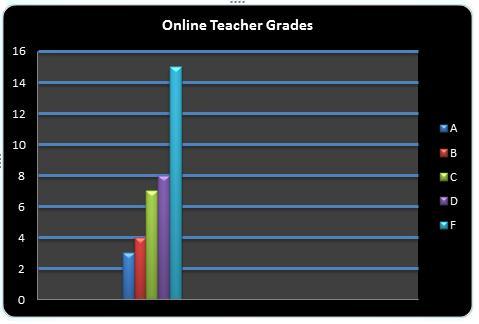
I take notes every time I take an online course and have the habit of grading the teacher.

Here’s a graph of the grades:

Image

So I began to think that my online teachers were every bit as important to my learning as my classroom teachers yet there was no certification programs or advanced credentialing that I knew of and that might have saved me from experiencing some of the worst teaching I have ever experienced,

Now I know I’m not a voice crying out in the elearning wilderness since every person I know who has taken an online program gives very few of the teachers a A grade and most get a sub par D or F. Why? Why is online teaching not considered as professional and as important as onground in class teaching?

Just wondering if anyone out there had the same idea? Maybe it’s time for some real online teacher certification. Thoughts?

121 Blogs About Learning


Here’s my daily reading list from which I pick and chose every day. The represent the best minds in the area of learning and learning technology. Enjoy!

Aaron Silvers

Adventures in Corporate Education

aLearning

Allison Rossett

Assets

B Online Learning

Blogger in Middle-earth

Bottom-Line Performance

Bozarthzone

brave new org

Brian Dusablon

Challenge to Learn

Clark Quinn

Clive on Learning

Connect Thinking

Courseware Development

Daretoshare

Dawn of Learning

Designed for Learning

Designing Impact

Developer on Duty

Discovery Through eLearning

Dont Waste Your Time

e-bites

e-Learning Academy

E-Learning Provocateur

E-learning Uncovered

easygenerator

eCampus Blog

eLearning 24-7

eLearning Acupuncture

eLearning Blender

eLearning Brothers

eLearning Cyclops

eLearning TV

Electronic Papyrus

Element K Blog

Engaged Learning

Enspire Learning

Experiencing eLearning

Getting Down to Business

Good To Great

I Came, I Saw, I Learned

ICS Learning Group

ID Reflections

IDiot

Ignatia Webs

In the Middle of the Curve

Integrated Learnings

Interactyx Social Learning

Jay Cross

Jay Cross’s Informal Learning

Joitske Hulsebosch eLearning

Jonathan’s ID

Kapp Notes

KnowledgeStar

Lars is Learning

Latitude Learning Blog

Learn and Lead

Learnability Matters

Learnadoodledastic

Learnforever

Learning and Technology

Learning Cafe

Learning Conversations

Learning Developments

Learning in a Sandbox

Learning Journeys

Learning Next

Learning Putty

Learning Rocks

Learning Technology Learning

Learning Unbound Blog

Learning Visions

LearnNuggets

Leveraging Learning

Living in Learning

Managing eLearning

mLearning Trends

Moodle Journal

onehundredfortywords

Ontuitive

OutStart Knowledge Solutions

Performance Learning Productivity

Pragmatic eLearning

QuickThoughts

Rapid Intake

Redtray

Road to Learning

Rob Hubbard

SharePoint and Assessment

Simply Speaking

Skilful Minds

Social Enterprise Blog

Social Learning Blog

Spark Your Interest

Speak Out

Spicy Learning

Sticky Learning

Stoatly Different

Sudden Insight

Take an e-Learning Break

Tayloring it

The E-Learning Curve

The eLearning Coach

The Learned Man

The Learning Circuits Blog

The Learning Generalist

The Peformance Improvement Blog

The Writers Gateway

Thinking Cloud

Tony Karrer

Trina Rimmer

Twitterpated with Learning

Upside Learning Blog

Vikas Joshi on Interactive Learning

Web 2.0 and Learning

Wonderful Brain

Work 2.0 Blog

ZaidLearn