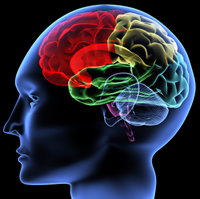
Always Said The Brain Rules!


I always knew that it’s all in my head, that my brain ruled and not my heart. It’s taken years of work in the Neurosciences to get to the point where they are realizing that they hardly know anything at all about the way the brain really works. John Medina, author of Brain Rules, is my favorite researcher because he’s honest about the science and at the same time very funny. If you ever get a chance to hear him speak take the time and go.

I always learn something useful about my brain when I read or see John. Since my brain controls my life the lessons are always valuable. For example, in this interview, I learned that the Listener (aka Audience) has no choice but to ask The First 6 Questions as I talk. They are so hardwired into our brains that we don’t even know we’re asking them. There were a lot of other great tips about public speaking, which is essentially what anyone does when they transfer knowledge or know-how to a group.

I often wondered what made John such a great speaker and now I know. He reveals his secrets here,  in this great interview with the Guru of Public Speaking himself. If you want to grab your audience when your speaking you would be well advised to take what John has to say to heart …  er make that brain.

Read More

The State of the Education Union


Several things President Obama said in his State of the Union address stayed with me long after the channels covering the speech cut back to their reality shows. First he asked schools to stop teaching to the test, an allusion to the No Child Left Behind program. Then talked about rewarding excellence .

Having consulted with one of the major companies that develop that test, I have a firsthand understanding of what No Child Left Behind is all about and how the tests are developed. I was struck by the thought that in this country, when we teach to the test, two things happen.

First, when we do test we are not asking for a very high bar. Too high a bar and too many would fail. Too low a bar and too many would pass. The test question for all of us is which group determines where we set the bar, and what committee decides what’s just right?

Second, as we have seen, when we teach to the test learning becomes a competitive sport. It’s crazy at this point in the evolving history of Thomas Friedman’s flat world to be competing against each other, student against student, teacher against teacher, class against class, school against school and district against district. For what prize? To not fail the Annual Yearly Progress report and continue teaching for another year? To score on or slightly above the mean?  To be average?

In China, one of our real competitors, there is no expression for “Fool me once shame on you, fool me twice shame on me.” The closest equivalent is “Fool me once shame on me.”  The schools in China work together to help their students reach excellence, to be amazing and know awesomeness. They set the bar so high that everyone is better for trying to reach it.

We need teachers who will raise the bar. Teachers who will help students reach as high as possible. Getting rid of tenure for teachers who entered the profession without any passion or excitement or a love of teaching, who should never have entered a classroom in the first place is a good thing.  And letting go of those who, if they ever had it, have forgotten it, who are simply tired and ready to move on, is also a good thing. We are not the competition in this new Idea Economy. And this is surely one case where just showing up is much less than 90% of the job.

Part Two: Anyone, Anytime, and Anyplace


For starters, since it always helps to know where you are before you decide where you’re going, let’s first take a quick 30,000 foot look at the three economic paradigms, from the Agricultural to the Idea Economy.

Once you see where we’ve been, and understand the business models, methods, theories and approaches that were designed for the Agricultural and Industrial Economies, you will hopefully see why business models everywhere needs to change, why learning experiences need to change, and why the decentralized learning experience is so crucial to success in the this type of economy.

Economic paradigms are at the very heart of the way we live and have lived. They are a critical part of the Social Contract. They directly – albeit usually unnoticed – affect your life in every imaginable way. And the educational systems and programs are either in concert with the current economic paradigm, or they quickly become irrelevant.

The Agricultural Economy

Economists usually separate the last 300 or so years into three economic paradigms. They started when there was a break from things made on a small scale, when the things made and sold by artists, craftsmen, masters, blacksmiths, wheelwrights, family farmers, merchants of handmade goods, etc. were replaced by things that were mass produced and mass consumed. The key point is that mass production is the cornerstone of all modern economic paradigms.

First it was food that was mass produced. So the first economic paradigm was the Agricultural Revolution.

For the first time in history, many people had enough to eat. They stopped worrying about food, did not farm their own crops nor raise and slaughter their own livestock. The mass production of food marks a turning point in history. It gave people something they never had as hunter-gatherers: free time. The ability to move about and travel, even live in new places. Leave the farms and come to what became the first cities.

Owning land became the key to wealth, since land used to grow food was the key to the Agricultural Economy. Land Barons were born. The landed gentry were created. Kings gave land as the highest boon for services rendered. Kings were kings because they owned all the land which is why they could give some of it away. Private property was born. My land was fenced off from your land. New nations opened up huge tracts of land because they knew that making that land productive was the key to prosperity. Rich agricultural lands were fought over and conquered, farmed and fought over again.

We managed muscles because farming was a hard, back breaking job, even for the oxen and horses.

The few existing and emerging educational models was still carefully controlled, managed and centralized. Very few people knew a little and most people knew only what they needed for survival. Reading and writing farmed no land and produced no food. Men were trained to be manly and women to be womanly according to the mores of the time. There was no need for mass education.

The Industrial Economy

Next up was the Industrial Economy. I believe it started with the printing press in the mid-15th century. I also believe it created a period of transition – much like the Incunabula – that has occurred every time there is a new economic paradigm.

The incunabula was a period in which the church still controlled the written word and, until the printing press was invented, ‘books’ were in limited supply. The idea of providing the masses with unfiltered ideas was heretical. So the church decided that it would use the printing press for God’s work, and take the illuminated manuscripts from the scriptorium in the monasteries, where all bibles were created, and print out the words and send these first ‘forms’ back to the scriptorium for illumination.

So the monks took the forms and added colorful pictures of devils and angels, ivy and floral scroll-work, visual ‘job aids’ for learning about right and wrong and what happened to you if you strayed from the path of righteousness. The pictures were important because most people alive then could not read. These first printing press books are called incunabula. They represent a paradigm shift that ultimately affected everything – your work, your play, your family, your thoughts, your life.

Once the Industrial Economy really started to steam ahead, again it was all about mass production, only this time it was the mass production of things. We managed hands.

The first things to become ‘industrialized’ were farming tools – cotton gin, land tillers, tractors, and more. A clean bridge from one economy to the next. Other things began to become mass produced as well. Cars. Trains. Ships. Typewriters, a personal printing press when you added carbon copies (the origin of cc).  Stuff people believed they needed and bought out of the Sears catalog. You didn’t need to read just look at the pictures and send in the money. We not only became consumers of food but simply consumers.

The capitalist world was all about moving capital around to further the production of things (including the industrialized production of food) in order to create wealth. The wealth of nations, as recorded by Adam Smith, was built upon an educational system that led to a culture and political system supporting the mass production and mass consumption of things.

Owning the means of production was the key to wealth. The great wealthy dynasties of the industrialized world were created at this point in time. If you look at America, you see Ford, DuPont, Getty, Rockefeller, and Kennedy ad infinitum, owning the means of production and becoming the kings of this era.

It also meant we needed to make sure the culture of mass consumers was healthy and working. According to John Taylor Gatto, public schools were created for this very purpose. We did not want a critically thinking, independent population focused on anything other than acquiring things. Work to spend. Spend more and work harder. Make the rich richer while you enrich your life with things. Towards the end of this economic paradigm, we invented the credit card, one of the greatest boons to mass consumption imaginable.

Since we had all the food we could want, and all the things we ever hoped for and couldn’t really afford, most Western countries were ready to move on into the next economic paradigm. But not everyone around the world was in lockstep. Many countries were slower to adopt and adapt and it turned out to be a good thing. Those countries has the disadvantage (?) of being stuck in the Agricultural Economy as we, for example, industrialized. We used to call them names. Third World, Underdeveloped, Developing, etc.. Until they realized that they could skip over 100 years of expensive, sweaty and generally nasty industrialization, and go right to the Idea Economy. To automate their new factories. To use cellphones and skip all the wires and poles. And most importantly to drive their new educational models.

The Idea Economy

The Idea Economy was born sometime in the late 20th century since economic paradigms are not given birth on a specific time or in a specific place. In 1959 Peter Drucker  was prescient enough to see what was coming and named the people who labored in this new economic paradigm Knowledge Workers. What they mass produced was Knowledge. New ideas. Innovations. Know-how. They spent their days thinking, writing, communicating, meeting, disseminating, rethinking, researching, creating, innovating, designing, reading, listening to the ideas of others, sharing, collaborating. Later they added emailing, instant messaging, tweeting, texting, wikiing, blogging, commenting, tweeting, etc. We managed minds.
Read More

Part One: The Decentralization of Everything


Part One: Bringing Order Out of Chaos …

What you are reading was born as a simple post about elearning, and ended up taking on a life of its own…

I wanted to write about why it is of critical importance at this point in the history of human evolution that learning is becoming available to almost anyone, anytime and anywhere.

I actually had a philosophical “chicken-and- egg” debate with my self late last night about whether history somehow consciously provides what is needed to take the next step, or do we rummage about in the attic of history and find what we need to keep evolving? I’ll leave the question for my two favorite Radiolab philosophers Jad Abumrad and Robert Krulwich.

Here’s the point. If we are to continue to evolve from the treetops to the Savannah to wherever we are headed in the futures, we need to find a creative and innovative way to transfer knowledge and know-how. There’s just too many of us who need learning, and not enough people to do the teaching.

Here’s great story that illustrates the point. It’s from one of my earlier posts.

Daphne Koller is a computer science professor at Stanford, and a MacArthur “Genius” Fellow. She has been working for years to make online education more engaging and interactive.

“On the long term, I think the potential for this to revolutionize education is just tremendous,” Koller says. “There are millions of people around the world that have access only to the poorest quality of education or sometimes nothing at all.”

Technology could change that by making it possible to teach classes with 100,000 students as easily and as cheaply as a class with just 100. And if you look around the world, demand for education in places like South Africa is enormous.

Almost two weeks ago, at the University of Johannesburg, more than 20 people were injured and one woman was killed trying register for a limited number of openings. Thousands had camped out overnight hoping to snag one of the few available places and when the gates opened, there was a stampede.

Koller hopes that in the future, technology will help prevent these kinds of tragedies.

Up until this writing I was overwhelmed by the number of choices for learning technology in particular, and technology repurposed for learning in general. Chaos makes me nervous. So I have this need to find a pattern that provides order.

As often happens in my mind the pattern emerged while I was dreaming.

I saw my hand write the word “Decentralization” with white chalk on a blackboard. When I awoke, I wrote the word at the top of this post, realizing that everything was being driven by decentralization.

So before I take on writing about the decentralization of education I thought it would be a good idea to write a Part One about decentralization itself.

Read More

A Brave New World of Learning


The following is from NPR and I wanted to share it to make a point. Learning is becoming decentralized. Instead of going to Stanford, Stanford came to over 160,000 students worldwide and they learned about Artificial Intelligence. Really learned it in a way that allowed for knowledge and know-how to be transferred, tested and even provide feedback to the professors to improve their course.

It’s no longer a brave new world of learning. It’s just the way it is and will be.
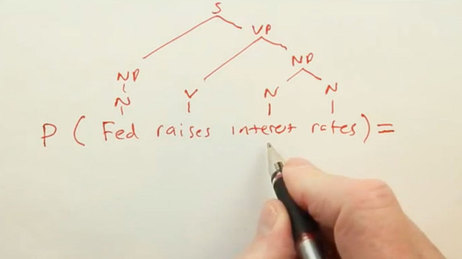
Stanford Engineering’s Online Introduction To Artificial Intelligence is made up of videos that teach lessons by drawing them out with pen and paper.

Last year, Stanford University computer science professor Sebastian Thrun — also known as the fellow who helped build Google’s self-driving car — got together with a small group of Stanford colleagues and they impulsively decided to open their classes to the world.

They would allow anyone, anywhere to attend online, take quizzes, ask questions and even get grades for free. They made the announcement with almost no fanfare by sending out a single email to a professional group.

“Within hours, we had 5,000 students signed up,” Thrun says. “That was on a Saturday morning. On Sunday night, we had 10,000 students. And Monday morning, Stanford — who we didn’t really inform — learned about this and we had a number of meetings.”

You can only imagine what those meetings must have been like, with professors telling the school they wanted to teach free, graded online classes for which students could receive a certificate of completion. And, oh by the way, tens of thousands have already signed up to participate.

For decades, technology has promised to remake education — and it may finally be about to deliver. Apple’s moving into the textbook market, startups and nonprofits are re-imaging what K-12 education could look like, and now some in Silicon Valley are eager for technology and the Internet to transform education’s more elite institutions.

Thrun’s colleague Andrew Ng taught a free, online machine learning class that ultimately attracted more than 100,000 students. When I ask Ng how Stanford’s administration reacted to their proposition, he’s silent for a second. “Oh boy,” he says, “I think there was a strong sense that we were all suddenly in a brave new world.”

Ng says there were long conversations about whether or not to give online students a certificate bearing the university’s name. But Stanford balked and ultimately the school settled on giving students a letter of accomplishment from the professors that did not mention the university’s name.

“We are still having conversations about that,” says James Plummer, dean of Stanford’s School of Engineering. “I think it will actually be a long time — maybe never — when actual Stanford degrees would be given for fully online work by anyone who wishes to register for the courses.”

‘Uncharted Territory’

Thrun’s online class on artificial intelligence or A.I., which he co-taught with Google’s Peter Norvig, eventually drew more than 160,000 students who received detailed grades and a class ranking.

“We reached many more students, Peter and I, with this one class than all other A.I. professors combined reached in the last year,” Thrun says.

Thrun believes a class that size creates a valuable credential — even if Stanford doesn’t recognize it. Students hailed from 190 different countries, including Australia, China, Ukraine and the U.S. They included high school students, women with disabilities, teachers and retirees — and they were all taking the same class Stanford students took, grades and all. But the online participants didn’t get credit.

“I think we all realized we were in uncharted territory,” Thrun says. “As we move forward, it is my real goal to invent an education platform that has high quality to it, [that] prevents cheating, that really enables students to go through it to be empowered to find better jobs.”

Widespread Impact

Stanford does award degrees for online work, but only to students who get through the admissions process and pay sometimes $40,000 or $50,000 for a master’s degree. Technology could push prices down.

Dean Plummer believes low-cost, high-quality online education will have a profound impact in high education, even at institutions as august as Stanford. He doesn’t think it will diminish demand for undergraduate degrees or Ph.D.s, but he says the impact on master’s programs could be profound.

“What it will look like in 10 years or 20 years or 30 years — your guess is as good as mine,” he says. “But I think the impact will be large and it will be widespread.”

Online education and distance learning have been going on at Stanford and other schools for years, but Plummer believes the technology has reached an inflection point.

Videos stored online let students build course work into their schedules anywhere in the world. Embedded quizzes let students monitor their own progress and give professors much richer data to improve their teaching.

Ng noticed that 5,000 students made the identical mistake in an online quiz. Within minutes, teachers were able to respond and clarify the issue that had led a large fraction of the class down a dead-end path.

Global Benefits

Daphne Koller is a computer science professor at Stanford, and a MacArthur “Genius” Fellow. She has been working for years to make online education more engaging and interactive.

“On the long term, I think the potential for this to revolutionize education is just tremendous,” Koller says. “There are millions of people around the world that have access only to the poorest quality of education or sometimes nothing at all.”

Technology could change that by making it possible to teach classes with 100,000 students as easily and as cheaply as a class with just 100. And if you look around the world, demand for education in places like South Africa is enormous.

Almost two weeks ago, at the University of Johannesburg, more than 20 people were injured and one woman was killed trying register for a limited number of openings. Thousands had camped out overnight hoping to snag one of the few available places and when the gates opened, there was a stampede.

Koller hopes that in the future, technology will help prevent these kinds of tragedies.

Trying ‘Bold New Things’

Over the past six months, Thrun has spent roughly $200,000 of his own money and lined up venture capital to create Udacity, a new online institution of higher learning independent of Stanford. “We are committed to free online education for everybody.”

Udacity is announcing two new classes on Monday. One will teach students to build their own search engine and the other how to program a self-driving car. Eventually, the founders hope to offer a full slate of classes in computer science.

Thrun says Stanford’s mission is to attract the top 1 percent of students from all over in the world and bring them to campus, but Udacity’s mission is different. He’s striving for free, quality education for all, anywhere.

Koller agrees, but she says Stanford and its professors will adapt.

“How it all is going to pan out is something that I don’t think anyone has a very clear idea of,” she says. “But what I think is clear is that this change is coming and it’s coming whether we like it or not. So I think the right strategy is to embrace that change.”

Over the years, Stanford has launched dozens of disruptive technologies into the world, but now administrators and professors seem to agree that the school may be about to disrupt itself. This semester Stanford will put 17 interactive courses online for free.

“Stanford has always been a place where we were will to try bold new things,” Plummer says. “Even if we don’t know what the consequences would be.”
Learning the WHY of the blackouts


Minority Report for Learning


(YAWN) … that’s my summary of the most recent CES show that seemed to have more iPhone and iPad cases on display than any really new or innovative technology. I’m always looking for “high tech stuff’ that we can use for learning. This year was not a great year with one exception that knocked me out … maybe it was a standout because everything else was so not innovative, but I think it really would have been exciting even in a great year for new products. It was especially hot since the plans to go into production this year are real.

Take a look …

[youtube+http://youtu.be/m5rlTrdF5Cs]

So you’re probably wondering why I think it’s such a potentially great product for learning?

Use your imagination … since the enormous growth of elearning online and in a virtual classrooms, place one in your kitchen and learn how to cook great scrambled eggs or manage a families diet. Put one in the kids room and let them go learning crazy.

The more learning we can do on the Internet, Skillshare being just one terrific example, the more Samsung’s ‘Smart Window’ will become a mirror for the mind.

The Numberlys are iPad Learning Rockstars!


I first read  about “The Fantastic Flying Books of Morris Lessmore” last summer in an article in Fast Company by John Pavlus. I was to say the least ‘gobsmacked’. It was an amazing look into the future of ebooks for learning, admittedly aimed at a much younger audience than you usually see in the workplace. It ignited my imagination when I started to envision ways it could be used for educating learners who had entered their age in double-digits.  Take a look …

I thought after that ebook, produced by Moonbot Studios,  there there would be years of copycats and catching-up before the work was excelled.

Boy was I was wrong.  And never more happy to be that way …

Moonbot Studios has not done it again. Actually, they have outdone it again. The new ebook on the iPad is called “The Numberlys,” about a group of amazingly adorable out-of-the-numbers-box characters who create ” The Alphabet”  in a spreadsheet boring and rigid universe ruled only by The Numbers. They build it from parts and pieces of the numbers.

Before I say another w..o..r..d, take a look at the video.

The ebook takes about 15-minutes to read through if you skip the games that are part and parcel with the story. I especially like the game “V” which is the letter V spinning faster and faster until you spin it fast enough to make it a “W”. It may sound like Sesame Street but it’s not. It’s a beautiful example of a direction that learning can take when the lessons are taught by bright, creative and very talented teachers, aka ebook creators, who obviously love what they are producing and are pushing the boundaries of the new technology to a new level.

PS. The added pieces on Vimeo about how the ebook came together are entertaining and interesting on theor own. Kudos to Moonbot Studios.


Learning is turning ? into !


Learning is about turning ? into !

Learning always starts with a question. Who?, What?, Where?, When?, Why?, and How? If you’ve ever been a student of journalism you’ll recognize the 5 “W’s” plus the “H” as the prime directive of all curious journalists. Maybe that’s why we still read the news because we learn something new or important about the world every day.

Questions and the Brain

None of this would be possible with the ?. And the ? would not be possible with the ability to imagine and see what is not there. In other words, the ability to think abstractly.

Imagine the following scene. A Neanderthal finds a cluster of red berries. He is hungry and eats some. He does not get sick or die. He shows the berries to his mate. He shows her that it is okay to eat them. She heads out and looks for the barriers. Since she has a mental picture of the berries in her head (an original work of abstract art) she can compare the red berries she sees with the ones she knows are okay to eat. She finds them and has lunch on a sunny patch of grass.

What just happened? The original hunter–gatherer found some berries and after using his stomach with which to experiment, learned that these particular berries were okay to eat. He then took some back to his mate and taught her what the berries looked like and how they tasted, and passed on the idea that they were okay to eat.

She learned and painted an abstract picture of those berries in her head and went to find them. She recognized a bunch, tasted one to make sure they were the same, and sat down for very berry feast.

Without the ability to think abstractly what would have happened? The first Neanderthal to eat would need to bring back a sample, show it to his mate, let her see they were okay berries to eat, and taken her by the hand to the berry bush where she could gather the exact same berries. Nothing to learn – no abstractions needed – just follow the berry bush road.

Here’s a wonderful factoid to support the idea. Neuroscientists had this idea that frustration builds brain connections in the Frontal Lobe where abstract thinking is believed to occur. They decided that driving in traffic was a frustrating experience. Finding your way around London was even more frustrating. So they scanned the brains of new cabbies and then after a year scanned them again. It was clear from the pictures of the brains that the frontal lobes had grown. They learned how to drive in traffic and find their way around olde London town.

Curiosity may have killed the cat but it sure made the cat smarter before it died.

So what does this teach us about learning and teaching?  You need to be curious in order to learn. You do not need to be curious in order to remember and then forget what you memorized. Rote learning is just that – memorize, test and forget.

Real learning has ‘stickiness’. It stays with us. Here are 4 more related factoids.

When emotion is included, we tend to learn more effectively. Emotion is like a “PowerUp” in various video games. In this case learning is measured by being able to recall and use the knowledge and/or know-how long after the learning experience is over.

Vision trumps all other senses. We think visually before we encode language to help recall what we saw. Written words ARE visual. Lines and circles and squiggles and whatever else are A R T.

Spoken words are music. Do-Re-Mi-Fa-Sol-La-Ti-Do. We’re so used to thinking in terms of words that we just take them for granted. How you say what you say has an enormous impact on turning ? into !. An excited voices kindles the fires of curiosity.

Your brain is hardwired to listen to a good story. A good story has a hook at the beginning, a good middle and a clear ending. It will stay in your mind for a long time. If you think I’m wrong how many of you remember the stories you heard as a child? That’s a long time for many of you to remember. You can scaffold what you learn on the story, so it is, in a very real sense, a bridge for memory from now until you forget. A good story interweaves all of the above – emotion, visuals, dramatic voice(s) – into one BIG brainpunch. Just a final note for the moment, in the past, when we lived as tribes of hunter-gatherers, the best place at the fire was always held for the storyteller.

The New Metric: Compound Learning Rate


A few weeks ago, my nephew asked me what the word “expert” means. I told him it was a person who knew a lot about something and learned more everyday. When I answered, he nodded and asked “so am I an expert about superheroes yet?” It made me think about how that question would translate into the companies with which I consult.

Joi Ito, Director of the MIT Media Lab, wrote recently about “neotony”, the retention of childlike attributes in adulthood. This ability to learn is like the compounding interest on an investment; after two or three years, a relentless learner stands head and shoulders above his peers.

“Relentless Learning” is a quality that is an essential element of success. It is the hallmark of leaders of successful companies. I realized that it needs to become one of the new metrics against which an individual leader, a team and even a company is measured. I’ve heard it referred to as the compound learning rate.

Here’s an example. Try asking your team this question at your next end-of-week wrap-up meeting: How did you get 1% better this week? What did you learn from our customers that is valuable? What change did you make to any of our products or services that drove better results? What specifically did you learn this week?

You can start by putting in your own 1%, and telling the team what you learned.

As your team gets into a learning rhythm, you can review this as a group each week. It definitely makes for a more valuable use of people’s time in meetings. It replaces the boring and usually repetitious serenade about their numbers which they already reported.

Plus it’s not inconsequential – 1% per week per team member adds up. Like compound interest in a mental savings bank. And on the weekly call it’s the sum total of that learning shared with the entire team.

If you wanted to take the compounding even further, you could start capturing the learning on the web as part of a shared learning collaboration portal. Everyone on the team and other similar teams would be responsible for sharing at least one thing they learned every week.

It reminds me of the idea I’ve always had that a company or corporation is equal to the sum total of the brains that walk around, sit in offices or cubicles, talk on the phone, attend meetings, and more. If you took away the bodies you can envision the brains floating around the office. Now add the bodies as the instruments that these brains need to communicate with one another.

Above all remember that a higher corporate IQ equals a smarter company. And in today’s Idea Economy, only the smartest companies win.