Learning is turning ? into !


Learning is about turning ? into !

Learning always starts with a question. Who?, What?, Where?, When?, Why?, and How? If you’ve ever been a student of journalism you’ll recognize the 5 “W’s” plus the “H” as the prime directive of all curious journalists. Maybe that’s why we still read the news because we learn something new or important about the world every day.

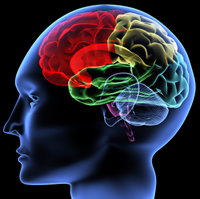
Questions and the Brain

None of this would be possible with the ?. And the ? would not be possible with the ability to imagine and see what is not there. In other words, the ability to think abstractly.

Imagine the following scene. A Neanderthal finds a cluster of red berries. He is hungry and eats some. He does not get sick or die. He shows the berries to his mate. He shows her that it is okay to eat them. She heads out and looks for the barriers. Since she has a mental picture of the berries in her head (an original work of abstract art) she can compare the red berries she sees with the ones she knows are okay to eat. She finds them and has lunch on a sunny patch of grass.

What just happened? The original hunter–gatherer found some berries and after using his stomach with which to experiment, learned that these particular berries were okay to eat. He then took some back to his mate and taught her what the berries looked like and how they tasted, and passed on the idea that they were okay to eat.

She learned and painted an abstract picture of those berries in her head and went to find them. She recognized a bunch, tasted one to make sure they were the same, and sat down for very berry feast.

Without the ability to think abstractly what would have happened? The first Neanderthal to eat would need to bring back a sample, show it to his mate, let her see they were okay berries to eat, and taken her by the hand to the berry bush where she could gather the exact same berries. Nothing to learn – no abstractions needed – just follow the berry bush road.

Here’s a wonderful factoid to support the idea. Neuroscientists had this idea that frustration builds brain connections in the Frontal Lobe where abstract thinking is believed to occur. They decided that driving in traffic was a frustrating experience. Finding your way around London was even more frustrating. So they scanned the brains of new cabbies and then after a year scanned them again. It was clear from the pictures of the brains that the frontal lobes had grown. They learned how to drive in traffic and find their way around olde London town.

Curiosity may have killed the cat but it sure made the cat smarter before it died.

So what does this teach us about learning and teaching?  You need to be curious in order to learn. You do not need to be curious in order to remember and then forget what you memorized. Rote learning is just that – memorize, test and forget.

Real learning has ‘stickiness’. It stays with us. Here are 4 more related factoids.

When emotion is included, we tend to learn more effectively. Emotion is like a “PowerUp” in various video games. In this case learning is measured by being able to recall and use the knowledge and/or know-how long after the learning experience is over.

Vision trumps all other senses. We think visually before we encode language to help recall what we saw. Written words ARE visual. Lines and circles and squiggles and whatever else are A R T.

Spoken words are music. Do-Re-Mi-Fa-Sol-La-Ti-Do. We’re so used to thinking in terms of words that we just take them for granted. How you say what you say has an enormous impact on turning ? into !. An excited voices kindles the fires of curiosity.

Your brain is hardwired to listen to a good story. A good story has a hook at the beginning, a good middle and a clear ending. It will stay in your mind for a long time. If you think I’m wrong how many of you remember the stories you heard as a child? That’s a long time for many of you to remember. You can scaffold what you learn on the story, so it is, in a very real sense, a bridge for memory from now until you forget. A good story interweaves all of the above – emotion, visuals, dramatic voice(s) – into one BIG brainpunch. Just a final note for the moment, in the past, when we lived as tribes of hunter-gatherers, the best place at the fire was always held for the storyteller.

The New Metric: Compound Learning Rate


A few weeks ago, my nephew asked me what the word “expert” means. I told him it was a person who knew a lot about something and learned more everyday. When I answered, he nodded and asked “so am I an expert about superheroes yet?” It made me think about how that question would translate into the companies with which I consult.

Joi Ito, Director of the MIT Media Lab, wrote recently about “neotony”, the retention of childlike attributes in adulthood. This ability to learn is like the compounding interest on an investment; after two or three years, a relentless learner stands head and shoulders above his peers.

“Relentless Learning” is a quality that is an essential element of success. It is the hallmark of leaders of successful companies. I realized that it needs to become one of the new metrics against which an individual leader, a team and even a company is measured. I’ve heard it referred to as the compound learning rate.

Here’s an example. Try asking your team this question at your next end-of-week wrap-up meeting: How did you get 1% better this week? What did you learn from our customers that is valuable? What change did you make to any of our products or services that drove better results? What specifically did you learn this week?

You can start by putting in your own 1%, and telling the team what you learned.

As your team gets into a learning rhythm, you can review this as a group each week. It definitely makes for a more valuable use of people’s time in meetings. It replaces the boring and usually repetitious serenade about their numbers which they already reported.

Plus it’s not inconsequential – 1% per week per team member adds up. Like compound interest in a mental savings bank. And on the weekly call it’s the sum total of that learning shared with the entire team.

If you wanted to take the compounding even further, you could start capturing the learning on the web as part of a shared learning collaboration portal. Everyone on the team and other similar teams would be responsible for sharing at least one thing they learned every week.

It reminds me of the idea I’ve always had that a company or corporation is equal to the sum total of the brains that walk around, sit in offices or cubicles, talk on the phone, attend meetings, and more. If you took away the bodies you can envision the brains floating around the office. Now add the bodies as the instruments that these brains need to communicate with one another.

Above all remember that a higher corporate IQ equals a smarter company. And in today’s Idea Economy, only the smartest companies win.

This Says It All …


In the future all learning experiences will be flipped …

“Will the teacher please step to the front of the room.”


The Best 100 of 2011


Jane Hart is one of my great “go-to” resources for all things learning. Every year she posts a great review of the Top 100 Tools. Here it is and Thanks, Jane!

“Yesterday, I finalised the Top 100 Tools for Learning 2011 list.  In the last few days of voting  there was a surge of contributions (both online and by email) that brought the number of contributions to 531.  Many thanks to everyone who took the time to share their Top 10 Tools and help me compile this, the 5th annual survey of learning tools.” Jane Hart

THE Future of Education is Blended Learning


This is a MUST WATCH for anyone interested in the future of what we today call the K-12 grades. And if the past gives us any signage on the road to the future, it also is about the way we will learn in colleges, universities, corporations and other organizations.

There are not many people today who have a clear crytal ball on the future of education. Not surprising since the past has become something of a mashup of approaches, methods and ideas. The majority of which do not work if you know the stats.

I believe  Tom Vander Ark is the exception. He is the leading education futurist and chair of the International Association for K-12 Online Learning. If you want more than you’ll get from this great video – and I know you will – you can read his new book  Getting Smart: How Personal Digital Learning is Changing the World. Tom is also  investor in General Assembly (see this month’s Fast Company Life in Beta) through his education-focused venture fund Learn Capital.  I also recommend the Fast Company article.

Learning Begins Before You Were Born


Apply the “WHY” to Learning


If you want someone to remember and forget keep on doing what you’ve always done as an teacher or professor or instructor. Talk about the WHAT and HOW of whatever you’re trying to get your students to learn. If you really want them to give you some of their  precious brainspace to really know about or know-how to something then please pay attention because I’m about to tell you why you need to know this and practice it every time you transfer knowledge from your brain into another…

It all about starting with the “WHY”.

How-To Learn by Trial and Error


This post should not need to be written …

Everytime, and I mean every time, you learn to do anything, you have done so by trial and error. Genius short circuits the process. Talent gets it quicker, but the process of learning is the same. Trial. and. error.

The latest findings from the neurosciences show that the brain aggregates memory and builds trial and error into the way to do something. Seems like the trial and error cells are held back while the successful trial and no error cells are moved to the front of the line. Then the old trial and error cells get recycled.

There are a number of things that either enable or disable this process.

Anxiety can work to help if it is aimed at the thing you are trying to do instead of at you focused on yourself failing. “I just can’t do this!” is anxiety talking, and disabling the trial and error process (hereinafter known as T&E). Someone outside your self talk can override your negative emotion with an enabling “Yes you can do it!” if they are an authority figure.

Which brings me to elbows in the mud at Boot Camp. Sargent Major SCREAMING “Whatisyourproblemgetourasupthatwallandoverthe toporIwillpersonallykickyour butttheremyself!!!” That is not a positive override, yet it sure as hell enables your body to get up and over the wall. How does that work?

Seems like the brain has a stronger need to win approval from authority figures than fail. So we do it for the Sarge. Or the Teacher. The Boy or Girl Friend. Or our Moms. Or Dads. Or our kids…

Or whomever we want to impress.

Regardless it’s T&E, the only way to effectively learn and the one way that is most overlooked by the industry from K – Corporate who purports to educate. The problem seems to be the E. You need to not fail. So no T&E only Just Do It. Nothing succeeds like success. [Add your own …].

It makes me crazy, not only because it disables the T&E process from Pre-K onward, it disables the process for all time. So we have a nation of people who no longer TRY because they are afraid to make an ERROR and FAIL. So we have a culture, a whole country of people who, for the most part, do not innovate, create, disrupt, do anything new and go from “Trial and Error” to “Tried and True”.

You want to learn or do something new and different and maybe better, faster and richer? Fail you ass off and count your errors as a plus rather than a minus.

Quick story to make a point. Thomas Edison was interviewed after he got the first light bulb to work (i.e. stay lit for more than a minute) and was asked “How did you manage to keep trying since you tried and failed over 1,000 times to get it right?”. He told the reporter “Those 1,000 times it didn’t work were all lessons that got me that much closer to the one that works.”

Now that’s T&E X 1,000. When it comes to learning, perseverance and persistence count …

7 Ways to Increase Your BrainPower


Sean McCool (yes that’s his real name) from AWAI had a number – 7 actually –  tips for improving your BrainPower. I’ve been adding all 7 into my routine and find they REALLY do help make me a  better, more productive thinker. So I’m passing them on …


1. Engage Yourself in Regular Exercise … 7-10 minutes


Do simple exercises like Dr. Oz’s seven-minute yoga routine. Or try five 40-yard sprints followed by some deep stretching. Either way, you’ll need less than 10 minutes.


Exercise triggers the release of neurochemicals known as endorphins, which produce a feeling of well-being. And this puts you in a better state of mind to think, plan, develop, deliver, whatever.

I use NPR as my reward. I listen to it while I’m doing AT LEAST 30 minutes at 2+ MPH on the treadmill in my office.


2. Supplement Your Diet … less than 1 minute


Natural supplements not only keep your body healthier, they also maintain the fitness of your brain. This results in better brainpower! You can start with a good multivitamin and then add in brain-boosting nutrients like Ginkgo biloba, and anything high in omega-3 is a great place to start. For more, just Google brain-boosting supplements.


This is an easy addition to your daily routine that takes less than a minute. It can go a long way to increased energy and clearer thinking.

Yes. Especially a multivitamin that has Ginko first thing in the morning with breakfast. With breakfast is an important add to the list. Eat a protein in the AM with a carbohydrate and then add vegetables and fruit for lunch with another small protein and finally no fruit after 4 PM and mainly vegetables in the evening. Add in 2 snacks of protein (I like peanut button on apple slices) in between and remember to drink LOTS of good water.


3. Use Your Brain … up to an hour


If you exercise your body, you should exercise your brain as well. Don’t just sit in front of the TV in your free time. Get out and have stimulating conversations. Take a night or online class in a subject you find interesting. Take up a hobby that uses a different part of the brain than writing, like woodworking, painting, or learning to play an instrument.


Better yet, combine your body and mind exercise with sports like tennis, basketball, or martial arts.

I’m a third degree black belt in karate … not. Okay so I do watch some TV, but I also spend my evenings reading, writing emails, checking websites that interest me (especially the neurosciences and how the brain learns).


4. Play Games … replace waiting time, TV time, or lingering on social media


Ever sit around waiting … for a kid to get out of school … in a waiting room … for your husband/wife/kids as they get ready to go out? Have you killed time watching TV or surfing mindlessly on Facebook?


Try to use some of that wasted time for mentally stimulating games. You can find brainteaser apps for your smartphone. Or try a good old-fashioned puzzle. Play the right games and you can increase your brain power.

We have a Wii and I am a great bowler-golfer-tennis pro. So there … plus I occasionally play online Texas Hold’em (does that count?).


5. Enjoy an Educational Hobby … an hour here and there


Choose a hobby that forces you to always be learning and improving your skills. Avoid monotonous activities. Photography is a good example of a brain-stimulating hobby as there are always new tricks and techniques to figure out. (As an added bonus, you could even supplement your income once you know a few photography tricks found here.)

I garden, which feeds my brain and body and adds a certain amount of exercise as well! It’s the perfect trifecta of BrainPowering.


6. Sleep Well … 6-8 hours


Sleeping is the time when your body rebuilds and recharges itself. Most professionals believe that you should sleep for at least six to eight hours a night.

I also try to take 10-minute power nap during the day.  I take my power nap at about 3:00. The nap, believe it or not, works better than a double-shot espresso with 2% skim milk. Just don’t nap and drive …


7. Relax … 12-60 minutes


Because of the stress of everyday life, your brain is exhausted just as much as your body. You must take the time to unplug and relax. The phrase “Be still and know…” comes to mind. You may want to try meditating to give your mind a break from all the hassle. Meditation is simply sitting or standing very still and very quiet. Try to put all your worries out of your mind and relax. It will be tough at first. But you’ll get better with practice.

I get it out of the way in the morning since I found that a sleepy brain is best for meditation before it fills up with the “To Do’s” for the day.


Over the next week, try to incorporate each of these 7 ideas at least once. Then share your experiences with me by posting a comment


To your success,


David

At The Brain Gym


Today over 14 million people in 180 countries either subscribe to Lumosity’s website or have downloaded one of its iPhone apps. And revenues have grown 25% every quarter since its launch.

Never heard of it? Never worked out in one of their Brain Gyms? Here’s the story and it tells us a good deal about the future of learning since that grey matter in tour head that’s deciphering these words right now – actually a few nanoseconds before you get the message – will grow old.

Back up to 2007 …

Lumosity was a scrappy startup looking for seed money. Today, the San Francisco-based company that creates games to make your brain work better is announcing it’s landed over $32 million in new funding. 1,2,3,4 years and counting from $0 to $32M.

Quite the ride. But why you ask …

Tim Chang of Norwest Venture Partners recently told Fast Company the investment story. “When we first invested, we were concerned this was just a niche area for people with Alzheimer’s or other cognitive problems. But Lumosity has proved there’s universal demand for this among all demographics.”

A universal demand. That means you, me and a lot of other brains. Sharp Brains, a market research firm tracking the brain fitness space, estimates that the size of the market for digital products was just under $300 million in 2009.

And they estimate that it will grow to at least $2 billion by 2015. That US$2B.

When you sigh up at Lumosity’s website,  it starts a process in which go through a series of questions to figure out whether you want to improve your ability to remember names, get better at problem solving, or perhaps develop better concentration. Luminosity then designs a series of “courses” tailored to your particular interests.

The “courses” consist of 40 games designed to sharpen a wide range of cognitive skills.

For example, one game is about numbers. Arithmetic problems appear in bubbles, and you need to solve them before the bubble bursts. In a word game, you and several other players are given a three-letter prefix like “pre”.  You must come up with as many words as possible while a clock counts down. The clock is counting how many can you come up with?

(Hint: prescient, preface, presence, prefix, pre-test, preview, pre, you get the idea.

Lumosity CEO Kunal Sarkar believes that brain fitness is the latest wave in the trend of healthy living. For the last 25 years people have been running to the gym, running at the gym, trying to bend over backwards for a yoga class, filling up the parking lots at Whole Foods and organic Farmer’s Markets. So think of it as a gym membership for brain. A subscription costs $14.95 a month or $80.00 a year.

Okay, 10 seconds starts now, how much does a yearly subscription save you, do the math …

This is not really out there anymore. The neuroscience research coming out of universities in the past 20 years has proven that cognitive abilities – your ability to think, reason, concentrate and more – are not fixed. Just as you can pump up by pumping iron , the games that Lumosity lets you play really can make your brain stronger, faster, better and smarter.

Let’s face it. More and more who work in this new Digital Economy rely on how well the grey matter between our ears between our ears functions. Smarter at work is better at work. Lumosity users include traders in Chicago who use the tools as a brain warm up before charging onto the fast-paced trading floor, actors in Los Angeles who need to memorize a script before an audition, even pilots who want to improve their spatial abilities, their reaction times and quick thinking skills before wheels up.

And here’s the kicker that started this whole post. Again from Lumosity CEO Kunal Sarkar. “We don’t necessarily teach you anything but we make it easier for you to learn new things, which is more and more important.” Holy Brain Gym Batperson! Imagine a company that not only provides a gym gym for your body but adds in a Brain Gym for you brain…

Like I said, in this new global hyper-competitive digital economy, only the companies with the highest Corporate IQ will win. A Brain Gym might just be the new espresso maker of the next decade.