FOR MEN ONLY – LEARN HOW TO BE A REAL MAN
TO ALL THE MEN WHO READ THIS. THE TED PRESENTATION JACKSON MAKES MUST BE WATCHED AND REMEMBERED.. PLEASE SHARE THIS WITH ALL THE MEN YOU KNOW …
TO ALL THE MEN WHO READ THIS. THE TED PRESENTATION JACKSON MAKES MUST BE WATCHED AND REMEMBERED.. PLEASE SHARE THIS WITH ALL THE MEN YOU KNOW …

This is the first in a three-part series. The goal is simple: Completely change the way we manage and learn. Forever. Looking forward to your reactions.
Companies worldwide today seem to be suffering from the same challenges: finding and hiring talent, time-to-performance, employee engagement and retention, innovation, decision-making, and more. They all seem to be fighting off the symptoms of the common disease that has infected them. This series of posts is part of a carefully-researched and groundbreaking book “Minds at Work”, co-authored by Stephen J. Gill and I, that traces the astonishing root cause behind the malaise that’s gripping corporations, and how it can be cured.
Part One: The Wisdom in the Maps from the Age of Exploration
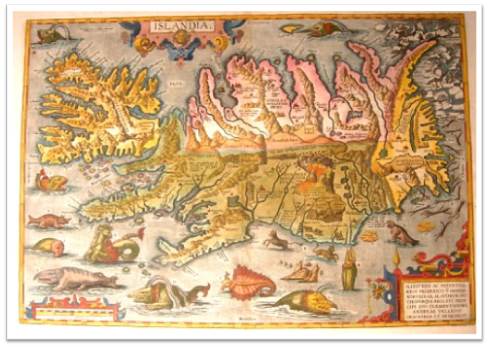
Old maps are brilliant. The great mapmakers of the 16th and 17th centuries not only captured the places that were known, but gathered information from as all available sources in their efforts to map uncharted territory. The 1502 Hunt-Lenox Globe is a great example: when its creators reached a place in unknown maritime waters, they would add the warning “here there be dragons” and illustrate that area with pictures of sea monsters.
Corporate managers are now sailing into uncharted territory. It seems as if we all went to bed one night, and when we awakened the next day, everything had changed. Yet many of us are still operating as if it were yesterday. Most of the management practices and principles we use today were developed in the 19th and 20th centuries, when managers were managing hands and workers were learning at a different pace. Digital technology, automation, and globalization have changed everything forever, and we all know that it’s not changing back. In our 21st-century knowledge economy, employees produce knowledge and know-how. In order to remain competitive, corporations have a critical need to ensure that employees are continuously learning, and need to find ways to ensure that can — and will — happen.
Stuck in a Timewarp
In actuality, most managers are continuing to rely on management principles and practices that were developed to meet the needs of prior centuries. Yet we have discovered that there has been a trend — growing almost undetected — among corporations located around the globe, to manage employees in radically new ways that are a better way to meet the needs and challenges of today’s knowledge economy.
The greatest mapmakers of old were not the ones who made better maps of places that were already known, but the ones who were able to imagine where the places that were still unexplored and uncharted might be, and how they might be reached.
A similar approach is needed now. Managers are in uncharted territory. They are struggling to imagine what to do and how to manage employees hired for what their minds can create, rather than what their hands can produce. Managers suddenly find themselves in a company that desperately needs employees to be responsible for their own learning, since no L&D or HR department can keep up with the rapid pace of change.
The forces driving the new world economic order has placed companies at an inflection point in the history of managing people and the way they learn. Managers continue to sit at the exact center of the curve, which has been shaped by three sweeping and dramatic shifts in the economy in the last 200 years, each of which created its own management approach and educational system to teach people how to do their jobs.
The Agricultural Economy: Managing Backs
The first great economic era focused on land: land for wealth, land for status, land for food. Private property was legally defined for the first time. Learning was hands on, and on the farm. Education was limited to a few, and was delivered in the home by tutors or in small private schools and colleges to the children of wealthy landowners and landed gentry.
Bodies were originally the major tool of production; over time, people learned to harness the power of oxen and horses. At the most extreme, people were enslaved or indentured to do the most backbreaking work. In the early 1800s, picking cotton was one of the most important jobs in the U.S. economy. We managed backs, and even in 1900, almost 90 percent of the population in the America and Europe worked on farms and in the fields.
The 20th-Century Industrial Economy: Managing Hands
The second great economic era focused in things. Harnessing steam power, discovering the uses for electricity and making their power universally available to mass-produce cars, clothing, food, and more on our assembly lines and in factories. Machines revolutionized farm work and the number of farmers dropped to below six percent by the end of the century. Backbreaking household chores were utterly transformed. Clothes no longer had to be washed by hand — a machine could do it. Huge blocks of ice no longer had to be hauled up stairs once the refrigerator was invented. Electric vacuum cleaners saved hours previously spent hanging up rugs and hitting them with rug-beaters.
Education was also transformed by the industrial economy. Public education was meant for everyone, and through a series of legislative decisions, it reached the rich and poor, urban and rural, male and female. Classroom instruction emphasized preparation for careers that were more about using hands than backs. Schools emphasized efficiency over individualization, and focused on educating the masses by using a curriculum designed centrally by experts that was consistent year after year. Companies taught managers and employees to do their jobs by exactly copying the classroom setting in which, as children, everyone had learned to learn.
The workplace became the school-place. The goal was mass training for mass production so that employees would be able to perform the same task or set of tasks the same way for as long as those skills remained useful.
Change was slow, and learning a skill or how to complete a task often took months, even years. People reported to the same site—office or factory—day after day. The predominant method of learning was classroom-based and instructor-led. It was highly structured training that followed a model developed during WW1. Corporations or training companies developed programs or courses and pushed them out to people the corporation had determined needed them.
Frederick Winslow Taylor, one of the first management consultants, wrote The Principles of Scientific Management in 1911. He developed what he called the “scientific management theory,” by studying the way hands were used at work, and using a stopwatch to time these movements to the hundredth of a minute. The goal of these time-motion studies was to scientifically determine the most efficient way to reduce the time needed for a worker to complete each task. If that could be done, Taylor believed he would have come up with the best way to optimize and manage work on the assembly line.
For the rest of the 20th century — some 90 years — Taylor’s research would be the standard used for managing hands. It formed the basis for a branch of study called “management science” and other influential theories, including Max Weber’s Bureaucratic Management, Abraham Maslow’s Hierarchy of Needs (1943), and Douglas McGregor’s Theory X & Theory Y (1960). Today’s MBA degree traces its lineage directly back to Taylor and his studies and work that are inextricably linked addressing the needs of industrial age businesses and managers, who hired employees to work with their hands.
The 21st-Century Knowledge Economy: Managing Minds
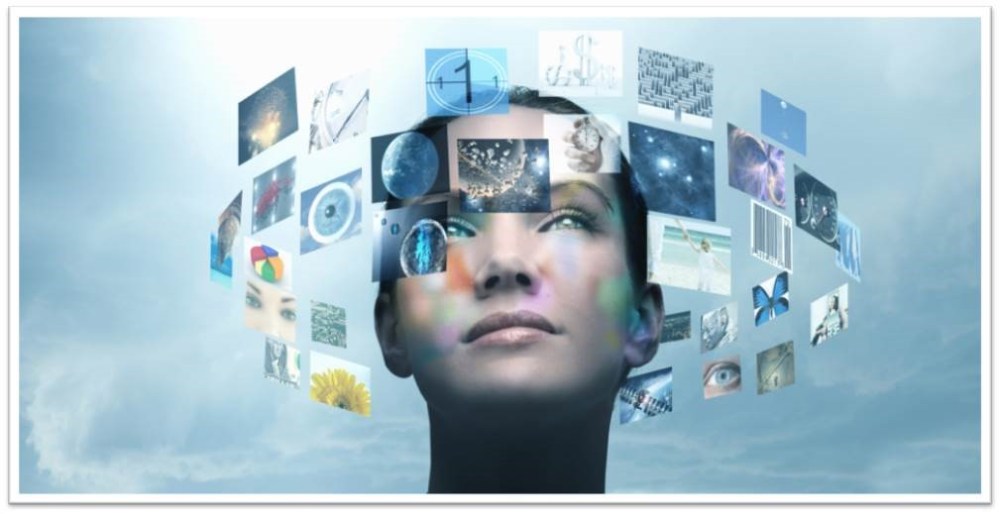
In this third and most recent economic era, the focus is on something intangible: data. Data that help create information that is turned into knowledge. In 1982, nearly 40 years ago, Peter Drucker was prescient enough to realize that a major change in the needs of corporations and labor force. name He realized that increasingly, people were working to produce information rather than things or goods and he referred to them as “knowledge workers.” These were employees who mass produced know-how and ideas. They spent their days fluidly moving between thinking and talking, meeting and deciding, researching and writing. They transformed data into information and then into knowledge. Increasingly, large corporations and our economy was quickly evolving, depending less on the work of backs or hands and more on brainpower. And yet the way corporations were managing, training and educating people did not evolve in parallel. Essentially, it remained static.
The way corporations train employees today is fundamentally the same as it was 100 years ago. Training is still pushed out as an event and primarily presented by a “sage-on-the-stage” even if that stage is online. The same schoolplace-in-the-workplace approach used during the previous industrial economy is widely used today. Employee management practices are still based on strategies that were created to manage hands – “command-and-control”, “knowledge is power,” siloed organizational structures with minimal collaboration across the enterprise, lack of transparency, “cube farms,” a limited use of communication technology. That’s the rule and not the exception.
We Crossed the Rubicon of Work, and it Was Deep … Really Deep
The agricultural economy and the industrial economy were more evolutionary than revolutionary.
For thousands of years people used their hands to produce everything from food to tractors, and work was labor-intensive. During this period, especially through both industrial revolutions, the way people structured organizations, and approached management and learning, was a result of the need to manage hands to maximize performance and expenditures.
The changes that have come in less than 50 years are a true revolution.
For the first time in history, we have an economy in which the majority of employees use their minds to produce the work they are paid for. These profound changes mean corporations now have no choice but to restructure our organizations, management models, and learning practices to align with and support this historic change. The new mind-intensive knowledge economy means corporations must embrace new ideas and models to ensure they are getting the smartest, most agile, innovative, creative, and collaborative workers.
Part Two: The Impact of the Great Divide and the Inflection Point
David Grebow, CEO of KnowledgeStar and former co-director of the IBM Institute for Advanced Learning, believes that the Internet of Smart Things (IosT) is the most significant opportunity that has come out of the IoT world, especially for manpower-intensive heavy industries. He spoke with Industrial Internet Now about IosT’s potential to humanize the IoT and realize companies’ returns.
What is the Internet of Smart Things and how does it differ from IoT in its implications on work as we know it?
The IoT was originally designed as an interconnected system of computing devices that could transfer data over a network. The original focus was to enable machine-to-machine transfer and display of data. The primary output was the data that informed a few people about how the interconnected devices were functioning. The emphasis was on managing that data, driving new business value from the investment of the infrastructure supporting the IoT, and finding more effective and efficient ways of doing business made possible by the IoT. It was not focused on how people could more safely and effectively use the machines, since there was no human-to-machine interface.
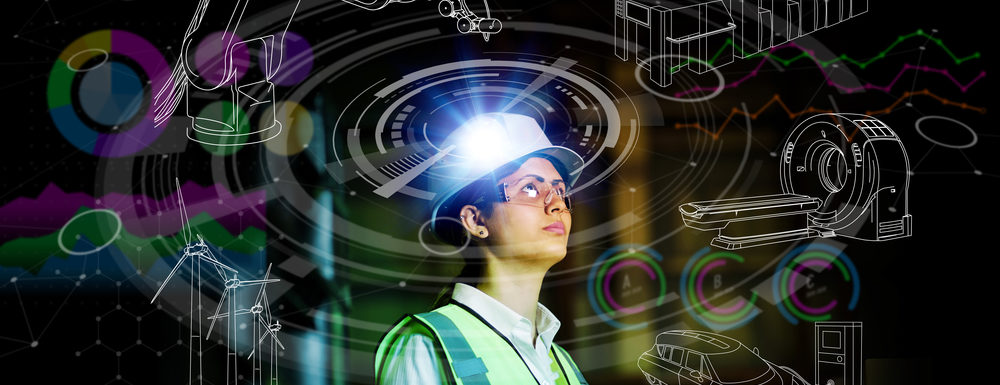
The Internet of Smart Things™ (IosT) incorporates that human-to-machine interface and uses the interconnected computing devices to alert and inform people about what they need to know and do to safely and effectively do their jobs. Imagine if the equipment you use in the workplace could show you what you need to know about how they operate, tell you how to use them correctly and efficiently in your native language, help you be safer working with or around them, offer you details to complete and submit regulatory forms and checklists. What if they could also show you how to fix them if they are broken, provide you with the schematics and diagrams you need, help you contact a mentor or emergency assistance, and more?
“Imagine if the equipment you use in the workplace could show you what you need to know about how they operate, tell you how to use them correctly and efficiently in your native language. What if they could also show you how to fix them if they are broken, provide you with the schematics and diagrams you need, help you contact a mentor or emergency assistance, and more?”
What if all this information was delivered automatically whenever you were within a short distance of the machine? Imagine if it was instantly and securely viewable from any nearby internet-connected device. Think of the enormous impact that could have: increasing safety, eliminating errors, boosting employee productivity, proving timely compliance, among others. It could dramatically reduce injuries and associated worker’s compensation and insurance costs – all of which would have an immediate and positive effect on the bottom line.
We’ve all heard and read about how the Internet of Things in the home will transform the ways in which we live. We’ve heard for years how your refrigerator is going to send a shopping list to your grocery store, your car will make an appointment for an oil change, and the blinds on your windows will automatically close as dusk falls.
What about the Internet of Things in the workplace? It seems to me that far more people have an immediate need for the machines they work with every day on the job to supply them with specific information.
While I can appreciate that having an expensive lathe machine tell me that there is a problem with the calibration of one of the lathes, having that same piece of machinery provide me with safety warnings, a way to access operational information I may have forgotten, a name of a person to call to solve an immediate problem, or a checklist of compliance issues that need to be completed before I operate it would be far more useful. That’s the Internet of Smart Things.
In the shift to a learning economy, what role will managers play, particularly in companies in more manpower-intensive heavy industries like ports and container handling, mining, automotive and general manufacturing? Also, with relation to industrial jobs, in what ways is IosT an opportunity?
Managers who are currently responsible for providing on-the-spot reminders and remedial training would be free to perform more important managerial jobs. Learning becomes the responsibility of the workers who can find out what they need to know and do using their smart devices – phones, tablets, or Google Glass EE – connected to the machines. Managers’ role will be to enable workers to use the IosT.
Managers will also be able to look at the analytics the IosT returns and see where training is hitting or missing the mark, find out who is acting as a go-to expert for operations or repairs, check to make sure regulatory guidelines and maintenance are being met on time, and more. Managers responsible for training will be able to see what parts of the training are working and which areas need to be revisited and revised.
In your writings, you’ve said that the IosT humanizes the IoT? In what way?
It adds people back into the equation. It takes machines that can essentially talk to one another and gives them the capability to literally talk to the workers operating and maintaining them.
You’ve also mentioned that the return on investment is easier to see with the IosT. How so?
According to the 2016 Training Industry Report, the manufacturing sector alone spent more than $25 million on training that year. Current research informs us that we forget as much as 50% of that training in a matter of days or weeks. That means that every dollar spent returns only 50 cents in value. The IosT is an antidote to forgetting since it provides not only just-in-time information; it can be designed to provide just-for-me initialized training as well.
Safety direct and indirect costs from injuries and accidents in the workplace have been estimated by the Occupational Safety and Health Administration, or OSHA – an agency of the United States Department of Labor – to amount to almost $1 billion per week. This ranges from medical payments to repairs of damaged equipment. Smart machines, driven by the IosT, would dramatically cut down these costs by reinforcing safety training and providing safety alerts and instructions. By ensuring that machinery was properly operated and maintained the indirect costs would also be reduced.
What, in your opinion, do responsible developers of technology need to consider in developing IoT systems to make the IosT a reality?
“The value of having a smart machine talking to other smart machines has already proven to be valuable. Incorporating the people who work on those smart machines into the equation makes the IosT even more important.”
The human-machine interface. There is an entire ecosystem that needs to be accounted for. Machine-to-machine data sharing is one element of the ecosystem. Human-to-machine interaction and connection is the other. The value of having a smart machine talking to other smart machines has already proven to be valuable. Incorporating the people who work on those smart machines into the equation makes the IosT even more important. It’s a viewpoint that asks a simple question: How can this technology be used to make life better for the people who work with these interconnected machines every day?
David Grebow heads KnowledgeStar, a US-based consulting firm that provides Fortune 500 corporations, start-ups, NGOs and analyst agencies with insight about the intersection of digital technology and education. His latest book, co-authored with Stephen J. Gill, “Minds at Work” will be published in December, 2018 by ATD Press.The Internet of Smart Things™ is trademarked by KnowledgeStar, Inc.
Originally published in Konecranes The Industrial Internet Now September 29, 2017

This turbulent cosmic pinnacle lies within a tempestuous stellar nursery called the Carina Nebula, located 7500 light-years away in the southern constellation of Carina.
Scorching radiation and fast winds (streams of charged particles) from super-hot newborn stars in the nebula are shaping and compressing the pillar, causing new stars to form within it. Streamers of hot ionised gas can be seen flowing off the ridges of the structure, and wispy veils of gas and dust, illuminated by starlight, float around its towering peaks. The denser parts of the pillar are resisting being eroded by radiation.
Nestled inside this dense mountain are fledgling stars. Long streamers of gas jets can be seen shooting in opposite directions from the pedestal at the top of the image. These jets are signposts for new star birth and are launched by swirling gas and dust discs around the young stars, which allow material to slowly accrete onto the stellar surfaces.
I love this image. It is all about new beginnings …
I’ve been writing this blog for such a long time that I became too familiar with the old look and feel. Until now. When I started these posts, I was just starting to scratch the surface of how technology could change the ways we learn. As one of my friends like to say, “Since Moby Dick was a minnow.” I have always been fascinated by how technology could enable, empower, and enhance the ways we learn.
I started before most of the educational technology we now have even existed. CD-ROMs had been replaced by Internet-driven online learning that was still new and being explored and evaluated. Formal learning in a classroom with a sage-on-the-stage was still the default and smile sheets continued to be the way the learning was assessed. LMS were just starting to be used to manage classrooms and the new online programs, and informal learning was still just a really bad idea. Some things changed, yet it feels like most of what we were doing then is what we are doing today.
So, what have I learned in all this time? Two important lessons.
First, learning as a natural human process has not changed in thousands of years. I’m still in awe of how we take in, remember, forget, and use what we learn. And no one, despite all the theories and ideas about education, has any real understanding of the process. Some theories and assumptions, many good guesses, lots of practical observations. And learning is still a wondrous mystery.
At the Inflection Point
Second, we are at the most dramatic inflection point in the history of work, and the implications for management and learning are profound.
We have come through two very different economic eras, each with a specific and different way of managing people and helping them learn to do their jobs. We are entering the third, and it is unlike anything that has ever come before. The first two periods – Agricultural driven by land, and Industrial driven by things – were labor-intensive. We produced work with our hands and learned to manage hands. Jobs were not as complex or constantly changing and we had time to learn, to take what we knew from school, or one job to another, and learn as we worked.
As we enter this newest period of history, driven by Knowledge, most of us produce work with our minds. The need to be an adept continual learner has become part of every job description. Technology has become an indispensable tool for the ways we learn.
If I could see all of you reading this post at this moment I would ask you the following question: How many of you produce work with your hands? I know that not many of your hands would go up. If I asked this question fifty years ago, when many people still worked with their hands, I would see 30-40% of the hands raised. In any audience one hundred years, ago almost every hand would be raised since just about everyone worked with their hands.
We measure our lives in tens of years not hundreds, so it feels like one hundred years is far away and long ago. In the span of history, it’s a barely a blink. And in this blink, most of the people on this planet have switched from producing work with their hands to producing work with their minds. That is new and has never happened before. Until recently it was a gradual evolution not a revolution. So, we have reached a profound inflection point in the history of work. The future is now all about learning how to manage minds.
Driving Forward Looking in the Rearview Mirror
The problem is that too many organizations are still acting as if we have not reached the inflection point. Their organizational structures and approaches to management and learning are disabling instead of enabling people to be successful. They are mired in a way of doing business that was developed when we were managing hands. What they are experiencing are a myriad of symptoms that are a result of trying to meet 21st century challenges with 20th century solutions. It does not work and there are enough companies in this century that have ended up in the Business Boneyard to prove the point. Either you evolve or you perish.
The implications are staggering and far-reaching, and that is what I will be writing about in this blog, and what I covered in my new book. If your future has anything to do with managing people, or enabling and empowering then to learn and grow professionally and personally, I recommend that you read what I discovered about how organizations are successfully learning to manage minds and thrive in the future. The research introduced me to some of the most forward-looking, smart and successful companies around the world who are quickly becoming models for what needs to be done.
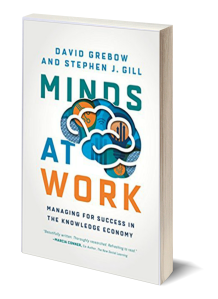
The book Minds at Work, co-authored with Stephen J. Gill, can be pre-ordered on Amazon and at other web bookstores.
And thank you to all of the many loyal readers who have been with me for any part of this learning journey. It will only get more interesting from here onward.
 David Grebow KnowledgeStar