The Future of Learning


Welcome to Learning in the Knowledge Economy

John Seely Brown is one of the best minds we have when it comes to how we learned in the 20th century, and more importantly, where we need to go in the 21st  … from a competitive strategy based on total command and control in a push-based economy that drove our educational model, to much more matrixed and collaborative organizations … from being organized around efficiency for mass production to being setup to focus on the “speed of learning … from push to pull where creativity is the key to this new economy ( read this for more ) .

Watch and learn …

Ah Training!


Ah Training!

We always knew that Independent Learning was the way …

The Two Biggest Trends in Education


I often write about what I believe are the reasons underlying the changes we see happening everyday. Two words sun them up:

  1. Digitization
  2. Disintermediation.

Here’s an example that neatly sums up the first.

From a TNW article June 8, 2012 Matt Brian

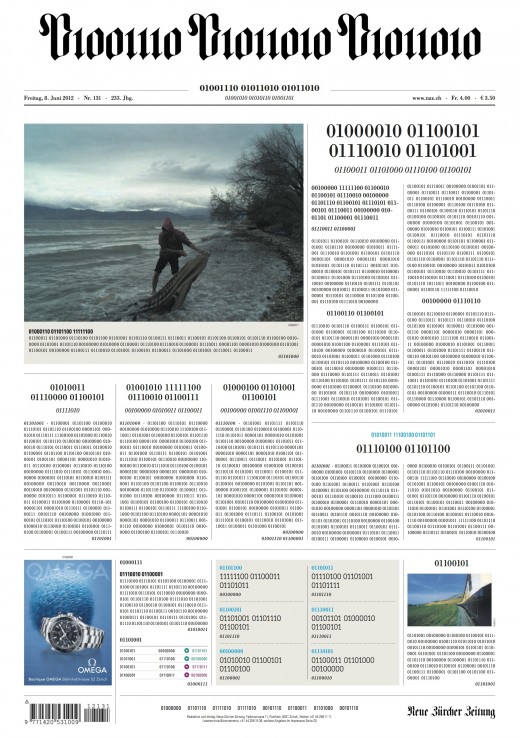
A Swiss newspaper, Neue Zürcher Zeitung (NZZ) decided to publish online only – digitization – and celebrated the first issue by publishing the front page of the new online version completely in code.


How-To Have a Great School System


What Americans Keep Ignoring About Finland’s School Success

By Anu Partanen

The Atlantic

The Scandinavian country is an education superpower because it values equality more than excellence.

finnish-kids.jpg
Sergey Ivanov/Flickr
Everyone agrees the United States needs to improve its education system dramatically, but how? One of the hottest trends in education reform lately is looking at the stunning success of the West’s reigning education superpower, Finland. Trouble is, when it comes to the lessons that Finnish schools have to offer, most of the discussion seems to be missing the point.

The small Nordic country of Finland used to be known — if it was known for anything at all — as the home of Nokia, the mobile phone giant. But lately Finland has been attracting attention on global surveys of quality of life — Newsweek ranked it number one last year — and Finland’s national education system has been receiving particular praise, because in recent years Finnish students have been turning in some of the highest test scores in the world.

Finland’s schools owe their newfound fame primarily to one study: the PISA survey, conducted every three years by the Organization for Economic Co-operation and Development (OECD). The survey compares 15-year-olds in different countries in reading, math, and science. Finland has ranked at or near the top in all three competencies on every survey since 2000, neck and neck with superachievers such as South Korea and Singapore. In the most recent survey in 2009 Finland slipped slightly, with students in Shanghai, China, taking the best scores, but the Finns are still near the very top. Throughout the same period, the PISA performance of the United States has been middling, at best.

Compared with the stereotype of the East Asian model — long hours of exhaustive cramming and rote memorization — Finland’s success is especially intriguing because Finnish schools assign less homework and engage children in more creative play. All this has led to a continuous stream of foreign delegations making the pilgrimage to Finland to visit schools and talk with the nation’s education experts, and constant coverage in the worldwide media marveling at the Finnish miracle.

So there was considerable interest in a recent visit to the U.S. by one of the leading Finnish authorities on education reform, Pasi Sahlberg, director of the Finnish Ministry of Education’s Center for International Mobility and author of the new book Finnish Lessons: What Can the World Learn from Educational Change in Finland? Earlier this month, Sahlberg stopped by the Dwight School in New York City to speak with educators and students, and his visit received national media attention and generated much discussion.

And yet it wasn’t clear that Sahlberg’s message was actually getting through. As Sahlberg put it to me later, there are certain things nobody in America really wants to talk about.

* * *

During the afternoon that Sahlberg spent at the Dwight School, a photographer from the New York Times jockeyed for position with Dan Rather’s TV crew as Sahlberg participated in a roundtable chat with students. The subsequent article in the Times about the event would focus on Finland as an “intriguing school-reform model.”

Yet one of the most significant things Sahlberg said passed practically unnoticed. “Oh,” he mentioned at one point, “and there are no private schools in Finland.”

This notion may seem difficult for an American to digest, but it’s true. Only a small number of independent schools exist in Finland, and even they are all publicly financed. None is allowed to charge tuition fees. There are no private universities, either. This means that practically every person in Finland attends public school, whether for pre-K or a Ph.D.

The irony of Sahlberg’s making this comment during a talk at the Dwight School seemed obvious. Like many of America’s best schools, Dwight is a private institution that costs high-school students upward of $35,000 a year to attend — not to mention that Dwight, in particular, is run for profit, an increasing trend in the U.S. Yet no one in the room commented on Sahlberg’s statement. I found this surprising. Sahlberg himself did not.

Sahlberg knows what Americans like to talk about when it comes to education, because he’s become their go-to guy in Finland. The son of two teachers, he grew up in a Finnish school. He taught mathematics and physics in a junior high school in Helsinki, worked his way through a variety of positions in the Finnish Ministry of Education, and spent years as an education expert at the OECD, the World Bank, and other international organizations.

Now, in addition to his other duties, Sahlberg hosts about a hundred visits a year by foreign educators, including many Americans, who want to know the secret of Finland’s success. Sahlberg’s new book is partly an attempt to help answer the questions he always gets asked.

From his point of view, Americans are consistently obsessed with certain questions: How can you keep track of students’ performance if you don’t test them constantly? How can you improve teaching if you have no accountability for bad teachers or merit pay for good teachers? How do you foster competition and engage the private sector? How do you provide school choice?

The answers Finland provides seem to run counter to just about everything America’s school reformers are trying to do.

For starters, Finland has no standardized tests. The only exception is what’s called the National Matriculation Exam, which everyone takes at the end of a voluntary upper-secondary school, roughly the equivalent of American high school.

Instead, the public school system’s teachers are trained to assess children in classrooms using independent tests they create themselves. All children receive a report card at the end of each semester, but these reports are based on individualized grading by each teacher. Periodically, the Ministry of Education tracks national progress by testing a few sample groups across a range of different schools.

As for accountability of teachers and administrators, Sahlberg shrugs. “There’s no word for accountability in Finnish,” he later told an audience at the Teachers College of Columbia University. “Accountability is something that is left when responsibility has been subtracted.”

For Sahlberg what matters is that in Finland all teachers and administrators are given prestige, decent pay, and a lot of responsibility. A master’s degree is required to enter the profession, and teacher training programs are among the most selective professional schools in the country. If a teacher is bad, it is the principal’s responsibility to notice and deal with it.

And while Americans love to talk about competition, Sahlberg points out that nothing makes Finns more uncomfortable. In his book Sahlberg quotes a line from Finnish writer named Samuli Paronen: “Real winners do not compete.” It’s hard to think of a more un-American idea, but when it comes to education, Finland’s success shows that the Finnish attitude might have merits. There are no lists of best schools or teachers in Finland. The main driver of education policy is not competition between teachers and between schools, but cooperation.

Finally, in Finland, school choice is noticeably not a priority, nor is engaging the private sector at all. Which brings us back to the silence after Sahlberg’s comment at the Dwight School that schools like Dwight don’t exist in Finland.

“Here in America,” Sahlberg said at the Teachers College, “parents can choose to take their kids to private schools. It’s the same idea of a marketplace that applies to, say, shops. Schools are a shop and parents can buy what ever they want. In Finland parents can also choose. But the options are all the same.”

Herein lay the real shocker. As Sahlberg continued, his core message emerged, whether or not anyone in his American audience heard it.

Decades ago, when the Finnish school system was badly in need of reform, the goal of the program that Finland instituted, resulting in so much success today, was never excellence. It was equity.

* * *

Since the 1980s, the main driver of Finnish education policy has been the idea that every child should have exactly the same opportunity to learn, regardless of family background, income, or geographic location. Education has been seen first and foremost not as a way to produce star performers, but as an instrument to even out social inequality.

In the Finnish view, as Sahlberg describes it, this means that schools should be healthy, safe environments for children. This starts with the basics. Finland offers all pupils free school meals, easy access to health care, psychological counseling, and individualized student guidance.

In fact, since academic excellence wasn’t a particular priority on the Finnish to-do list, when Finland’s students scored so high on the first PISA survey in 2001, many Finns thought the results must be a mistake. But subsequent PISA tests confirmed that Finland — unlike, say, very similar countries such as Norway — was producing academic excellence through its particular policy focus on equity.

That this point is almost always ignored or brushed aside in the U.S. seems especially poignant at the moment, after the financial crisis and Occupy Wall Street movement have brought the problems of inequality in America into such sharp focus. The chasm between those who can afford $35,000 in tuition per child per year — or even just the price of a house in a good public school district — and the other “99 percent” is painfully plain to see.

* * *

Pasi Sahlberg goes out of his way to emphasize that his book Finnish Lessons is not meant as a how-to guide for fixing the education systems of other countries. All countries are different, and as many Americans point out, Finland is a small nation with a much more homogeneous population than the United States.

Yet Sahlberg doesn’t think that questions of size or homogeneity should give Americans reason to dismiss the Finnish example. Finland is a relatively homogeneous country — as of 2010, just 4.6 percent of Finnish residents had been born in another country, compared with 12.7 percent in the United States. But the number of foreign-born residents in Finland doubled during the decade leading up to 2010, and the country didn’t lose its edge in education. Immigrants tended to concentrate in certain areas, causing some schools to become much more mixed than others, yet there has not been much change in the remarkable lack of variation between Finnish schools in the PISA surveys across the same period.

Samuel Abrams, a visiting scholar at Columbia University’s Teachers College, has addressed the effects of size and homogeneity on a nation’s education performance by comparing Finland with another Nordic country: Norway. Like Finland, Norway is small and not especially diverse overall, but unlike Finland it has taken an approach to education that is more American than Finnish. The result? Mediocre performance in the PISA survey. Educational policy, Abrams suggests, is probably more important to the success of a country’s school system than the nation’s size or ethnic makeup.

Indeed, Finland’s population of 5.4 million can be compared to many an American state — after all, most American education is managed at the state level. According to the Migration Policy Institute, a research organization in Washington, there were 18 states in the U.S. in 2010 with an identical or significantly smaller percentage of foreign-born residents than Finland.

What’s more, despite their many differences, Finland and the U.S. have an educational goal in common. When Finnish policymakers decided to reform the country’s education system in the 1970s, they did so because they realized that to be competitive, Finland couldn’t rely on manufacturing or its scant natural resources and instead had to invest in a knowledge-based economy.

With America’s manufacturing industries now in decline, the goal of educational policy in the U.S. — as articulated by most everyone from President Obama on down — is to preserve American competitiveness by doing the same thing. Finland’s experience suggests that to win at that game, a country has to prepare not just some of its population well, but all of its population well, for the new economy. To possess some of the best schools in the world might still not be good enough if there are children being left behind.

Is that an impossible goal? Sahlberg says that while his book isn’t meant to be a how-to manual, it is meant to be a “pamphlet of hope.”

“When President Kennedy was making his appeal for advancing American science and technology by putting a man on the moon by the end of the 1960’s, many said it couldn’t be done,” Sahlberg said during his visit to New York. “But he had a dream. Just like Martin Luther King a few years later had a dream. Those dreams came true. Finland’s dream was that we want to have a good public education for every child regardless of where they go to school or what kind of families they come from, and many even in Finland said it couldn’t be done.”

Clearly, many were wrong. It is possible to create equality. And perhaps even more important — as a challenge to the American way of thinking about education reform — Finland’s experience shows that it is possible to achieve excellence by focusing not on competition, but on cooperation, and not on choice, but on equity.

The problem facing education in America isn’t the ethnic diversity of the population but the economic inequality of society, and this is precisely the problem that Finnish education reform addressed. More equity at home might just be what America needs to be more competitive abroad.

More information

Professor Pasi Sahlberg’s website
Finnish Lessons”, by Pasi Sahlbert   
The OECD’s Better Life Index for Education
Nick Clegg speech on Social Mobility 
Roy Hattersley’s New Statesman review of “The Spirit Level: Why More Equal Societies Almost Always Do Better” by Richard Wilkinson and Kate Pickett
 
Professor John Seddon addressing California Faculty Association

“Yes, we are all in this together”, New Statesman 

Towards a Smarter Nation


Towards a Smarter Nation.

What Did You Learn in School Today?


MORNING MEETING School is in.

New York Times By  Published: April 13, 2012

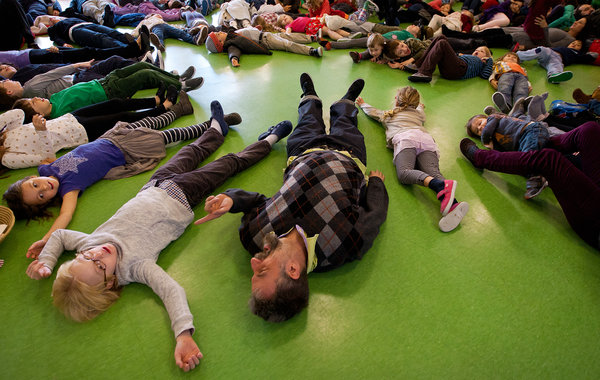
LAST month, two kindergarten classes at the Blue School were hard at work doing what many kindergartners do: drawing. One group pursued a variation on the self-portrait. “That’s me thinking about my brain,” one 5-year-old-girl said of her picture. Down the hall, children with oil pastels in hand were illustrating their emotions, mapping where they started and where they ended. For one girl, sadness ended at home with a yummy drink and her teddy bear.

REFLECTION David Kelly, director of curriculum at the Blue School, meets weekly with the kindergarten teachers.

Grappling so directly with thoughts and emotions may seem odd for such young brains, but it is part of the DNA of the Blue School, a downtown Manhattan private school that began six years ago as a play group. From the beginning, the founders wanted to incorporate scientific research about childhood development into the classroom. Having rapidly grown to more than 200 students in preschool through third grade, the school has become a kind of national laboratory for integrating cognitive neuroscience and cutting-edge educational theory into curriculum, professional development and school design.

“Schools were not applying this new neurological science out there to how we teach children,” said Lindsey Russo, whose unusual title, director of curriculum documentation and research, hints at how seriously the Blue School takes this mission. “Our aim is to take those research tools and adapt them to what we do in the school.”

So young children at the Blue School learn about what has been called “the amygdala hijack” — what happens to their brains when they flip out. Teachers try to get children into a “toward state,” in which they are open to new ideas. Periods of reflection are built into the day for students and teachers alike, because reflection helps executive function — the ability to process information in an orderly way, focus on tasks and exhibit self-control. Last year, the curriculum guide was amended to include the term “meta-cognition”: the ability to think about thinking.

“Having language for these mental experiences gives children more chances to regulate their emotions,” said David Rock, who is a member of the Blue School’s board and a founder of NeuroLeadership Institute, a global research group dedicated to understanding the brain science of leadership.

That language is then filtered through a 6-year-old’s brain.

Miles, one of the kindergartners drawing their emotions, showed off his picture and described the battle it depicted between happiness and anger this way: “The happy fights angry, but angry gets blocked by the force field and can’t get out.” Happiness could escape through his mouth, Miles explained. But anger got trapped, turning into sadness.

With ample research showing that negative emotions impede learning while positive emotions broaden children’s attention and their ability to acquire and retain information, strategies for regulating emotions are getting more emphasis in progressive schools across the country.

“The science of learning is something teachers are paying more and more attention to,” said Mariale Hardiman, director of the Neuro-Education Initiative at the Johns Hopkins University School of Education. She was not familiar with the Blue School but said she would endorse any school trying to integrate academic and emotional education.

“We can no longer think that the two systems are separate,” Dr. Hardiman said, “and that children should leave their emotions at the door.”

For all the attention brain science is receiving in schools, experts say it is too soon to know whether its application will lead to improved academic outcomes. And some researchers say that while they embrace new ideas — especially around self-control — they personally prefer a more traditional approach to pedagogy.

“The older approach has led to some very good outcomes,” said Sam Wang, an associate professor of molecular biology and neuroscience at Princeton University and co-author of “Welcome to Your Child’s Brain,” a child development primer for parents.

But the Blue School clearly has its appeal. This year, it had eight applications for each spot in its program for 3-year-olds, making it a typically hypercompetitive Manhattan private school. Tuition for students in kindergarten through third grade is $31,910 a year.

 “I’m never anxious about academics,” said Thomas Bierer, the father of first-grade twins who have been at the school for two years. “My main thing is how they will interact with others and what kind of people will they be.”

Ruth Fremson/The New York Times

TRIP PLANNING Shanon Greenfield and her first-grade class carefully plotted a visit to the New York Aquarium in Coney Island.

Started in 2006 by members of the Blue Man Group, an alternative theater troupe, and their wives, the school’s original mission was to “reimagine education for a changing world.” The goal was to nurture creative and adaptive learners, not to teach students to digest and regurgitate facts and formulas. It considers itself a lab school, where teachers, parents and students collaborate; there are plans to have a teacher training program by 2013.

Teachers ask questions but rarely offer answers, instead helping students learn from one another. “Learning is not an individual act,” David Kelly, the school’s director of curriculum, said. “It’s a social act.”

In November, Shanon Greenfield asked her first graders what they wanted to study. Sharks and leaves each developed a strong following. Over weeks of discussion, the students decided they should go to an aquarium to learn more about one of the topics they had picked. Ms. Greenfield posted a road map for their research. What do they know? What do they want to know? How will they find it out?

The students set goals: Pick an aquarium, figure out how to get there, plan what to do while there and afterward. By mid-January, they were pondering transportation options: school bus (free) or ferry (one student thought it was most direct). They set a deadline for the trip, and in February visited the New York Aquarium in Coney Island — by bus.

“The end goal is not facts about sharks,” Ms. Greenfield said. “It’s not to recreate anything. The end goal is the process.”

Other progressive schools in Manhattan and across the country take a child-centered approach to education, with a heavy dose of social and emotional learning. But many of them turn toward a traditional academic curriculum by second or third grade. Testing, with all of its anxiety, kicks in, and content, not process, becomes paramount.

This being New York, even Blue School parents are not immune. Starting last year, when the oldest children in the school became second graders, parents began voicing increasing concern about the school’s lack of traditional assessments. The school had been preoccupied with moving almost every previous year. But with a permanent home established on Water Street, the parents, in town hall-style meetings and group discussions, asked the school to do more testing.

One parent who supported the push was David Beal, an adviser to the president of National Geographic, who noted that the school will end at fifth grade and that the children will be thrust into a test-happy world. “We don’t want to find out after we’ve left that we’ve missed some important chunk of learning,” he said.

The school responded. Four-year-olds are now being given a standard private school assessment, and this year for the first time, third graders will take the E.R.B., a widely used test.

Even with the changes, the Blue School is not for everyone. Emily Glickman, founder of Abacus Guide Educational Consulting, said her clients found it a “little too artsy and alternative.”

“I find more and more, for their tuition dollars, families want tradition, structure and the three R’s,” she said.

Dr. Daniel J. Siegel, a neuropsychiatrist and co-author of the parenting guide “The Whole-Brain Child,” who is also an adviser to the school, said there were three others R’s: reflection, relationships and resilience — and schools should teach those, too.

He spent three days at the school in late March working with students, teachers and parents on topics ranging from what learning is to why multitasking was not good for the brain (concentration is better at creating neural connections, which result in long-term synaptic change, otherwise known as learning). “Kids who learn social and emotional skills do better academically,” Dr. Siegel said. “They are happier, and their emotions are more rewarding.”

So what happens when you do too much multitasking, he asked some third graders. “Your brain explodes,” said one girl, squirming. “Ew.”

WARNING! Adult Content!


Great Learning Experiences Number 3478


This is so over the top that I won’t even comment. Let’s just say that it’s a brilliant use of technology – in this case augmented reality – in a presentation that makes it easy for your short-term memory to commute to the land of the long-term.

Ouch! The Truth Hurts


This would be funny if it was not really happening.

The responsibility for knowledge and know-how is being placed on the learner and not necessarily on the company anymore. I believe there are some huge implications to this trend:

  • The gap between the people who have the ability to be lifelong learners, and those who cannot get out of the more formal feed-me learning mode, will grow wider. Income will follow the ones who can learn on their own not the ones who have the most degrees or letters after their name.
  • Providing certificates for people who are learning all the time through the programs they take, from self-paced to webinars, virtual classes to conferences, will be a necessity in a world in which people want to prove what they learned. “Those outside of companies with skill-building curriculae can’t obtain legitimacy in those skillsets without being an employee. The more people are culling unassociated resources and experiences to learn specific skills, the more urgent it is for there to be a place for them to record their efforts and success, to study with peers, and to present their learning portfolios to future employers or partners in a meaningful way.” Fast Company
  • Independent learning is dependent on technology for reach and currency. Countries with the best, fastest most up-to-date online learning technologies will become the leaders in this hyper-competitive marketplace.
  • The formal school system is a disaster of epic proportions. If you disagree spend some time looking up the statistics on things like
    • drop-out rates from 2000 until today
    • average reading levels at graduation for those who get through the system
    • illiteracy rates from 1900 until today
    • comparisons of math and science test scores with other countries.

When you cross-reference these system failures with other countries you discover a startling fact. The countries that are ahead of us are the ones with the best on-your-own education systems. It’s not the formal school system that is giving them the lead but the system that enables their citizens to learn and continue learning on their own.

  • Teaching-to-the-test is a dumb idea. It does not produce people who can master learning on-your-own. Instead the outcome is a person who can memorize and forget and not really learn anything except how to take a test and move from one grade to another. The teaching-to-the-test approach does no one any favors. At best, it is a band-aid on a broken system. At worst, it is responsible for the dumbing-down of America.
  • The current educational model is ancient. Based on the Industrial Age necessity of churning out good soldiers (literally where it started) it was never designed to produce independent critical learners who were capable of learning on their own or with one another.
  • Teaching people to learn is far more important than teaching them a subject. Mastery never came out of a class anyway, and blended learning that married informal and formal modes of learning always trumped formal-only learning.
  • Khan Academy is one of the more brilliant uses of learning technology that seamlessly blends learning on-your-own with being helped to master a concept with a mentor or facilitator. The flipping of the schoolwork and homework into a more effective model of learning is a revolution in education. It can be used from Pre-K to Lifelong learning.

So the upshot is pretty simple. We need to revamp the educational system to produce great learners. It’s totally possible for several compelling reasons:

  1. People are born, to one degree or another, with the innate capability to be brilliant learners. Study infants in their first 5 years as they master walking, running, eating, talking, and so much more. Thank goodness school does not start during this period of exploration, discovery, trying, failing and succeeding. It’s only when we place them into the formal school system that they learn to be stupid.
  2. There already are great new approaches that are succeeding. I mentioned Khan Academy. There are others. So there is no longer any excuse for not replacing the outdated failed dysfunctional model of education with a new, better, brighter and more functional model of learning.

No reason that is except for a mountain of resistance: entrenched stakeholders in the old system; the politics of hold-the-line; stubborn inertia; “teachers” unions; teachers themselves; bureaucrats and their selfish bureaucracies; Boreds of Education; lots of people who hold the old dear and the fear the new; well-intentioned people without a desire to really see the system change … and more.

But despair not, change will come to the educational system, it will just take time. Planks Principle about the way science changes is worth repeating here. In his autobiography, Planck remarks that a “new scientific truth does not triumph by convincing its opponents and making them see the light, but rather because its opponents eventually die, and a new generation grows up that is familiar with it.”

It’s no wonder that a visionary like Sal Kahn literally started his brilliant game-changing program in a closet …

Brain Rules for Classes


One of the biggest reasons people like learning online, especially late at night,  is that it’s a great way to get to sleep.

Just joking. Not. The following interview was originally written as Brain Rules for Meetings. As I read it, I was struck by the realization that it applies even more so as Brain Rules for Classes. It is right to the point about the ways that we need to be Great Instructors in our classes (which after all is and done are not essentially different than a meeting). What I find amazing is how many Teachers – Instructors – Lecturers do not follow the rules.

For those of you pressed for time, here’s a quick summary of the 3 key rules or “Brain Gadgets” that guarantee a really good class presentation:

  1. Start with the meaning of what you’re talking about, not the details. Details are b o r i n g, meaning is everything
  2. You have 10 minutes before the brain checks out … that means a powerful start EVERY 10 minutes if you want to hold their attention
  3. Key in on the 6 Big Questions everyone asks in any meeting or class that you need to answer … especially Question 5 and 6. I won’t even try and sum those up, so read on ….
Molecular biologist John Medina, speaker and author of the best-selling book Brain Rules: 12 Principles for Surviving and Thriving at Work, Home, and School, didn’t set out to become a media star. But he got so fed up with encountering myths about the brain – that you use only 10 percent of it, for example, or that there are right- and left- brain personalities – that he once threw a magazine across a seat on an airplane. (The flight, he notes, wasn’t full.) “So I decided to write Brain Rules,” Medina said, “as an attempt to say, ‘Look, here’s what we do know, here’s what we don’t know, here are a few things you can try that might have an application in the business world – and the meetings world as well.'”

Not that Brain Rules will tell you how the brain operates. “We don’t know squat about how the brain works,” said Medina, who has focused on brain research for nearly three decades. He added: “I don’t know how you know how to pick up a glass of water and drink it. But we do know the conditions that [the brain] operates best in, even if we don’t know all the ins and outs of that operation.”

Which of the 12 Brain Rules has the most impact on meetings?

Well, probably, the biggest one would have to be about attentional states. This rule is very simple: People don’t pay attention to boring things. So if you really want to have a lousy meeting, make sure it’s boring. If you want to have a lousy classroom, make sure it’s boring. And if you want to vaccinate against the types of things that really do bore the mind, we have some understanding of that.

So how do you design a good meeting?

Here are the top three “brain gadgets” that probably have a bearing on the question. First, the human brain processes meaning before it processes detail. Many people, when they put meetings together, actually don’t even think about the meaning of what it is they’re saying. They just go right to the detail. If you go to the detail, you’ve got yourself a bored audience. Congratulations.

Second, in terms of attentional states, we’re not sure if this is brain science or not, but certainly in the behavioral literature, you’ve got 10 minutes with an audience before you will absolutely bore them. And you’ve got 30 seconds before they start asking the question, “Am I going to pay attention to you or not?” The instant you open your mouth, you are on the verge of having your audience check out. And since most people have been in meetings – 90 percent of which have bored them silly – they already have an immune response against you, particularly if you’ve got a PowerPoint slide up there.

How do you then hold attention?

This is what you have to do in 10 minutes. You have to pulse what I just said – the meaning before detail – into it. I call it a hook. At nine minutes and 59 seconds, you’ve got to give your audience a break from what it is that you’ve been saying and pulse to them once again the meaning of what you’re saying.

What is the third “brain gadget”?

The brain cycles through six questions very, very quickly. Question No. 1 is “Will it eat me?” We pay tons of attention to threat. The second question is “Can I eat it?” I don’t know if you have ever watched a cooking show and have loved what they are cooking, but you pay tons of attention if you think there’s going to be an energy resource. Question No. 3 is highly Darwinian. The whole reason why you want to live in the first place is to project your genes to the next generation – that means sex. So Question No. 3 is “Can I mate with it?” And Question No. 4 is “Will it mate with me?”

It turns out we pay tons of attention to – it actually isn’t sex per se, it’s reproductive opportunity. [It is also] hooked up to the pleasure centers of your brain – the exact same centers you use when you laugh at something. Oddly enough, I think that’s one of the reasons why humor can work. If you can pop a joke or at least tell an interesting story, it’s actually inciting those areas of the brain that are otherwise devoted to sex. You don’t become aroused by listening to a joke. I’m saying those areas of the brain can be co-opted. You can utilize them, and a good speaker knows how to do that.

What are Questions 5 and 6?

“Have I seen it before?” and “Have I never seen it before?” We are terrific pattern matchers. There is an element of surprise that comes when patterns don’t match, but the reason why that happens is because we are trying to match patterns all the time.

Is there a Brain Rule that addresses whether you should try to control the use of laptops and phones during a meeting session?

I have this rule response, based on data, and then I have a visceral response, also based on data. In other words, I’m about ready to tell you a contradiction. Are you ready?

Yes, I am.

Alrighty. I do believe what you can show is that there are attentional blinks. The brain actually is a beautiful multitasker, but the attentional spotlight, which you use to pay attention to things, [is not]. You can’t listen to a speaker and type what they are saying at the same time.

What you can show in the laboratory is that you get staccato-like attentional blinks. Just like you come up for air: You look at the speaker, then when you’re writing, you cannot hear what the speaker is saying. Then you come up for air and hear the speaker again. So you’re flipping back and forth between those two, and your ability to be engaged to hear what a speaker is saying is necessarily fragmented.
At the same time, if your speaker is boring, you could have checked out anyway. So you see, in many ways it depends upon the speaker.

How so?

If the speaker is really compelling and is clear and is emotion- ally competent, and has gone through those six questions, letting you come up for air every 10 minutes, I’ve actually watched audiences put their laptops away just to pay attention.

I have a style that is purposely a little speedier. And the reason why is that it produces a tension that says, “I need to pay attention closely to him or I’m going to lose what he’s saying.” I don’t make it so fast that it’s unintelligible – at least I hope I don’t. But I do make it fast, and occasionally I see comments that say, “Great speaker, but you know, you were too freaking fast.”

This interview originally appeared in the Professional Convention Management Association (PCMA) magazine