The Brain in the 21st Century


Brain Rules

This is where it all happens. All that I am and will  be. We’ve learned so much about how we learn and know so little. And use even less!

I love “Brain Rules” by John Medina because it translates what little we know abot how the brain learns into easy to digest and use chapters.

If you want add the current neuroscience about how the brain learns to your ability to teach any type of Knowledge Transfer to another human from birth to whenever, then please read this book and start using the lessons learned.

Failure Is NOT An Option


Well, there you have it … as often is the case Dilbert sums up the mess we’ve gotten ourselves into … without failure there can be no real learning, since real learning requires practice over time to adopt and adapt what you know and can do … under an ever-changing variety of circumstances.

If experience is the best teacher, then corporations that do not reward real learning – trying , failing, succeeding – have fired the best teacher.

Actually she was never hired …

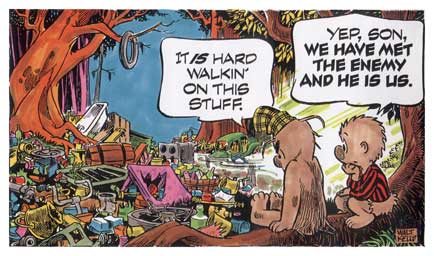
It’s like another great cartoon character, Pogo, told us years ago ,

“We have met the enemy … and he is us.”

The Real Meaning of mLearning


The mobile web has eradicated any wired person’s dilemma whether to be offline in the real world, or online and stuck in one location (an office cube, a living room, or worse, the basement).

Offline is now online, and online is offline.

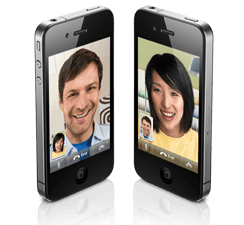
mLearning will be the driver for Learning 2.0. Today’s smartphones and tablets – e.g. iPhones and iPads – are just the beginning. We now have real meaning when we say learning anytime anyplace. It first meant someplace other than the classroom. Now it means the freedom to learn when and where you need to know.

The implications for learning are as profound as the creation of the formal educational system. That system was created to support an Industrial Economy where mass production required mass consumption. Learning 1.0 was all about learning as an event, a beginning and an end, ADDIE, Kirkpatrick’s Levels, SCORM and ‘asses in classes”.

Learning 2.0 is all about performance, connection and conversation, mentoring and support, learning as a process that occurs over time and can now be supported with mlearning when and where you need to learn.

The implications for design and delivery are profound. Courselets. 10 minute time limits. Compelling emotional stories to pull a learner in and provide lessons from the real world …

… that’s only the beginning. There’s the added benefits of Social Media and Social Networking = Social Learning. The mind boggles …

Welcome to the new world of mLearning. Like my friend Marcia Connor says in one of her new Learnativity posts (which I recommend you RSS ASAP) “In Naming Elephants, Sue Hammond and Andrea Mayfield write, “Ignorance and knowledge grow at the same rate because the more you know, the more you know you don’t know.””

Get used to it … the more you can learn about mlearning, the more you know you don’t know. Like the unk-unk I use in groups to whom I speak. It means the unknown unknown. You can’t know what you don’t know. You can only keep learning, and discovering, and pushing the boundaries of your expectations aside.

Back to the Future


Sometimes I think we already knew then what we are learning today. Take a music break and learn a lesson:

Extraordinary App for Education


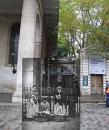
I’m not selling smartphones but you just have to look at this augmented reality app from the Museum of London called “Streetmuseum“. Talk about bringing history alive.

How would you use it to help learners learn?

I’ll start with one – a thriving small business that was a microloan start-up with an augmented reality picture of the gross empty lot that was there a year ago. Use it to motivate people who are learning how to write a simple business plan to get a microloan to start a small business. After seeing a number of augmented success stories, and then walking right into the business and talking with the owners about their experiences.

Out of the classroom and into the street, that’s where learning needs to go more often.

“It’s the brain, stupid!”


It seems a bit crazy to me that people who are responsible for creating educational programs for adults fail to listen and learn from the amazing work being done in the Neuroscientists and others who are discovering how we learn.

They are learning how we send ideas from our short-term to our long-term memories; why ten minutes is the maximum amount of time we can pay attention; when a lesson learned becomes part of one’s life.

… and so much more. I tried to capture some of it here. Hopefully it will shake you out of the Industrial Economy box in which all of the educational theories you hold so dear were created. To be replaced by a real understanding (and the principles, rules, methods and approaches that follow) of the miraculous ability of our brains to learn.

Here’s the link:

http://www.slideshare.net/KnowledgeStar/how-adults-learn

We Are No Longer the Gatekeepers of Knowledge


Chris Collison and Geoff Parcell, in their recently updated book and CD, “Learning to Fly”, have what I believe is a paradigm shifting insight into our professional lives:

“You can’t manage knowledge. Nobody can. What you can do is to manage the environment in which knowledge can be created, discovered, captured, shared, distilled, validated, transferred, adopted, adapted and applied.”

What do you think? Can we still manage knowledge, or has technology stripped the power out of our hands and given it to anyone, anytime and anywhere? And if they’re right, what new role should we take?

I’ve been giving this a lot of thought and have come to the conclusion that we need to become any or all of the following:

  • Knowledge Traffic Cops
  • Translators of Techspeak into (whatever language the non-technical folks in your country speak)
  • eKnowledge Librarians
  • Mentors
  • Coaches
  • Tutors

We are no longer the gatekeepers of knowledge.

If anything, we are the bottlenecks, the place where all the people who need to learn and to know how to do, get put into line and told when and where and how they can access what they need today, right now.

I remember Instructor Led Training programs that had waiting lists of hundreds of people who needed a certification course but had to hold off on their careers until there was an opening for them to get to the knowledge.

I think we had the impression that we ‘owned’ the knowledge … back then perhaps we did.  But that’s no longer true …

What do you think?

All Communication is Education


I came across this presentation, and it’s two mantras about education and learning, and decided to post it for anyone reading this who has NOT yet made the connection …  social media, social networking,  online learning and more – much more – are all communication, and all communication is learning.

The second point is the one I have been hammering home for years, ever since the Knowledge Economy became the dominant way of life and living, like the Agricultural and Industrial Economy’s which it preceded.

“”Teachers are no longer the gatekeepers of knowledge.”

But they are more important than ever …

Plus there’s a third reason. I really like it when an outsider looks in at our industry, which tends like all others, to be  dominated by insiders. It a refreshing and in some instances, eye-opening experience.

So sit back and click through to see how you look from the outside …

I want to end it with a quote I recently found:

“You can’t manage knowledge. Nobody can. What you can do is to manage the environment in which knowledge can be created, discovered, captured, shared, distilled, validated, transferred, adopted, adapted and applied.”
Chris Collison and Geoff Parcell, Learning to Fly

Finally! The Hogwart’s Library is Real


From the very first time I used hypertext (over 30 years ago) I fell in love with it. I declared to everyone I knew that this was The Future of writing and reading.

I have been studying the history of writing from the invention of the printing press and the incunabula,  through the point&click functionality of word processing programs on the PC.

I remember being amazed by Encarta the hypertext encyclopedia and thinking Bill Gate’s book, “The Road Ahead”, with it accompanying CD that included, among other things, the book in searchable hypermedia, was in fact the road ahead to the future.

If this video is a precursor of things to come, then Gates might very well have been right …

Read on for more …

Read More

Using Social Media for Learning


I’m not only a big proponent of social media, I’m also an educator who develops learning programs for companies and organizations. I love it when I see a blog that collects great information and other related sites … it’s one of the reasons I blog. This one from the eLearning Blog by Tony Karrer is a great example for anyone who is involved with learning and social media.

Take it away Tony …

Read More