Learning Tip Number 3: Why Storytelling Works
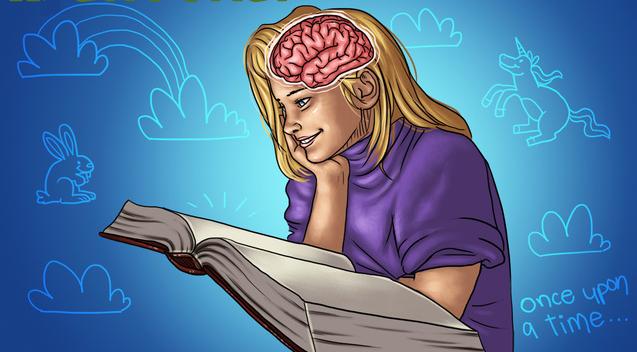

Image

I love it when someone comes up with the science to prove what I’ve learned through trial&error. Leo Widrich makes the most convincing case for storytelling that I yet read. If you are not incorporating storytelling into your training or education programs, then this article should push you over the top. Stories are not only the most powerful way to activate out brains they are the best way to make the spaghetti of learning bits stick to the synapses. Plus I learned why my significant other usual tells a related story from her life whenever we are talking about anything. Used to drive me crazy until I read this article …

I remember the first time I used storytelling in a leadership training program.

“It was a dark and stormy night …”

The Science of Storytelling: Why Telling a Story is the Most Powerful Way to Activate Our Brains

Leo Widrich

A good story can make or break a presentation, article, or conversation. But why is that? When Buffer co-founder Leo Widrich started to market his product through stories instead of benefits and bullet points, sign-ups went through the roof. Here he shares the science of why storytelling is so uniquely powerful.

In 1748, the British politician and aristocrat John Montagu, the 4th Earl of Sandwich, spent a lot of his free time playing cards. He greatly enjoyed eating a snack while still keeping one hand free for the cards. So he came up with the idea to eat beef between slices of toast, which would allow him to finally eat and play cards at the same time. Eating his newly invented “sandwich,” the name for two slices of bread with meat in between, became one of the most popular meal inventions in the western world.

What’s interesting about this is that you are very likely to never forget the story of who invented the sandwich ever again. Or at least, much less likely to do so, if it would have been presented to us in bullet points or other purely information-based form.

For over 27,000 years, since the first cave paintings were discovered, telling stories has been one of our most fundamental communication methods. Recently a good friend of mine gave me an introduction to the power of storytelling, and I wanted to learn more.

Here is the science around storytelling and how we can use it to make better decisions every day:

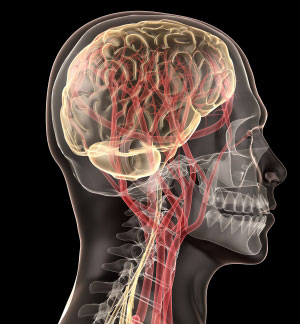
Our brain on stories: How our brains become more active when we tell stories

We all enjoy a good story, whether it’s a novel, a movie, or simply something one of our friends is explaining to us. But why do we feel so much more engaged when we hear a narrative about events?

It’s in fact quite simple. If we listen to a PowerPoint presentation with boring bullet points, a certain part in the brain gets activated. Scientists call this Broca’s area and Wernicke’s area. Overall, it hits our language processing parts in the brain, where we decode words into meaning. And that’s it, nothing else happens.

When we are being told a story, things change dramatically. Not only are the language processing parts in our brain activated, but any other area in our brain that we would use when experiencing the events of the story are too.

If someone tells us about how delicious certain foods were, our sensory cortex lights up. If it’s about motion, our motor cortex gets active:

“Metaphors like “The singer had a velvet voice” and “He had leathery hands” roused the sensory cortex. […] Then, the brains of participants were scanned as they read sentences like “John grasped the object” and “Pablo kicked the ball.” The scans revealed activity in the motor cortex, which coordinates the body’s movements.”

A story can put your whole brain to work. And yet, it gets better:

When we tell stories to others that have really helped us shape our thinking and way of life, we can have the same effect on them too. The brains of the person telling a story and listening to it can synchronize, says Uri Hasson from Princeton:

“When the woman spoke English, the volunteers understood her story, and their brains synchronized. When she had activity in her insula, an emotional brain region, the listeners did too. When her frontal cortex lit up, so did theirs. By simply telling a story, the woman could plant ideas, thoughts and emotions into the listeners’ brains.”

Anything you’ve experienced, you can get others to experience the same. Or at least, get their brain areas that you’ve activated that way, active too:

The Science of Storytelling: Why Telling a Story is the Most Powerful Way to Activate Our Brains


Evolution has wired our brains for storytelling—how to make use of it

Now all this is interesting. We know that we can activate our brains better if we listen to stories. The still unanswered question is: Why is that? Why does the format of a story, where events unfold one after the other, have such a profound impact on our learning?

The simple answer is this: We are wired that way. A story, if broken down into the simplest form, is a connection of cause and effect. And that is exactly how we think. We think in narratives all day long, no matter if it is about buying groceries, whether we think about work or our spouse at home. We make up (short) stories in our heads for every action and conversation. In fact, Jeremy Hsu found [that] “personal stories and gossip make up 65% of our conversations.”

Now, whenever we hear a story, we want to relate it to one of our existing experiences. That’s why metaphors work so well with us. While we are busy searching for a similar experience in our brains, we activate a part called insula, which helps us relate to that same experience of pain, joy, or disgust.

The following graphic probably describes it best:

The Science of Storytelling: Why Telling a Story is the Most Powerful Way to Activate Our Brains


In a great experiment, John Bargh at Yale found the following:

“Volunteers would meet one of the experimenters, believing that they would be starting the experiment shortly. In reality, the experiment began when the experimenter, seemingly struggling with an armful of folders, asks the volunteer to briefly hold their coffee. As the key experimental manipulation, the coffee was either hot or iced. Subjects then read a description of some individual, and those who had held the warmer cup tended to rate the individual as having a warmer personality, with no change in ratings of other attributes.”

We link up metaphors and literal happenings automatically. Everything in our brain is looking for the cause and effect relationship of something we’ve previously experienced.

Let’s dig into some hands on tips to make use of it:

Exchange giving suggestions for telling stories

Do you know the feeling when a good friend tells you a story and then two weeks later, you mention the same story to him, as if it was your idea? This is totally normal and at the same time, one of the most powerful ways to get people on board with your ideas and thoughts. According to Uri Hasson from Princeton, a story is the only way to activate parts in the brain so that a listener turns the story into their own idea and experience.

The next time you struggle with getting people on board with your projects and ideas, simply tell them a story, where the outcome is that doing what you had in mind is the best thing to do. According to Princeton researcher Hasson, storytelling is the only way to plant ideas into other people’s minds.

Write more persuasively—bring in stories from yourself or an expert

This is something that took me a long time to understand. If you start out writing, it’s only natural to think “I don’t have a lot of experience with this, how can I make my post believable if I use personal stories?” The best way to get around this is by simply exchanging stories with those of experts. When this blog used to be a social media blog, I would ask for quotes from the top folks in the industry or simply find great passages they had written online. It’s a great way to add credibility and at the same time, tell a story.

The simple story is more successful than the complicated one

When we think of stories, it is often easy to convince ourselves that they have to be complex and detailed to be interesting. The truth is however, that the simpler a story, the more likely it will stick. Using simple language as well as low complexity is the best way to activate the brain regions that make us truly relate to the happenings of a story. This is a similar reason why multitasking is so hard for us. Try for example to reduce the number of adjectives or complicated nouns in a presentation or article and exchange them with more simple, yet heartfelt language.

Quick last fact: Our brain learns to ignore certain overused words and phrases that used to make stories awesome. Scientists, in the midst of researching the topic of storytelling have also discovered, that certain words and phrases have lost all storytelling power:

“Some scientists have contended that figures of speech like “a rough day” are so familiar that they are treated simply as words and no more.”

This means, that the frontal cortex—the area of your brain responsible to experience emotions—can’t be activated with these phrases. It’s something that might be worth remembering when crafting your next story.
 

Digital Immigrants Zero, Digital Natives Won


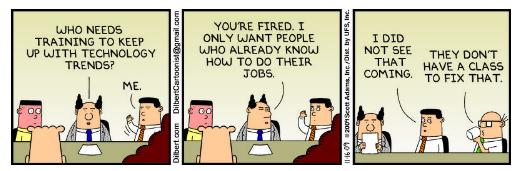
dilbert on training

I recently read this and had an epiphany about why older workers over 40 are becoming an endangered species, not only in the high tech industry but in companies worldwide.

“Besides the problem of “older engineers who face rapid skill obsolescence and deteriorating job opportunities,” they wrote, there’s a switch in how U.S. companies regard their employees – from a “high commitment system,” which puts a premium on long-term employment and on-the-job training, to a “high innovation system.” “Engineers are typically hired because their skills and knowledge are required for a specific technology or product being developed,” they wrote. “This system is seen as cost effective, since the company can hire required skills and does not have to retrain experienced workers, who usually command higher wages than new graduates. Of course, this puts engineers, who are no longer retrained by their companies, at a disadvantage as they age.” From SFGate.

I come from a generation of continuing education – workers who were tagged to go from event to event to learn new skills and improve or update old ones. I wondered why there were so many older (read post-40) workers being counted as part of the ‘long-term unemployed’. The answer is that “learning” has been replaced by “knowing”. If a company can find a worker with a specific skill to fill a job that requires that skill, then there’s no need to spend the time and money training someone to learn it. In today’s flat and hypercompetitve world, it’s the equivalent to trying to teach a square peg ‘roundness’ when simply finding a round peg will do.

It’s the difference between the “high-commitment system” in which employees expect to be taught and learn and improve skills while they are working in order to perform, and the “high innovation system” in which people only become employees when they can already perform the skills that are required. How they learned them is not important. Being able to prove they can do them is all that counts.

In the industrial economy where change happened more slowly there was time and money to train someone in a new skill. In today’s Digital economy, there is more talent out there than time or money, training as we knew it is becoming irrelevant. Let me repeat myself; training as we knew it is becoming irrelevant. If that scares you then you are a Digital Immigrant and should be scared. The digital revolution has happened so fast that an entire segment of the workforce now has an expired ‘use by’ date stamped on their foreheads.  Digital Natives today and in the future will always trump a Digital Immigrant in the job market. What a Digital Native has already learned will always be in higher demand than what a Digital Immigrant can learn. The younger Digital Native must be continuous learners who learn on their own dime and in their own time. What they know comes prepackaged, not as a SCORM-wrapped course, but as who they are. The Digital Immigrants are still waiting around for the class to begin.

So the next time you see a picture of an employment fair or a long-term unemployed 41-year old engineer, the knee-jerk response about “all they need is more training” is not the answer. I’m not sure what is, but the epiphany is that retraining older workers no longer works. Like they say on Wall Street, “Past performance is no longer an indicator of future returns”.

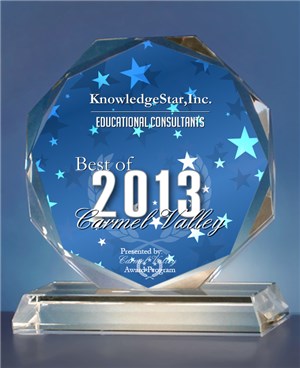
Tooting Our Horn


Sometimes we just need a pat on the back …

C13DB9C-PBAX-BGVV

Learning Wisdom


I keep wondering where is the wisdom…

I’ve spent a lot of time over the last few years trying to discover how we learn wisdom. I see a continuum that goes like this:

Image


OVER TIME

Data is raw stats that over time becomes a fact. That fact is tested (or should be) and turns into more useful information. That information in turn is used by a number of people and becomes knowledge. Knowledge that can be shared by anyone anywhere. Time tests the knowledge as it is used to produce know-how. All the usual suspects are included in the process – content, context, communication, collaboration, connection. That know-how is then tested over a longer period of time by lots of people and becomes wisdom.

So wisdom is borne by many and stands the test of time. The flame is hot do not touch. A penny saved is a penny earned. Time heals all wounds. The statements of wisdom abound. Yet they all seem old and tired. Where is the new wisdom? 

It matters to me because we seem to have stopped learning at know-how. Here’s a quote that kicked-off this post:

“You’ve been thinking about intelligence the wrong way. Almost everyone assumes that intelligence is a genetically programmed trait like eye color—set from birth and unalterable. Yet the extensive body of research on human intelligence demonstrates that this assumption is false. Our best data show that IQ, the most common measure of intelligence, fluctuates within a person’s lifetime as well as from generation to generation. This is our conceptual starting point: IQ scores are changeable. With the right environment, intelligence levels can be increased intentionally. This possibility holds implications for you and for the world around you.”—Michael E. Martinez, Future Bright: A Transforming Vision of Human Intelligence

We apparently become smarter and stupider at the same time. There is wisdom in not killing one another yet we seem to stop at knowing-how to develop better weapons. There is wisdom in learning how to love one another on this insanely impossible human journey yet hate is on the curriculum in schools worldwide. We have been visited by great teachers – Abraham, Buddha,Deganawidah James the Baptist, Jesus, Moses, Muhammad, The Saptarshi, and many others – yet we seem to not only ignore the wisdom they taught, we often turn it upside down and use their teachings to support what (never who) we hate and want to kill or eradicate. 

The point is who cares how much we learn or even how we learn if wisdom is not one of the goals. Can elearning help teach wisdom? The Kahn Academy model? A flipped wisdom classroom? Wisdom games? 

Without wisdom we will destroy one another and the world that is Gaia to us. Learning needs to grow over time and become wisdom. We should be wise enough by now to have learned that we must stop wrecking the earth, work to disable countries from fighting civil wars, have religions teach tolerance instead of hate, pay attention to the growing divide between rich and poor, practice forgiveness and support the least among us and more. So much more. We have the hubris to call ourselves Homo Sapiens ” in Latin meaning Wise Man”.

Yet I keep wondering, after all this education and learning, where is the wisdom?

How to Get a Head


I’m not sure what this has to do with education, learning, knowledge transfer, or anything else I usually write about. It just struck me as … relevant? You decide.

A leading neurosurgeon has revealed a project to carry out the first human head transplantation with spinal linkage with the next two years. The project is code-named HEAVEN / GEMINI. Read more here … Is this immortality? Can we finally forget about uploading what we know into the cloud? Could Stephen Hawkins head be put onto a healthy body? Does anyone reading this doubt it is a possibility?

262948-head-and-neck


Create Your Own Education


Image

Ditch the Lectures, Save Tens of Thousands, and Learn More Than Your Peers Ever Will

The cost of college can range from $60,000 for a state university to four times as much at some private colleges. The total student debt in the U.S. now tops credit card debt. So a lot of people are asking: Is college really worth it?

There are several famous and staggeringly successful college dropouts, including Mark Zuckerberg, Bill Gates and Larry Ellison. You may not end up with fat wallets like them, but Dale Stephens says you can find a different education path.

Dale Stephens, founder of UnCollege.org and author of a new book,Hacking Your Education, challenges people to learn differently, away from a school campus.

“When you think about education as an investment, you have to think about what the return is going to be.”

Stephens points to an alternative self-education system by taking responsibility for learning on your own and using networking to your advantage. He also says school just isn’t for everyone.

“I left school because I didn’t feel like school was an environment that left me free to learn,” says Stephens, who dropped out of college. In his interview he makes it clear that college will always be there in one form or another. These days, with MOOCs and other online learning programs, building your own curriculum is easier than ever. Plus schools still have not adapted to the need for a real-world performance -based educational model. Perhaps the better path for some is the educational road less taken.

Image

Tyler Driscoll/Courtesy of Perigee


Interview Highlights

On what “hacking your education” means, and how people learn

“Hacking your education is about figuring out how to create an education for yourself. There are all these different parts of an education that are currently just given to us. And hacking your education is figuring out how to find the mentors, how to build the network, how to find the content and put those together in a package that works for you. One of the great myths of the school system is that we tell people that everyone should learn exactly the same thing and exactly the same way, at roughly exactly the same speed. And that’s just not true. People learn in different ways, at different speeds, at different times. And so hacking your education allows you to learn what, when, how and where you want.”

On leaving the college experience behind

“For anyone in college today, just going to college is not going to be enough, right? The competition for a job is insanely furious. We keep hearing about the extent to which there’s a gap in skills between what people learn and what companies are actually hiring for. And whether you go to college or not, it’s your responsibility to figure out what it is that you need to learn, and how you can learn those things so that you can get a job after school.”

On figuring out whether or not to go to college

“It’s an even bigger gamble to … commit to four years into an institution, when the average student graduates with $27,000 in debt, which is an astronomical amount of debt to be saddled with, as you’re coming out and trying to find an entry-level job and being forced to pay off that debt. If college were free, this would be an entirely different question, right? But when you’re faced with the economic reality of how much college costs and how little self-directed learning costs, I think the cost is fairly low. College is not going away anytime soon. If you want to go back, it will always be there. But the cost of taking a year to learn for yourself is nothing.”

Smartphones Make Kids Smarter


The educational revolution will be televised … on a smartphone.

NOTE TO MY READERS:  I originally published this in the spring of 2010. At the time I thought it was brilliant. I still do and many of you seem to agree since I get comments on it constantly. It points out a problem and a solution. Knowledge – great ideas, excellent ways to solve pressing problems, smart ways to change  and more – all seem to fly by SO fast that they get lost in cyberspace. The rush to be new and original means that we keep digging the mine shaft instead of mining the gold. So I’m flipping on my headlamp – and ignoring the bird – and for this summer (officially starting today) will repost what I think are some of the best and most relevant pieces I have written. That btw is the solution. It’s always online and accessible. Thanks for all your great support! 


We usually focus on education for adults, but every now and again we come across a piece of research that has tremendous implications for education for everyone. This one in particular is a long piece on how smartphones are being use by the digital generation – those born under the @ sign – at school and at home, anywhere and anytime.

The article is an eye -opener and we invite you to do two things. First, take the time to read it all. Second, do the translation. Use your imagination to see how you can go mobile with mLearning. It is a brave new world coming up behind most of us. We need to find ways to make smart use use of smartphones. Make them as  educational in the same way that Sesame Street transformed TV with the Big Green Teacher in a Box – or as it were the garbage can.

It’s estimated that 5 years from now most people around the world will be getting their connection to each other and everything else woven into the world wide web over a smartphone. It’s already happening …

So read on … since you’re either on the school bus or not.

Read More

A Basic Primer on MOOCs


I’ve been posting about MOOCs since they first appeared. Easy to get lost in the trees and forget to see the forest. So I look at this TED presentation about once a month to get a refresh on the basic reasons why MOOCs are so important. The message gets lost too often in the static of the various media pundits and education gurus who, having very little if anything to do creating and developing MOOCs, still feel obliged to weigh in on them.

Daphne Koller is one of the original and most articulate visionaries behind MOOCs. Every time I watch this I pick up a new idea as well as remembering some of the basic reasons why MOOCs are important and are here to stay.

MOOCs are a work-in-progress. How they end up looking and working is To Be Determined. Like anything new with education they are still in the early stages of their evolution. I recently heard a mother tell her son that a MOOC was not worth taking since they were “… still experimental”. A MOOC is no more experimental than a college lecture hall presentation by professor. And that may be the sticking point … but don’t worry it’s covered by the presentation.

“School” is Where We Create the Future


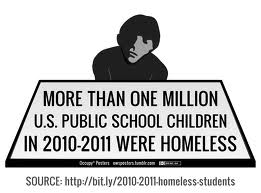
homeless 1

[Note: The numbers have increased since then …]

A Different Way of Looking at “School”

School is far more than a building in which we educate our children to pass tests and grades. It is the place where we create the future of our country.

During the last 5 years I have had the pleasure of meeting young students around the country. I only asked them one question: “What is your dream for your future?”

Here are some of the answers:

“I want to be a teacher like my teacher.”

“I want to be an astronaut and go to Mars.”

“I want to cure the cancer my Dad died from.”

“I want to be doctor and help people.”

“I am going to be going to Mars.”

“I think I can be the President or maybe a Governor.”

“I want my Mom to be sent home from prison.”

“I want to finish this grade.”

“I want to find a place to live.”

“I just want to be safe.”

“I want to find enough food for me and my brother.”

“I want a home.”

I grouped the answers into two categories for a reason. Some of the answers are from kids who have a home, food, a feeling of security. Basic Maslow pyramid foundational stuff. Too many of the kids I met are missing a parent or parents, do not have enough to eat, live in poverty, and worse are homeless.

So if schools really do create the future, then here’s an idea about the ‘least of us’.

During many tornadoes and hurricanes I see that shelters are put together in gymnasiums all over the country. Disaster relief for people in need of help. The kids who are living in poverty, hungry all day, in homes that are not safe or worse living homeless are also in need of help. Their very lives are a daily disaster.

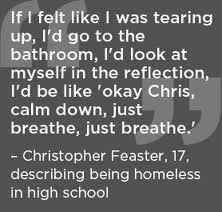
Personally I cannot fathom why or how these kids manage or even bother to go to school every day. I suspect that it’s a temporary shelter, warm and dry in the winter, there’s some food, a safe bathroom with toilets that work and running water. Other kids with whom to play, some structure.

And perhaps for many, even the dream of doing well and graduating to a better life, which has always been the basic underlying dream of education.

They need help. And it will not even cost a lot, especially for the kids who are homeless or in need of a safe place to spend the night.

Many other people pray for what most of us take for granted.  

2

I propose that school administrators redefine the ideal of school as more than getting grades and passing tests. I suggest that we adopt and adapt the Red Cross disaster relief model.

Some of these kids will chose not to be identified as needing help. Too proud. To into their gang or drug or alcohol addiction. Too lost. Too much freedom from irresponsibility and nothing left to lose. Enjoying a life with no expectations or any rules. Not thinking about anything more than today.

For others, a small leg up will be most welcome. They will consider it an invitation to the future, their future, a better future.

They would welcome some rules as a small price to pay:

  • Class attendance and passing grades the price of admission
  • Separate girls and boys
  • No smoking, drinking or drugs
  • No gangs, no bullying, no fighting
  • No loud music (use your earphones)
  • Cellphones in a calling area only
  • Lights out at a reasonable hour.

These kids will no longer be targets for judgments. It is not their fault, and no one is to blame. Blame is for losers. We do not heap blame upon the victims of a hurricane or tornado. We should not heap blame on these kids. Most of them just want an even playing field to show how smart they are, and how far they can go with a little help from their friends. In many ways, their success is harder to earn than their more fortunate schoolmates.

And for the kids who are doing okay, it would be a chance to act as a mentor and help these kids learn and progress in school. If they have clothes that have been passed down as far as down can go, or stuff they no longer wear, they can provide it to those in need. They can experience sharing and caring and learn the value of helping others. Of empathy. Of kindness. Again school is where we create the future. The question is, what do we want to teach kids about the kind of people we want them to be in our future?

Just an idea. Like this new idea of school. A place where we build the future of our nation. A nation where everyone has the opportunity to become the best they can be. A level playing field. For them. For us. For our future.

 3

Inside the Crystal Ball: Education and the Future


Untitled

Children are the future, and their education needs to be part of that future, woven into the web of the digital world, not stuck in the rut of the industrial economy we are leaving behind. This really summed it up for me ….

“We’re still teaching our kids using a 20th-century paradigm, but many visionaries–like the ones in this video–have plans to take our advances in computing and technology and use them to explode the idea of what education can be.”

http://www.fastcoexist.com/node/1680776