The Lost Art of Learning

images

This is a very short post for a very BIG topic. Still, I hope to make 3 key points:

1. Learning has always been a natural one-on-one human process

2. Formal education, driven by the needs of the 19th century Industrial Revolution, disabled the natural learning process

3. Technology will take us back to where learning again is a natural one-on-one human process.

Learning as a Natural One-on-One Human Process

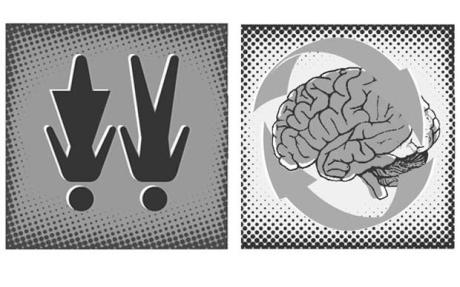
Millions of years ago we started out as learners. We know that we as a species — genus homo — began our evolutionary trek around two million years ago.  That makes us a relatively young species.  Current research by neuroscientists indicates that in the last two million years, the human brain has nearly tripled in mass, going from the 1¼-pound brain used by our Homo Habilis ancestors of 2,000,000 years ago, to the modern three-pounder that we Homo Sapiens carry between our ears. This entire transformation took place during the last 200,000 years, a blink in the evolutionary eye. Why?

When brains triple in size, they don’t just get bigger so they can store more memories, they actually gain new structures. The main reason our brains got so big is that they added a whole new part in the frontal lobe called the prefrontal cortex.

What amazing function did the brain need to perform to justify a complete redesign in a mere 200,000 years? What was so important to our survival as a species that we underwent a total overhaul that doubled the size of our brain in the mere blink of the evolutionary eye? The answer is learning.

The evolution of the human brain and our intelligence — called “encephalization” — was first driven by our need to learn the names of the ‘things’ in our concrete world. As we became more social, there was the need to learn how to live and work together. Or not. If that wasn’t enough brainfood to munch upon, we then evolved from the concrete to the abstract. Time. Space. Creation and more. So we grew a new part of the brain to handle the learning process.

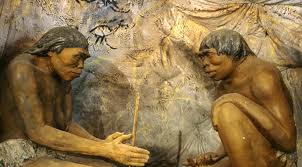
What we needed to know and know-how to do, we learned directly from one another. Initially, before we invented words and language, we learned by mimicking. We watched someone and copied what they did – or did not – do. Then we invented language, so people no longer needed to be in the same place – or even time.  And so on …

We became Homo Sapiens because we had a better brain for learning, and because we could learn we became better Homo Sapiens. Round and round she goes. And after 200,000 or so years of intense learning and encephalization, we invented “school”.

Formal Education Disables Learning

War was the reason school was created. When you need to quickly teach a large number of men (back then) how to kill, school was a useful way to do it. Apparently in the 19th century, the Prussian army perfected the model. Later in that same century, when our consumer society needed to teach large numbers of men and women how to read, write, mass produce and buy things, the school model again was the answer. One problem with schools is that you take away the one-to-one learning and substitute one-to-many. What had been a very personal human interaction for 200,000 years – learning – became an impersonal, dehumanized distraction. What we really needed to learn disappeared into a curriculum dominated by ‘school boards’ and then handed to ‘teachers’. One-to-many.

Technology Will Take Us Back

The most profound impact of technology-driven online education will be to make face-to-face personal interaction as important as it was before the educational model of ‘school’ took over.

Think it through with me. Technology allows us now to flip a classroom. It enables the MOOC. It gave rise to the virtual online course. All instances where the lecture can be viewed anytime and anyplace. Classroom and teacher and student’s attending no longer required.

On the surface it seemed to displace the teacher or instructor even more. Until social learning began to emerge. Social learning that takes the teaching or instructing piece out of the education equation, and replaces it with mentoring or coaching. Teachers become coaches, instructor turn into mentors. Peer-to-peer networks are already starting to replace classes and courses. People are once again learning what they need from one another, instead of waiting to be told what to learn.

The lecture by teacher / instructor is becoming a canned anytime anyplace video learning tool similar to the etextbook. What used to be called “homework” has become the real work of learning when you get together with your learning mates, mentors or coaches. Real learning is moving back towards performance instead of remembering, regurgitating on a test and then forgetting. Back to one-on-one learning.

So here’s the point of this post:

thought

Content as a Service (CaaS)


Image

The etextbook in 2018 will be dramatically different than the etextbook of today. It will be coupled to an app that will provide you with Content as a Service (CaaS). CaaS will include many of the following features (and more that have yet to be imagined):

  • Multimedia
  • Simulations
  • Educational Games
  • Animations
  • Pre- and post-tests
  • Formative and Summative Quizzes
  • Adaptive testing
  • Networked Social Learning
  • Study groups
  • Analytic Datasets 
  • Virtual and Flipped classes
  • Communities of Learning and Practice
  • Virtual classes.

It will be designed to make learning easier and more effective. It will replace the old print (and even current online) early prototype etextbook that still uses content as the product. By 2018, you will be purchasing the services which the CaaS app will provide. Dream with me a moment …

I am sitting at my desk in the near future, the year 2018. My Ecology etextbook is on my tablet and my elearning app helping me take notes. I read the following: “The biosphere is interconnected with three other spheres of the physical environment: the lithosphere, the hydrosphere, and the atmosphere.” I press the ASK THE EXPERT button and an email form pops up. “What” I write “does the term Gaia have to do with all the spheres?” The answer will probably be in my inbox before I go to sleep. I watch the animation of clouds forming and rain falling and plants growing. I skip the I Dig the Earth game and decide to test myself to see if I’m getting it.

Principles-of-Biology-digital-textbook-by-Nature-Publishing-Group-pop_10779

So I touch the TEST ME button and a menu comes down asking what kind of test do I want? I say Chapter, and a test of the chapter appears. I could have asked for Page, Chapters or Book. I answer the questions, get most right, and the ones I missed are automatically turned into flashcards. I skim all the sentences I highlighted when I was reading, check the notes my friends sent about the book, answer a few questions they asked, and bookmark my place. I remember to place a yellow sticky note on the front to find my reading glasses although enlarging the type was no problem. I check the times of my remaining biology courses that week, and make sure there are no tests coming up. Taking a break from studying, I switch from the etextbook to an old Big Bang Theory TV episode I missed.

Nice fantasy? Not at all. The etextbook of the future is all about the idea of Content as a Service (CaaS). Textbooks in the not-too-distant past were a product. You wrote them, packaged them, and sold them. Period. They were a product, often a commodity that had many versions from many authors on the same topic. As textbooks moved from analog print to digital online something amazing started to happen.

They were free. Not free as in no cost although they are cheaper (and lighter). They were let out of the analog prison. Think about it for a second, even though it’s such an embedded part of our lives we take it for granted. You print and bind a textbook and that’s it. You can write in the margins or highlight a passage and that’s about it. Now take that same book and put it online. Suddenly the constraints of print are gone. You can use your tablet to enlarge the print, highlight the text, and even take notes. Okay so aside from making the font bigger it’s about the same.

Now here’s the big deal. Add an app that has been developed to help you learn. eBooks are great when you’re reading for pleasure. Reading for learning, or RFL, is an entirely different process. And the app is there to make your day. It almost magically knows you. You are connected to you to your fellow students and even students that have already passed the course. Your notes, highlights, questions and more are all collected in one place. You can ask to be tested, and what you have not yet learned is instantly turned into flashcards for later studying. The etextbook is there to serve you. To help you learn. The app transforms the etextbook of tomorrow into Content as a Service (CaaS).

Content as a Service will be the marketing and sales differentiator for the etextbook of the future. The services that you can will be able to purchase will be THE deciding factor in what publisher and/or CaaS app provider offers you the best learning services. And that is a gamechanger. The current established publishers may disappear as new digital publishers, especially those with great CaaS apps, disrupt the print textbook publishing market that has been around for hundreds of years. The printing press invention spun off the invention of the analog textbook. The perfect storm of digital etext, mobile technology, and tablets,  is at the heart of the reinvention of the new CaaS etextbook.

I recently had the opportunity to review a number of these apps. They are designed to work with students who are learning from etextbooks. Developed in response to the needs of people who read etextbooks for learning.  They’re real and they are here. And they will change the way we teach and learn. Not only for students but for authors, teachers, instructors and administrators as well. Content as a Service (CaaS) is a new paradigm for putting the “e” into the etextbook. Only this time it will mean enhanced and enabled instead of merely electronic.

For more information take a look at Brandon Hall Group Executive Summary on CaaS.

Here’s the final word on the future of the textbook as we know it today:

The “4th Annual eBook Survey of Publishers” was completed in April, 2012, and in remarks addressed to the National Press Club, Education Secretary Arne Duncan said, “Over the next few years, textbooks should be obsolete,” citing a need to not only keep up with the times but also with other countries such as South Korea, whose students outperform those of the U.S. and which has set a goal to make all of its textbooks digital by 2015, excluding some grades and to allowing paper textbooks to be used alongside digital etextbooks while paper books are phased out.  “The world is changing,” Duncan said. “This has to be where we go as a country.”[1]

Planet Earth: The Community of Learners


ME2

I’ve been writing and talking about the idea of a Community of Learners for several years now and I just wanted to bring you up-to-date. It’s a reality, it’s huge, as big as the Earth itself and getting bigger …

WhooHoo! as my friend Sue likes to say … here are some quotes from two New York Times articles I just read:

First from Alison Smale, New York Times

 “We don’t know where the next Albert Einstein is,” said Daphne Koller, a computer science professor at Stanford who, with a colleague, Andrew Ng, introduced Coursera last spring. “Maybe she lives in a small village in Africa.”

“The Community of Learners from around the world is proof that the Internet as worldbrain is a reality. There really are no borders for learning anymore.

Sebastian Thrun, another Stanford computer science professor who introduced Udacity after seeing more than 160,000 students sign up for an online class on artificial intelligence in the fall of 2011, predicted that this kind of learning would eventually upend American and perhaps other Western academic institutions.

Enterprising academic institutions have taken the lead in online learning. Harvard and M.I.T., for instance, worked together to introduce EdX, which offers free online courses from each university, last year. About 753,000 students have enrolled, with India, Brazil, Pakistan and Russia among the top 10 countries from which people are participating.

Dr. Koller said the value of a postgraduate education, no matter where it was gained, was shifting fast. “We have passed the stage in history,” she said, “where what you learn in college can last you for a lifetime.” After 15 years, she added, that learning is “obsolete.””

And this is from Thomas L. Friedman also NYT

“Last May I wrote about Coursera — co-founded by the Stanford computer scientists Daphne Koller and Andrew Ng — just after it opened. Two weeks ago, I went back out to Palo Alto to check in on them. When I visited last May, about 300,000 people were taking 38 courses taught by Stanford professors and a few other elite universities. Today, they have 2.4 million students, taking 214 courses from 33 universities, including eight international ones.

Anant Agarwal, the former director of M.I.T.’s artificial intelligence lab, is now president of edX, a nonprofit MOOC that M.I.T. and Harvard are jointly building. Agarwal told me that since May, some 155,000 students from around the world have taken edX’s first course: an M.I.T. intro class on circuits. “That is greater than the total number of M.I.T. alumni in its 150-year history,” he said.

One member of the Coursera team who recently took a Coursera course on sustainability told me that it was so much more interesting than a similar course he had taken as an undergrad. The online course included students from all over the world, from different climates, incomes levels and geographies, and, as a result, “the discussions that happened in that course were so much more valuable and interesting than with people of similar geography and income level” in a typical American college.

Mitch Duneier, a Princeton sociology professor, wrote an essay in The Chronicle of Higher Education in the fall about his experience teaching a class through Coursera: “A few months ago, just as the campus of Princeton University had grown nearly silent after commencement, 40,000 students from 113 countries arrived here via the Internet to take a free course in introductory sociology. … My opening discussion of C. Wright Mills’s classic 1959 book, ‘The Sociological Imagination,’ was a close reading of the text, in which I reviewed a key chapter line by line. I asked students to follow along in their own copies, as I do in the lecture hall. When I give this lecture on the Princeton campus, I usually receive a few penetrating questions. In this case, however, within a few hours of posting the online version, the course forums came alive with hundreds of comments and questions. Several days later there were thousands. … Within three weeks I had received more feedback on my sociological ideas than I had in a career of teaching, which significantly influenced each of my subsequent lectures and seminars.”

As we look to the future of higher education, said the M.I.T. president, L. Rafael Reif, something that we now call a “degree” will be a concept “connected with bricks and mortar” — and traditional on-campus experiences that will increasingly leverage technology and the Internet to enhance classroom and laboratory work. Alongside that, though, said Reif, many universities will offer online courses to students anywhere in the world, in which they will earn “credentials” — certificates that testify that they have done the work and passed all the exams. The process of developing credible credentials that verify that the student has adequately mastered the subject — and did not cheat — and can be counted on by employers is still being perfected by all the MOOCs. But once it is, this phenomenon will really scale.

I can see a day soon where you’ll create your own college degree by taking the best online courses from the best professors from around the world — some computing from Stanford, some entrepreneurship from Wharton, some ethics from Brandeis, some literature from Edinburgh — paying only the nominal fee for the certificates of completion. It will change teaching, learning and the pathway to employment. “There is a new world unfolding,” said Reif, “and everyone will have to adapt.”

What can I add except “WhooHoo!”

Too Many Children Left Behind


tedtalk

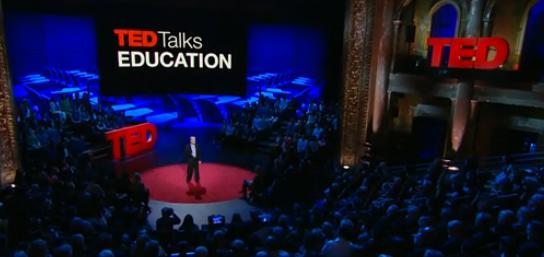
This is a wonderful talk by Sir Ken Robinson at TED. In a most delightful and engaging way he rips the current educational system to small shreds. Especially the fact that the system is missing the 3 most vital parts that drive any real learning – individuality, curiosity and creativity.

“Why don’t we get the best out of people? Sir Ken Robinson argues that it’s because we’ve been educated to become good workers, rather than creative thinkers. Students with restless minds and bodies — far from being cultivated for their energy and curiosity — are ignored or even stigmatized, with terrible consequences. “We are educating people out of their creativity,” Robinson says. It’s a message with deep resonance.”

And if you have the time and want to ‘go to school’ on what Sir Ken has to say here are a few more gems to watch:

Case Study: Flipped Classrooms Work for Financially Challenged Students


flipp

I’ve been advocating for the flipped classroom since I first read Daniel Pink’s article in the UK Telegraph 3 plus years ago. Since then some amazing changes have been happening (see previous post). This case study grabbed my attention for several reasons. It is written by the Greg Green, the Principal at Clintondale High School in Clinton Township, Michigan. It talks about how he flipped what he terms “… a financially challenged school near Detroit”. The flipped version of the school way out-performed the standard model that was failing in almost every respect. And he wraps it up with the following statement:”Instead of placing blame on each other, we need to recognize the solution, which has been right in front of us the whole time. It’s time to change education forever.”

Thank you Greg Green, my new Education Hero of the Week! You showed us that money is not the problem, teachers are not the problem, unions are not the problem, and the kids are certainly not the problem.
The problem is the lack of vision and ability of people running the schools to change the educational model from the traditional disabling approach to one that is truly enabling for all. The answer really has been in front of us for several years now. Time for the people who control the schools and administer the districts to learn the lesson.

Courtesy Troy Steinby Greg Green,

Greg Green is the principal at Clintondale High School in Clinton Township, Michigan.

I’m a principal at Clintondale High, a financially challenged school near Detroit. I’m in charge of doing my best to make sure that Clintondale students get the best education possible when they walk through our doors.

There are constant hurdles to making this happen. We are a school of choice, so not all students come in with the same skill levels in reading, math, science or other subjects. Almost 75% of our students receive free or reduced-price lunch because of today’s economic climate, and a large part of our student population commutes from Detroit, which often times takes an hour or longer, especially if the bus is late.

Every year, our failure rates have been through the roof.  The students weren’t paying attention, they weren’t doing their homework, they were being disruptive, or they weren’t coming to school at all. Sadly, these issues are not that uncommon, particularly in this economic climate, where the percentage of students who fall into the poverty category is increasing by the day.

It’s no surprise that these issues are happening in our schools. Everyone from politicians to parents admit that our educational system isn’t working, and we’re all screaming for change.  But no one gives advice on what changes are needed to improve education. The time has come to realize that the problem isn’t simply lack of effort or money, but the misalignment of our school structure.

To watch this happen every day, where it is your responsibility to try to provide the very best you can for the students, is beyond frustrating. It’s heartbreaking.

Our staff agreed that our failure rates were not good. But how do you go about addressing these issues with no money, no additional resources and no clear solution from the experts who already know the system is broken?

How do you get your staff on board with change you want to implement, but no one else has ever tried it on a mass scale? How do you get your students excited about learning when they’ve never shown much interest before?

You flip it. Here’s how it works:

At Clintondale High School, our education model wasn’t working, and the people suffering most were students. We recognized that a change was needed and applied for a grant from TechSmith, a local company that makes screen and lecture recording software. They provided us with some technology licenses and helped us create a flipped class structure, which we first implemented in the ninth grade and eventually put into action for the entire school.

Our flipped school model is quite simple. Teachers record their lectures using screen-capture software (we use Camtasia) and post these lecture videos to a variety of outlets, including our school website, and YouTube. Students watch these videos outside of class on their smartphone, in the school computer lab (which now has extended hours), at home or even in my office if they need to. Now, when students come to class, they’ve already learned about the material and can spend class time working on math problems, writing about the Civil War or working on a science project, with the help of their teacher whenever they need it. This model allows students to seek one-on-one help from their teacher when they have a question, and learn material in an environment that is conducive to their education. To change the learning environment even further, we’ve used Google Groups to enable students to easily communicate outside of class, participate in large discussions related to their schoolwork and learn from each other.

In addition to flipping the classroom, we wanted to give our students the opportunity to learn about each subject or topic from someone who is a recognized expert in each area. So we decided to team with other schools across the country and world. Now, some of our calculus students are able to watch video lectures from a math teacher in a private school in Virginia, and our students learning about the Holocaust can watch videos made by a teacher in Israel who just brought her class to Auschwitz. This type of learning network will enable us to close the gap of inequality that schools are subjected to because of their financial standing, and provide all students, no matter what district they’re from, with information from the best teacher or expert in any field.

At Clintondale High School, we have been using this education model for the past 18 months. During this time, our attendance rate has increased, our discipline rate decreased, and, most importantly, our failure rate – the number of students failing each class – has gone down significantly.  When we first implemented this model in the ninth grade, our student failure rate dropped by 33% in one year.

In English, the failure rate went from 52% to 19%; in math, 44% to 13%; in science, 41% to 19%; and in social studies, 28% to 9%. In September of 2011, the entire school began using the flipped instruction model, and already the impact is significant. During the first semester of the year, the overall failure rate at the school dropped to 10%. We’ve also seen notable improvement on statewide test scores, proving that students’ understanding of the material is better under this model.

Our schools have long been structured so that students attend class to receive information, and then go home to practice and process this information. When many students go home after school, they don’t have the resources necessary to understand, and sometimes don’t complete their homework. Many families are not able to provide the expertise and technology needed to help with their children’s homework, so when we send kids home at the end of each day, we’re putting them into environments that are not capable of supporting their learning needs.

By reversing our instructional procedures so that students do their homework at school, we can appropriately align our learning support and resources for all of our students, and eliminate the inequality that currently plagues our schools. When students do homework at school, they can receive a meal and access to technology (during a declining economy), and an overwhelming amount of support and expertise. When students do their homework at school, we can ensure that they will be able to learn in a supportive environment that’s conducive to their education and well-being.  For the first time in history, we can provide a level playing field for students in all neighborhoods, no matter what their financial situation is.

As we continue to expand and improve the flipped school model, it’s important for educators to come together and work with each other toward a common goal of fixing our education system through teamwork and collaboration, so all students can have access to the best information and materials. Instead of placing blame on each other, we need to recognize the solution, which has been right in front of us the whole time.

It’s time to change education forever.

[NOTE: Part of an online article first printed January 18, 2012 –  http://schoolsofthought.blogs.cnn.com/2012/01/18/my-view-flipped-classrooms-give-every-student-a-chance-to-succeed/]

Brain Dead Spaces


Copy of JohnMedina_Portrait_WebVersion

“There is no greater anti-brain environment than the

classroom and cubicle.” 

Since most of us spend most of our time in them, it’s amazing we learn anything or get anything done,

Check out John Medina’s new multimedia interactive website on brain and learning here.

The Teachers versus The Corporate Machines?


learnmouse

Nobody likes change, and some people really hate it …

I suppose I should be happy. Two of my heroes, David Brooks and Thomas Friedman, both had recent articles about educational technology – MOOCs and Testing. Yet my joy has turned to consternation. Their articles have added fuel to a small but growing fire about education in general, and educational technology in particular. The theme seems to be that the machines are coming, the corporations are already here, public is morphing into private, it’s all about the money, and teachers are an endangered species.

Let’s back up a bit.

Here is what I read as a key part of David Brook’s piece The Practical University:

The best part of the rise of online education is that it forces us to ask: What is a university for? … My own stab at an answer would be that universities are places where young people acquire two sorts of knowledge, what the philosopher Michael Oakeshott called technical knowledge and practical knowledge… Practical knowledge is not about what you do, but how you do it. It is the wisdom a great chef possesses that cannot be found in recipe books. Practical knowledge is not the sort of knowledge that can be taught and memorized; it can only be imparted and absorbed. It is not reducible to rules; it only exists in practice.

The problem is that as online education becomes more pervasive, universities can no longer primarily be in the business of transmitting technical knowledge. Online offerings from distant, star professors will just be too efficient. As Ben Nelson of Minerva University points out, a school cannot charge students $40,000 and then turn around and offer them online courses that they can get free or nearly free. That business model simply does not work. There will be no such thing as a MOOC university.

 Nelson believes that universities will end up effectively telling students: “Take the following online courses over the summer or over a certain period, and then, when you’re done, you will come to campus and that’s when our job will begin.” If Nelson is right, then universities in the future will spend much less time transmitting technical knowledge and much more time transmitting practical knowledge.


The goal should be to use technology to take a free-form seminar and turn it into a deliberate seminar (I’m borrowing Anders Ericsson’s definition of deliberate practice). Seminars could be recorded with video-cameras, and exchanges could be reviewed and analyzed to pick apart how a disagreement was handled and how a debate was conducted. Episodes in one seminar could be replayed for another. Students could be assessed, and their seminar skills could be tracked over time.

So far, most of the talk about online education has been on technology and lectures, but the important challenge is technology and seminars. So far, the discussion is mostly about technical knowledge, but the future of the universities is in practical knowledge.

And here are some gems from Thomas Friedman’s My Little (Global) School:

There was a time when middle-class parents in America could be — and were — content to know that their kids’ public schools were better than those in the next neighborhood over. As the world has shrunk, though, the next neighborhood over is now Shanghai or Helsinki … imagine, in a few years, that you could sign on to a Web site and see how your school compares with a similar school anywhere in the world.

Well, that day has come, thanks to a successful pilot project involving 105 U.S. schools recently completed by Schleicher’s team at the Organization for Economic Cooperation and Development, which coordinates the Program for International Student Assessment, or PISA test, and Jon Schnur’s team at America Achieves, which partnered with the O.E.C.D. Starting this fall, any high school in America will be able to benchmark itself against the world’s best schools, using a new tool that schools can register for at http://www.americaachieves.org. It is comparable to PISA and measures how well students can apply their mastery of reading, math and science to real world problems.

“If you look at all the data,” concluded Schnur, it’s clear that educational performance in the U.S. has not gone down. We’ve actually gotten a little better. The challenge is that changes in the world economy keep raising the bar for what our kids need to do to succeed. Our modest improvements are not keeping pace with this rising bar. Those who say we have failed are wrong. Those who say we are doing fine are wrong.” The truth is, America has world-beating K-12 schools. We just don’t have nearly enough.

Seems like these and other recent pieces have created a proverbial tempest in a teapot. The arguments seem to rest on this idea:  Testing and MOOCs are the spawn of Big Corporate America and have little to do with students learning or teacher’s teaching. Actually they are perceived as a threat to both. The underlying reasoning is the same for both. It boils down to the “facts” that testing and MOOCs reduce the person-to-person time, the opportunity for real discovery, lateral learning and whatever else is supposed to happen in the ideal classroom.

Here’s another quote from a piece I wrote last year that looks at the bigger picture:

Daphne Koller is a computer science professor at Stanford, and a MacArthur “Genius” Fellow. She has been working for years to make online education more engaging and interactive.

“On the long term, I think the potential for this to revolutionize education is just tremendous,” Koller says. “There are millions of people around the world that have access only to the poorest quality of education or sometimes nothing at all.”

Technology could change that by making it possible to teach classes with 100,000 students as easily and as cheaply as a class with just 100. And if you look around the world, demand for education in places like South Africa is enormous.

Almost two weeks ago, at the University of Johannesburg, more than 20 people were injured and one woman was killed trying register for a limited number of openings. Thousands had camped out overnight hoping to snag one of the few available places and when the gates opened, there was a stampede.

Koller hopes that in the future, technology will help prevent these kinds of tragedies.

The point is this is NOT an either-or situation. Technology and Corporations have always played a part in education from making pencils to printing books. The educational goal has always been to prepare students for success in higher education and/or the workplace. The focus is always on providing the best education possible. It just seems to get harder and harder to reach. If you don’t believe me, look at the numbers for high school graduation or grade school STEM test comparisons with other countries.

When we were a little country in a big world, making our own things, driving the global school bus, it was perhaps okay to only get a minimal high school education or even to leave classes behind and go to work. That no longer makes sense. As Thomas Friedman says this is now a global school and we compete with the best and brightest from around the world. As David Brooks says it not an either-or situation, but a chance to see how we can bring the technology and the teachers together to make education better.

So to the critics who try and place the conversation into a black&white and either-or context all I can say is “gray”. It’s all about change and change is messy. Change is also an opportunity. Education is not only technology led by greedy corporations, seeing privatizing and testing as opportunities for making lots of money. It’s not about Silicon Valley taking over the world mind with MOOCs that replace colleges and universities. It about trying to keep ahead of the wave that has already started to break over America and the rest of the world.

Should education be for free? Should we stop testing students to try and raise the overall standards of learning and preparedness? I have no final answers, only an interest in the ongoing conversation, and the forward motion that provides the best outcomes.

The Flipped Corporate Class?


FLIPTHINKING_1713383c

Flipping the classroom has been a topic since Daniel Pink wrote about it in 2010. In Cyberspace & Internet Time that’s far away and long ago. Seems to be happening only in Grades K-12 and Higher Education. The very places that tend to be the slowest to change. If you’ve been off the planet for the last few years, here is a primer on flipping the classroom. I’ll add this before we get to the Big Question.

Here’s the latest piece I read from Dr. Nellie Deutsch:

“What is a flipped class? In a flipped class the teacher prepares the students, their parents, and other stakeholders for the lesson in advance. Teachers create assignments that motivate students to watch a video or connect with the content and try to learn on their own at the comfort of their homes. Learning on your own is not easy for most people. Many prefer to connect socially for learning. After the students are introduced to the material, they come to class ready to engage with the teacher and the other students on the content and beyond. Being introduced to the content in advance prepares the students for the class. The students and their parents (K-12) know what each lesson will be about. The teacher prepares the students for the classwork. The students can ask questions, engage with their class mates, and receive individualized instructions during class.

The rationale behind the flipped class is to engage learners in and out of the classroom. 

Benefits of the Flipped Class

There are many benefits to flipping the class:

  1. Less stress because know what to expect.
  2. Boost confidence because can prepare for the class in advance.
  3. Parents can get involved.
  4. Teachers can be better prepared.
  5. Everyone is on the same page.
  6. Raise interest and curiosity in students.
  7. Students can make up work if absent.
  8. Students learn about taking responsibility for learning
  9. Teachers can cater to student needs.
  10. Students can receive individual attention.
  11. Students can go at their own pace.
  12. Students can become independent learners.
  13. Teachers and students can focus on the process of learning.

Flipping Online Classes

I love teaching online because technology allows me to experiment with what I do in my face-to-face classes. I decided to flip a fully online class. I flipped Learn English Online (LEO) online course. Students can watch the recordings ahead of time in preparation for the face-to-face or the online (asynchronous and/or synchronous class). I invite other teachers to do the same. You can use WizIQ live class to create a video recording for your students and flip your face-to-face and/or a fully online class.” 

Here is a great story about flipping you class:

… And here are 5 things you might have wanted to know BEFORE you flip it:

Now to the Big Question: I cannot understand WHY in K-12 grades and colleges and universities classes are being flipped every week, and I have yet to hear about it happening in a corporate educational environment. Aside from getting parents involved, learning is learning at any age. A flipped class in a corporation makes even more sense, since everyone is under greater time constraints and learning has become more and more performance based  – what you know-how to do versus what you know. So being able to practice with others and with an ‘expert’ either in the room or on the screen would be a perfect fit. Instead we get endless PowerPoint slides,  sometimes homework, and usually no real chance to see if we know what we’re supposed to know-how to do.

Not a great use of employees or teachers time. Yet the model seems part of most companies learning DNA.

I’ve noticed that even MOOCs seem to be replicating the old ‘sage on the virtual stage’ for tens of thousands of students at a time. At least they can form up into Communities of Learning that can graduate into Communities of Practice.

We’ve been working on flipping a corporate class lately and looked for other examples. We came up empty handed. If anyone has heard of a company smart enough to use the flipped class model please let us know. And hats off to all the hardworking teachers in K-12 and Higher who are making this new and better model a reality.

The Learning Relationship


 4openpuzzle

It’s time to plant my backyard garden again. Nice thing about Spring it always returns around the same time. I was carefully interplanting my tomatoes and marigolds, lettuce and broccoli, the three sisters (corn, beans and squash), and I stopped to remember my neighbor Tom from many gardens ago.

Once day Tom was watching me put in a garden and asked me if I ever heard of interplanting. I had not, and he taught me what it involved and why it would help my garden grow. He had learned it from his grandfather who really was a farmer. After the WWII Tom’s grandfather decided he needed as much peace and quiet as he could find, and a farm in Nebraska seemed just like the ticket. He was visited by his friend, a fellow warrior, who had just taken charge of the local Agricultural Extension Service. They talked about a new approach called interplanting. Beating their swords into plowshares seemed to go with the harmony of interplanting, where your corn helps your squash, and your squash watches out for your beans.  This was well before corporate farming and monoculture, but not too long after the dust settled from the 1930’s. So Tom’s grandfather’s relationship with his ag service buddy leads to Tom and his relationship with me and the lesson about interplanting lives on. The sun beats down on my garden and my hat’s off to Tom’s grandpa, and the long line of lessons about interplanting that helps my garden grow.

There’s an old maxim about corporations that starts with find the smartest person in the company. The question then is “Who is the second smartest?” And the answer is the person sitting in the next cube or office. Real learning is, and always has been, about relationships. It’s not what you know, or know how to do, but who you know and what they can teach you. Learning has always been a participatory social endeavor. Most of us just didn’t have the tools until now to get back to what real learning means.

Brandon Hall Group has explored and explained the importance and value of relationship centered learning (RCL) in your company today and into the future. Their paper focuses on the ROI of RCL, the current state and the inevitable and irresistible future, To learn more about it, check out Relationship-Centered Learning here.

The Three-Minute Lesson that Saved My Life


 chunky

The Three-Minute Lesson that Saved My Life

The last new thing I learned was last week. I was sitting in the parking lot at the shopping center, vaguely listening to “Car Talk” on NPR. One of the Tappet brothers said something like “I bet you really never learned to fix those side view mirrors you use all the time.” I perked up when he said “So listen up, well fix that right now.” The lesson was realtime and took all of three minutes. After 20 or so years of driving, I learned how to adjust my side view mirrors perfectly (a revelation!), and realized that I had been dancing with a collision for years, from driving with huge blind spots on BOTH sides of my car since cars now pass on the left and right.

The point is not that I learned to save myself and my precious passengers from a screeching metal crunching accident (or worse).  The point is that learned something important in 3 minutes. I took a radio course on “Correctly Using Your Side View Mirrors 101”. No test. No classroom. No clock. No computer in sight.

What does that say about chunking courses into smaller units? What shall we call them? We don’t have a good agreed-upon name for these chunks yet. And I’ve heard them referred to as “learning nuggets”, “courselets”, “learnlets” ,”microlearning”, and more. For now let’s just determine what they are, and if they might be a useful part of learning in your future.

Some background

Chunking is a concept that was originally coined by Harvard psychologist George A. Miller in 1956[1]. Simply stated George discovered that the human memory can most easily shuttle 5 plus or minus 2 numbers and/or letters from short-term to long-term memory. It was most famously used by AT&T who, in 1957 when phones were no longer a ‘new’ technology and were exponentially increasing, changed the alphanumeric phone dialing system from 2L-4N numbers to 2L-5N. Five numbers preceded by two letters.[2]

Until the close of the 20th century, with the growth of the neurosciences and cognitive psychology, learning was a phenomenon observed from the outside in. The ideas for pedagogy and andragogy resulted more from the needs of teachers than their students. Did you ever notice that every classroom in the world has a clock? The course length was set in the late 1800’s and was called a Carnegie Unit[3]. Each unit was 55-minutes during which a single subject was taught. There have been many attempts to change it since then, and they all failed for a variety of reasons. The reason that seems to be the most important is the lack of supporting tools.

Today, we have a host of tools to make that ‘chunkier’ vision of learning a reality. And with the disappearance of the Carnegie Unit, we also can now let go of the long form course, and replace it with short chunks of learning. Chunks that take a few minutes, and teach 5+-2 things you need to know or know how to do.

The world used to be my oyster. Today it has become my classroom. Technology is transforming the way we find knowledge and know-how. “Google it” for example is now a phrase spoken around the world. The old model (actually not really even that old) was bricks and mortar solid, tradition-bound, and all too often hierarchical (Pre-K – 12 schools, 2-year colleges, 4-year universities, corporate universities). It was an impediment to learning, and often disabled the much older natural learning process. Until a few years ago it was the best we could do.

Some Foreground

Then along came the internet and what followed was an explosion of new ways to learn that did not use the long form course. The list is already long and getting longer every day. Social learning, online cohorts, mLearning, Communities of Practice, performance support systems, expert locators, podcasts and videocasts. Now there’s augmented reality showing you how a place looked like before you were born, you can take a picture of a leaf and use those pixels to find the name of the plant, record a birdsong and use it to bring up a picture with information about the bird. And don’t forget Khan Academy and MOOCs with some subjects taught in 1-2 minutes, and most others in 10-15 minute chunks. I cannot wait for what’s next ….

The new model is all about continuous learning and learning moments, like sitting in your car learning to properly adjust you side view mirrors.  I may not get any certificate or other rewards but I may just save my life. Now that’s one chunk worth learning.

Do You Chunk?

Let us know what you think. Are you using a course-o-matic to divide your learning into more palatable chunks? Would you want your learning anytime and anywhere to also be any size you decided to put together, from smallest coherent piece to longer sit downs? Be part of the many that have an opinion about chunking and let us know what you think. Thanks