The Inconvenient Truth About Continuous Learning


538368_10150724843069733_65054494732_8734179_1136188655_n

“In a time of drastic change, it is the learners who inherit the future. The learned find themselves equipped to live in a world that no longer exists.”
Eric Hoffer

Here are the facts:

The vast majority of learning programs still rely on event-driven formal learning models. Formal and informal together are only a small part of the continuous learning experience. LMS and LCMS systems favor events which account for only a small amount of continuous learning.

The conclusion? Continuous Learning is the way we learn and grow, and because of the way we have learned to teach, it is still the least accepted and included way of learning in our schoolplace (primary and secondary) or workplace.

If it is truly the primary way we learn then it is incumbent upon us to begin to incorporate continuous learning into our programs starting in pre-school. How you ask? No longer difficult I answer. I recently wrote about Eddie Obeng who understands that all the rules have changed and that most of the world was “…asleep at midnight when all the rules changed.” We are still operating as if nothing has changed. So as to how we can easily create classrooms that have an online Community of Learners forum for sharing, exploring, discovering, asking and answering. Peer-to-peer and peer-to-mentor. as we move from one grade level to the next we can ‘graduate’ the Community of Learners to become a Community of Practice. Worldwide.

All schools worldwide have parallel ‘grades’ or ‘tranches’ for learning in the K-12 space. The fact is that we live in a digitally-connected global society. For starters there is no longer any reason to put learning into an small event-driven box (aka classroom). Students are already learning continuously and are also forming global Communities of Learners (CoL) and Communities of Practice (CoP). It’s time for the educational systems to get in sync with the students and support what they are doing.

Continuous Learning in the Corporation

The same is true for corporate learning only more so. Many of us have been talking about “informal Learning” for years (feels like forever actually). Well the continuous learner is all about informal learning. Perhaps if we shift the focus from the learning to the learner we can make some progress. Continuous learning in the corporate environment is critical to the increase of the Corporate IQ. And only the smartest companies will win in this new rapidly changing hypercompetitve flatworld. So companies MUST support continuous learning by creating the following:

Communities of Learners (CoL) that are networked together as they take a flipped course (assume companies and L&D organizations will be smart enough to learn that the flipped classroom enables learning far better than the disabling traditional classroom)

Communities of Practice (CoP) that the learners ‘graduate’ into to continue learning on a worldwide basis adding real world experiences into what they know and know how to do as a result of adopting and adapting the learning.

Rewards, certificates, some software that tracks the continuous learners – a Continuous Learning System (CLS)- so the company can see (custom or standard reports) how much learning is going on that today of which they are, for the most part, completely unaware.

What a waste of all that talent and learning! Here’s my experience. I once worked in a big blue-colored company and every year I was told what courses I needed to take. Well it depended on whether I had the time. If I was off being a good little billable employee, the course was a nice to take. Seems like I was always off being billable, and at the end of the year, the list of courses was replaced with another list that again went the way of  “I’m too busy making money for the company”. In the meantime I managed to take a number of online seminars, webinars, courses and go to a few conferences where I grabbed a workshop or two. I learned enough to realize I wanted to work in another company with more cutting edge technology and left my former company feeling blue. The company not me since I was all happy. The moral of the story is that the motivated interested curious continuous learner in me trumped the too-busy-being-billable proscribed learner and moved on. And no one in the old company had a clue.

Now here’s another scenario. The old company tracked my continuous learning as much as what they were telling me to learn. And lo and behold they found a new position for me that fit with what I was interested  in to take all the learning I had pursued on my own. They benefited and I helped them and me grow in a new area.

So let’s stop all the chatter about “informal learning” since it has no more meaning or relevance. We’ve talked about enough and nothing has happened. Let’s instead focus on the Continuous Learner as the Hero of the story and continuous learning as one of the the Great Differentiators between the individuals who are so motivated that they use their own time to learn and grow, and those that are just taking up office space. Between companies that have a lively and growing corporate brain and an increasing corporate IQ, and the ones that will soon be forgotten.

And you know who you are …

Flipping Corporate Learning


This one is from my friend Jay Cross @ Internet Time. It’s a take on flipping the corporate class that I totally agree with. Flipping the educational process has now been proven to work across the board especially among financially challenged schools. A combination of flipping and going back to the dream we all had with elearning when it was first introduced could ‘flip’ the equation and move the dial in corporate learning from disabling to enabling. Maybe this time I’ll use a more permanent glue to keep my fingers crossed.  

Thanks to Jay for your insights as always!

Flipping learning is big in education. It will be big in corporate learning. Let’s not blow it.

How do you flip learning?

Khan Academy is the poster child for flipped learning. Sal Khan has produced more than 3,000 short videos on a variety of topics. Students watch the videos before coming to class. In the classroom, they sort out what they’ve learned and do what used to be called homework. Millions of students are learning this way. Recently, Stanford professors offered a couple of courses in this fashion and were surprised when a third of a million people enrolled.

Flipping makes a ton a sense. The learner can watch the mini-lectures when it’s convenient to do so. The learner controls the pace by pausing, replaying, or fast-forwarding. In all likelihood, the presentation by the enthusiastic Salmaan Khan or a popular Stanford prof is going to be more engaging than your local school teacher or grad student teaching assistant. The video can provide content in small, digestible pieces. Once it’s in the can, the video can be replayed again and again. And of course, video delivered online scales without an increase in cost.

More important for learning outcomes, the time spent in class can be put to more productive use. Learners convene to get answers to questions, discuss examples, put what they’ve learned in context, debate, explore, and extend their knowledge. Instead of passively listening to an instructor, they actively engage the material. Instructors, freed of the need to mouth the words of lessons, focus on helping learners understand things and coaching individuals. These activities can take place online, and people can learn from one another in virtual communities and support groups.

Flipping Stanford

In a Science Times essay, “Death Knell for the Lecture: Technology as a Passport to Personalized Education,” Daphne Koller described how Stanford University has flipped traditional courses:

At Stanford, we recently placed three computer science courses online, using a similar format. Remarkably, in the first four weeks, 300,000 students registered for these courses, with millions of video views and hundreds of thousands of submitted assignments.

What can we learn from these successes? First, we see that video content is engaging to students — many of whom grew up on YouTube — and easy for instructors to produce.

Second, presenting content in short, bite-size chunks, rather than monolithic hourlong lectures, is better suited to students’ attention spans, and provides the flexibility to tailor instruction to individual students. Those with less preparation can dwell longer on background material without feeling uncomfortable about how they might be perceived by classmates or the instructor.

Conversely, students with an aptitude for the topic can move ahead rapidly, avoiding boredom and disengagement. In short, everyone has access to a personalized experience that resembles individual tutoring.

Watching passively is not enough. Engagement through exercises and assessments is a critical component of learning. These exercises are designed not just to evaluate the student’s learning, but also, more important, to enhance understanding by prompting recall and placing ideas in context.

Moreover, testing allows students to move ahead when they master a concept, rather than when they have spent a stipulated amount of time staring at the teacher who is explaining it.

An article in Wired, The Stanford Educational Experiment Could Change Higher Learning Forever, describes the wildly popular course on artificial intelligence taught by Stanford professors Sebastian Thrun and Peter Norvig:

Does it make any sense that school is generally a place where people come together to sit and listen to the person at the front of the room?  It generally doesn’t make the most sense to get a group of people together to sit and stare.  What if instead, educators spent class time doing and homework time for the watching of lessons/lectures.  The other benefit of this is that these can be viewed and reviewed anytime/anywhere.  The result is a lively bustling classroom where students can spend their time learning, talking, doing.

I fear that flipping learning in corporations may meet the same nasty fate as eLearning.

In the early days, 1999-2000, many of us believed that eLearning was the forefront of a renaissance in learning. Not only could people learn at their own pace, whenever they wanted, they’d also be able to ask questions, learn with peers, join communities, access job aids, contact mentors, and create personal learning paths. Workers could attend virtual classes without leaving the workplace. Software would create personalized learning experiences by assembling custom configurations of learning objects.

The eLearning dream didn’t last long. Companies proved more interested in reducing instructor head-count and facilities costs than in improving learning outcomes.  Training departments put PowerPoint presentations on their intranets and acted as if people could learn from them. Vendors put deadly-dull page-turner courses online and called it eLearning.

When times were tough, training departments slashed budgets by replacing face-to-face instruction with online reading. They failed to follow through with the discussions, practice, social processing, and reinforcement that makes lessons stick. It didn’t work. Most eLearning is ineffective drudgery.

That’s my nightmare about flipping learning in the corporation, that organizations will once again confuse exposure to content with learning. It’s great to replace lectures with video clips — IF you retain the opportunity for people to ask questions, interact with the material, practice what they’ve learned, collaborate with others, and periodically refresh their memories. This takes a sound learning ecosystem, a workscape.

Dan Pink thinks we should flip not only schooling but also publishing, the movie business, human resources, and office space. I agree. Business has changed. There’s hardly any business model left that couldn’t benefit from a flip. Break the processes into pieces and see if there’s not a better way to put them back together.

Who is training the online teachers to teach online?


article-0-0BC05DB5000005DC-354_468x328

NEWSFLASH: Online Education is Here to Stay.

Okay so tell me something I don’t know. When I start to see articles and stories appearing in the NY Times, NPR, WSJ, on TV and lots of other places I start to think “mainstream”. What every one of you reading this already knows has become The Latest Big News. Online education is here to stay.

So that begs an important question. The more traditional onground version of education has been around since Moby Dick was a minnow. As in forever. And formal education was truly formalized when Teacher’s Colleges were started and teacher’s were taught to teach.

From Wikipedia:

Generally, Teacher Education curricula can be broken down into four major areas:

  1. Foundational knowledge in education-related aspects of philosophy of education, history of education, educational psychology, and sociology of education.
  2. Skills in assessing student learning, supporting English Language learners, using technology to improve teaching and learning, and supporting students with special needs.
  3. Content-area and methods knowledge and skills—often also including ways of teaching and assessing a specific subject, in which case this area may overlap with the first (“foundational”) area. There is increasing debate about this aspect; because it is no longer possible to know in advance what kinds of knowledge and skill pupils will need when they enter adult life, it becomes harder to know what kinds of knowledge and skill teachers should have. Increasingly, emphasis is placed upon ‘transversal’ or ‘horizontal’ skills (such as ‘learning to learn’ or ‘social competences’, which cut across traditional subject boundaries, and therefore call into question traditional ways of designing the Teacher Education curriculum (and traditional school curricula and ways of working in the classroom).
  4. Practice at classroom teaching or at some other form of educational practice—usually supervised and supported in some way. Practice can take the form of field observations, student teaching, or (U.S.) internship.

All this leads to a certification and ongoing teacher education to make sure the level of quality of the teaching is maintained. We would not let our kids go to a school where the teachers were not certified to teach. We do not go to colleges and universities to learn from from people who are not prepared to teach. Yet we flip on our headphones and sit in front of our [fill in your device here] for hours on end taking online courses, not ever really knowing who is inside the screen, or what training they had that qualifies them to be the instructor.

Traditional onground teachers are highly qualified professionals. I cannot say the same for online teachers. According to the numbers I’m hearing lately, more than 63% of Americans have taken one of more online courses. That means a course with a curriculum and several sessions of teaching and learning, not a one-off webinar. And in many countries the numbers are dramatically higher (South Korea for example at over 85%).

Towards a Smarter Nation

Here’s the question:

Who is training the online teachers to teach online?

Some of the worst ‘teaching’ I have ever tried to learn from has been online. The worst. And I’m not alone. Everyone I know has stories about an online class that was a total waste of time. Poorly organized content. Terrible to no graphics. So many bullet points that the screen ended up being 8pt Arial.  A droning voice with no modulation or interest in the subject. Talking bullet points. Less than a modicum of enthusiasm. Hardly any interaction in a medium defined by interaction.

In sum, it was taking the untutored teacher without certification person and putting that so-called teacher in a box, without so much as a nod to the tools afforded by the fantastic digital medium being used. Cheaper perhaps than getting people in a classroom. But what a waste of brainpower and yet another missed opportunity.

There are exceptions that always prove the rule. The free university level courses being taught by outstanding teachers who are first and foremost outstanding  teachers and then outstanding online teachers as well. Starting with Khan academy. Great teachers using a new online approach and really working hard to find ways to make online education work online (e.g. Udacity and Coursera). Taking advantage of Communities of Learners, peer-to-peer learning, great interaction, and graduating students into Communities of Practice. Those are the exceptions.

The question again is when do we answer the question? When will we start to take online teaching as seriously as we take onground teaching? I found only one decent online teaching program and it’s from Cisco, where they are certifying their online – virtual – teachers so they know how to teach online. Certified to understand how online teaching – in a virtual classroom – is different than teaching onground – in an actual classroom. Some are still better than others when it come to teaching – the art and science of lighting a fire, not filling a bucket.

At the very least, when they are certified – actually certified after going through a process as rigorous as any other Cisco certification – they know how to correctly use the online classroom to maximize the capabilities of their virtual presence and get learners interacting and, dare I say it, actually learning something. As in those rare and wonderful “Aha!” moments.

So once again I leave you with a question.

Who is training the online teachers to teach online?

images (4)

Which Kid Becomes a Successful Entrepreneur?


Which Kid Becomes a Successful Entrepreneur?

The drawing by Rutan Motan “The Art of Distraction” summed up my experience in school. I was the kid in the pink sweater …

Flipapalooza – When Education Moves @ Lightspeed


The next two articles actually make me believe that change can come to Education sooner than later. It’s a case of ‘if it’s broken fix it’. It’s the model that was first talked about here by Daniel Pink two years ago, in September, 2010.   Two years in the world of education is mere pedagogical blink and yet here we are.

I added some sources for you to learn more about this rapidly spreading way of learning in the new Idea Economy. The next step is to get corporate education flipped even if it’s a virtual classroom so the lecture is your “homework” and the time spent with your peers and instructors practicing what was preached is your schoolwork.

All I can say is “Flip it, flip it good!”
The secret flipped side of Khan Academy: http://www.khanacademy.org/coach/resources
An Educator’s Take on The Flip http://connectedprincipals.com/archives/1534
Here are two articles, the first from NPR and the second from Liz Dwyer, Education Editor for Good Education.
From NPR 

Welcome to the 21st century classroom: a world where students watch lectures at home — and do homework at school. It’s called classroom flipping, and it’s slowly catching on in schools around the country.

When Jessica Miller, a high school sophomore in rural Bennett, Colo., sits down to do her chemistry homework, she pulls out her notebook. Then she turns on an iPad to watch a video podcast. Whenever the instructor changes the slide, Miller pauses the video and writes down everything on the screen.

Miller can replay parts of the chemistry podcast she doesn’t understand, and fast forward through those that make sense. Then she takes her notes to class where her teacher can review them.

Back in the classroom, chemistry teacher Jennifer Goodnight walks up and down the rows of desks giving verbal quizzes, guiding students through labs and answering questions.

Goodnight is one of about five teachers flipping their classrooms at this small school on Colorado’s Eastern Plains. She’s part of a growing group of teachers using the concept since it emerged in Colorado in 2007.

In Durham, N.H., Oyster River Middle School seventh-graders Patrick Beary and Morgan Bernier play with StoryKit, a free app that helps middle-schoolers put together simple presentations, and elementary students make storybooks.

Goodnight’s been teaching for 12 years and has been flipping her class for the past two. The effort is paying off with better test scores, she says.

“If they’re going to have their iPods all the time, might as well put a lecture on it,” Goodnight says. “So on their way home from school, on the bus or whatever they can maybe watch your lecture for homework that night. It’s truly about meeting them where they’re at, and realizing that the 21st century is different.”

Jerry Overmyer, creator of the Flipped Learning Network for teachers, agrees. “The whole concept of just sitting and listening to a lecture is really, that’s what’s getting outdated, and students are just not buying into that anymore.”

Overmyer’s network has almost 10,000 members. He says the flipped classroom concept is particularly popular in math and science classes, where students can easily become frustrated working problem sets at home.

And while the video component of the program seems to get the most attention, he says what really matters is how teachers use classroom time.

“It’s about that personalized face-to-face time. Now that you’re not spending all of class time doing lectures, you’re working one on one with students,” Overmyer says. “How are you going to use that time?”

While there’s little academic research on the concept, it appears to work in a variety of schools from Colorado to Illinois and Michigan. Outside Detroit, Clintondale Principal Greg Green tested the idea in 2010 as a way to curb disciplinary issues and boost test scores. It worked well enough that Green flipped the entire school, which has a large number of at-risk students.

Jessica goes over her work with teacher Jennifer Goodnight. Goodnight says "flipping" her class has improved students' test scores.

Grace HoodJessica goes over her work with teacher Jennifer Goodnight. Goodnight says “flipping” her class has improved students’ test scores.

“Now you can simply just take about five steps and record a video and then simply send it to your students and parents and keep everyone informed,” Green says. “So now we’re becoming even more transparent.”

That transparency can go a long way toward winning over parents who are skeptical of the idea.

Back in Colorado, Bennett High School parent Denise Patschke was once one of them. She questioned classroom flipping videos when her son first came home from school with one. But as time went on, she began to watch them.

“I can listen to the video as well when they need help, and then I can try to help him understand what [the teacher] is saying,” Patschke says.

Chemistry is tough enough for high school students — let alone parents whose last chemistry class was 25 years ago. A flipped classroom, advocates say, could make helping students easier for everyone.

From Good Education – One Small Step for Students One Giant Leap for Education          

lecturing.professor

Another sign that the college lecture might be dying: Harvard University physics professor Eric Mazur is championing the “flipped classroom,” a model where information traditionally transferred during lectures is learned on a student’s own time, and classroom time is spent discussing and applying knowledge to real-world situations. To make it easy for professors to transition out of lecture mode, Mazur has developed Learning Catalytics, an interactive software that enables them to make the most of student interactions and maximize the retention of knowledge.

Mazur sold attendees at the recent Building Learning Communities conference on this new approach by first asking them to identify something they’re good at, and then having them explain how they mastered it. After the crowd shared, Mazur pointed out that no one said they’d learned by listening to lectures. Similarly, Mazur said, college students don’t learn by taking notes during a lecture and then regurgitating information. They need to be able to discuss concepts, apply them to problems and get real-time feedback. Mazur says Learning Catalytics enables this process to take place.

The way the software works is that first the instructor inputs the concept she wants students to discuss. The program then helps create either multiple choice or “open-ended questions that ask for numerical, algebraic, textual, or graphical responses.” Students then respond to these questions using electronic devices they’re already bringing to class, like a laptop or smartphone.

The instructor can see a snapshot of who “gets” a concept and who still needs extra help, and then pair up students accordingly. The students even receive personalized messages on their devices telling them who to talk to in class, like “turn to your right and talk to Bob,” until they master the concept. And, when it’s time to study, they can access questions and answers from the class discussions.

Learning Catalytics was so successful in Mazur’s physics classroom that it’s being rolled out across Harvard, but it’s also open to other users on an invitation-only basis. If this tech-based flipped classroom approach takes off, maybe we’ll end up with a generation of students that retain what they’ve learned, long after the final is over.

FLIP IT, FLIP IT GOOD!

Food for Taught


Schoolteachers should have to pass a stringent exam – much like the bar exam for lawyers – before being allowed to enter the profession, one of the nation’s largest teachers unions said Monday.

This headline was from a recent news story about a proposal from the American Federation of Teachers calling for a new written test and stricter entrance requirements for teacher training programs.

“The proposal, released Monday as part of a broader report on elevating the teaching profession, calls for a new test to be developed by the National Board for Professional Teaching Standards. The nonprofit group currently administers the National Board Certification program, an advanced, voluntary teaching credential that goes beyond state standards.

There is no single, national standard for teacher certification, although the federal government does ask states to meet certain criteria to be eligible for federal funding.

Education Secretary Arne Duncan commended the proposal, describing it as part of a broader push to raise the bar for teachers and enable schools to predict a teacher’s potential for success in the classroom.”

I read the story (link here) and sat backing wondering how many classroom teachers I had in the last 3 years. The answer? None. 37 courses, classes and webinars and all my teachers have been online. The classes were online, the study materials were online, the students were all online and the teachers were online.

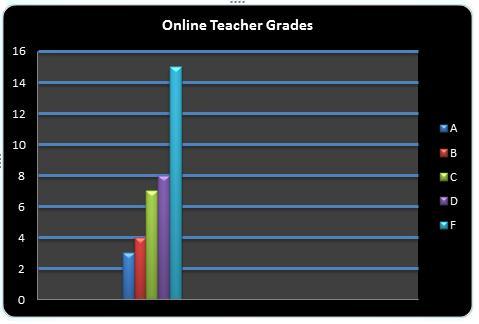
I take notes every time I take an online course and have the habit of grading the teacher.

Here’s a graph of the grades:

Image

So I began to think that my online teachers were every bit as important to my learning as my classroom teachers yet there was no certification programs or advanced credentialing that I knew of and that might have saved me from experiencing some of the worst teaching I have ever experienced,

Now I know I’m not a voice crying out in the elearning wilderness since every person I know who has taken an online program gives very few of the teachers a A grade and most get a sub par D or F. Why? Why is online teaching not considered as professional and as important as onground in class teaching?

Just wondering if anyone out there had the same idea? Maybe it’s time for some real online teacher certification. Thoughts?

A Seat at the Grownups Table


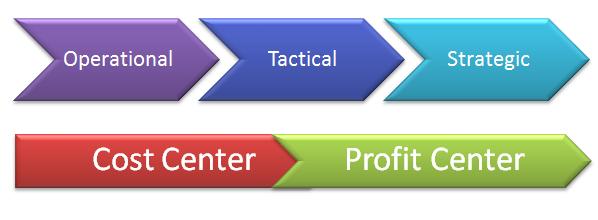
The short history of the training or education department within corporate organizations is an interesting mirror of the shift in economic paradigms from the Industrial Economy to the Knowledge Economy. These departments have moved from the operational level as cost centers to profit centers with their own “C” level leadership that in many cases reports directly to the CEO. It’s a glimpse into the future of where these “Departments of Learning” will be in the corporate hierarchy and how they will be perceived.

Let me back up a bit. The global economy has undergone three major and notable economic paradigms each with an attendant educational system. They can be summed up simple in the following list:

Agricultural Economy: We managed backs – we basically learned on-the-job.

Industrial Economy: We managed hands – we primarily learned in the formal classroom.

Knowledge Economy: We manage minds – we learn continuously in an ever-growing variety of ways.

Here’s a story that sums up the changes:

In 2007,  I gave a presentation to the annual gathering of CIO’s at Boeing in Southern California. As the top CIO was leading me into the conference room, she told me that the building itself has an interesting history. Originally an orchard grove for oranges, the building was first used as a giant manufacturing facility for the production of airplanes. When the demand for planes was reduced, the building was cut up into floors, offices and cubicles and people spent their workdays in front of computers producing, refining, defining, revising, discussing, an communicating ideas. Ideas for new planes. Ideas for improving production of planes. Ideas about related projects that had something to do with planes. One piece of land, three economic paradigms.

The point is all they did all day was produce ideas, work with ideas, think about ideas, write and talk about ideas. There were still a small group of people who ultimately made those ideas into things – planes. But they were followed by the people who had more ideas about how to market it, sell it, teach people to fly it and so on and so on. So the Knowledge Economy is all about the mass production of ideas. Success in the Knowledge Economy is the ability to sift through all those ideas to come up with the ones that can be produced and sold. Turning ideas into money.

These workers are literally the corporate brain. In a flat digitally-interconnected world where 24×7 marketplaces are open to all and as a result  are hypercompetitve, the Corporate IQ separates the winners from the losers, the successes from the failures. So making sure that all the employers can learn as much as they need to know and know-how to do, anytime and anyplace, become a strategic fact. Learning has become the most critical differentiator in this newest Knowledge Economy. And the “Department of Learning” is at the center of it all.

In a recent report by SABA Transforming Learning into a Strategic Business Enabler, the following facts emerged from interviews with over 612 leaders from the Director level and above:

  • Overall 52.7% of respondents report that the learning function at their organization is seen as a strategic enabler for the business
  • Only 13.7% report that the learning function at their organization is seen as a cost center.

With regard to the way these newly perceived strategic organizations are operating, here are some vital statistics:

  • 4-6% more likely to deliver training to customers.
  • 8-9% more likely to deliver training to partners/channels.
  • 4-6% more likely to deliver training to suppliers.
  • 25-42% more likely to report that training is aligned with business strategy.
  • Twice as likely to use objective measures of employee performance to align their learning to the business strategy.
  • Twice as likely to do formal learning requirements planning.
  • Four times more likely to have a learning advisory board with members from the business and the learning function.
  • 26-43% more likely to have an annual process of mapping the learning strategy to the business strategy for the year.
  • 39% more likely to have been demonstrating the impact that training has on the core business.

The study goes into much greater depth if you’re interested in getting into the weeds. The point for me was that the training department in which I started only 30 years ago has moved from a cost center focusing on operational training that often was the first to be cut during a downsizing, rightsizing or capsizing, to being viewed as a critical strategic component to the core business. All those early discussions about ‘getting a seat at the table’ are finally being realized.

Education, Not Guns and Bombs, Creates The Future


Other people around the world pray

for what we take for granted.

From the article:

“As the recent Taliban assassination attempt on Malala Yousafzai, the 15-year-old Pakistani champion of girls’ education, shows: The Taliban are most scared of books, not bombs. Establishing an educational infrastructure in Afghanistan is the most cost effective long-term strategy for grassroots change.

The cost effectiveness could be shown in multiple ways. “For the cost of just one soldier in Afghanistan for one year, we could start about 20 schools,” said Nicholas Kristoff in a July 2010 column in the New York Times.”

Education is the most powerful weapon

which you can use to change the world. 
                                                   Nelson Mandela 

Education is a better safeguard of liberty

than a standing army. 
                                                     Edward Everett 

Give Afghanistan Schools Today (or Don’t Blame Islam Tomorrow)

Posted: 11/08/2012 10:39 am
After a gruesome reelection campaign, President Obama should unwind. And instead of playing basketball, he should watch a movie. How about the 2007 biographical drama, “Charlie Wilson’s War”? It’s about the period when the United States was leaving Afghanistan after wrapping up its covert anti-Soviet operation there. Tom Hanks, who played the role of Congressman Charlie Wilson in the movie, pleaded with lawmakers, “$1 million for school reconstruction. … Did you hear me say? It was a million, not a billion, for a school construction?”

This is what he got in return: “Nobody gives a sh** about a school in Pakistan.” Or Afghanistan.

Caution: A quarter century later, America is about to make the same mistake. President Obama and Mitt Romney both pledged to leave Afghanistan by 2014. But neither discussed the importance of establishing schools for the children of a war torn nation where nearly half the population is now under the age of 15.

As the recent Taliban assassination attempt on Malala Yousafzai, the 15-year-old Pakistani champion of girls’ education, shows: The Taliban are most scared of books, not bombs. Establishing an educational infrastructure in Afghanistan is the most cost effective long-term strategy for grassroots change.

The cost effectiveness could be shown in multiple ways. “For the cost of just one soldier in Afghanistan for one year, we could start about 20 schools,” said Nicholas Kristoff in a July 2010 column in the New York Times.

Kristoff says Greg Mortenson, the author of “Three Cups of Tea,” told him that “for the cost of just 246 American soldiers in Afghanistan for a year, we could pay for a higher education plan for all Afghanistan.”

Can you imagine the global impact of educating a tribal society over the next decade, all for less than 0.1 percent of our annual military spending?

“Why build,” some push back, “when the Taliban are going to destroy these schools anyway?” Again, ask Greg Mortenson who reported that the Taliban have not destroyed even one of his schools.

To be fair, the U.S. government has made some strides. In December 2011, an Afghan version of “Sesame Street” — a program funded by the U.S. State Department and produced in consultation with Afghanistan’s Ministry of Education — was launched. Afghanistan has one of the highest proportions of school-age children in the world, yet less than half are in school.

This leaves millions of young Afghans, mostly girls and women, vulnerable to poverty and Taliban influence. As the U.S. withdraws its troops and the Taliban regain control, which they will in varying degrees, they are likely to enforce misogynistic policies with impunity and recruit 14-year-olds for suicide bombings.

Some will blame Islam itself for this inhumanity. But their reasoning doesn’t hold up. Why don’t American Muslims blow themselves up? Primarily, because such acts of cowardice are an affront to Islam and its prophet. But they have this understanding because they are educated. They have a good life. They have plans for tomorrow. For an Afghan kid, it’s different.

About 12,000 Afghan civilians were killed just between 2007 and 2011. Think about their orphan children who could be recruited by a Taliban run madrassah (school) to fight in “God’s army against the infidel.” This army is funded in part by Saudi oil money to nurture the extremist Wahhabi and anti-western mindset in the religious madrassahs. In the 1980s, the Saudis matched America’s anti-communism budget of $500 million to uproot the Soviets in Afghanistan. Now, their motivations for funding the Taliban are different.

Helping Afghanistan establish schools today, Mr. President, would prevent American lives tomorrow. It shouldn’t be this way. But sadly, it is.

Before declining to help the Afghans, we should remember that the Taliban have other help anyway — notably from the Pakistani Army, politicians and mullahs. Recently, even a relatively liberal ex-cricketer-turn-Pakistani-politician, Imran Khan, publicly gave legitimacy to their cause by declaring the Afghan conflict “a holy war” justified by Islamic law. Ignore this paradigm of support, and America’s decade-long gains will be washed away within a year.

“This is what we always do. We always go in, with our ideals to change the world. And then we leave. We always leave,” Charlie Wilson lamented. Mr. President, regarding Afghanistan, please don’t display the body language of a leader who just wants to leave.

Before leaving Afghanistan, Washington should pledge at least $1 billion to establish secular schools for boys and girls in Afghanistan. And policymakers should work with Islamabad to help fund and establish schools in the tribal areas of Pakistan. The funds should go toward hiring qualified teachers, developing standardized curricula, and constructing a robust infrastructure to support these schools, their staff and their students. If armed protection for such schools is required, it should come from locally hired forces.

Spent right, these dollars could achieve what counterinsurgency missions, bombers and drones could not.

Dr. Faheem Younus is a clinical associate professor at the University of Maryland School of Medicine and the founder of Muslimerican.com. Follow him on Twitter at @FaheemYounus.

121 Blogs About Learning


Here’s my daily reading list from which I pick and chose every day. The represent the best minds in the area of learning and learning technology. Enjoy!

Aaron Silvers

Adventures in Corporate Education

aLearning

Allison Rossett

Assets

B Online Learning

Blogger in Middle-earth

Bottom-Line Performance

Bozarthzone

brave new org

Brian Dusablon

Challenge to Learn

Clark Quinn

Clive on Learning

Connect Thinking

Courseware Development

Daretoshare

Dawn of Learning

Designed for Learning

Designing Impact

Developer on Duty

Discovery Through eLearning

Dont Waste Your Time

e-bites

e-Learning Academy

E-Learning Provocateur

E-learning Uncovered

easygenerator

eCampus Blog

eLearning 24-7

eLearning Acupuncture

eLearning Blender

eLearning Brothers

eLearning Cyclops

eLearning TV

Electronic Papyrus

Element K Blog

Engaged Learning

Enspire Learning

Experiencing eLearning

Getting Down to Business

Good To Great

I Came, I Saw, I Learned

ICS Learning Group

ID Reflections

IDiot

Ignatia Webs

In the Middle of the Curve

Integrated Learnings

Interactyx Social Learning

Jay Cross

Jay Cross’s Informal Learning

Joitske Hulsebosch eLearning

Jonathan’s ID

Kapp Notes

KnowledgeStar

Lars is Learning

Latitude Learning Blog

Learn and Lead

Learnability Matters

Learnadoodledastic

Learnforever

Learning and Technology

Learning Cafe

Learning Conversations

Learning Developments

Learning in a Sandbox

Learning Journeys

Learning Next

Learning Putty

Learning Rocks

Learning Technology Learning

Learning Unbound Blog

Learning Visions

LearnNuggets

Leveraging Learning

Living in Learning

Managing eLearning

mLearning Trends

Moodle Journal

onehundredfortywords

Ontuitive

OutStart Knowledge Solutions

Performance Learning Productivity

Pragmatic eLearning

QuickThoughts

Rapid Intake

Redtray

Road to Learning

Rob Hubbard

SharePoint and Assessment

Simply Speaking

Skilful Minds

Social Enterprise Blog

Social Learning Blog

Spark Your Interest

Speak Out

Spicy Learning

Sticky Learning

Stoatly Different

Sudden Insight

Take an e-Learning Break

Tayloring it

The E-Learning Curve

The eLearning Coach

The Learned Man

The Learning Circuits Blog

The Learning Generalist

The Peformance Improvement Blog

The Writers Gateway

Thinking Cloud

Tony Karrer

Trina Rimmer

Twitterpated with Learning

Upside Learning Blog

Vikas Joshi on Interactive Learning

Web 2.0 and Learning

Wonderful Brain

Work 2.0 Blog

ZaidLearn

Asleep at Midnight


Image

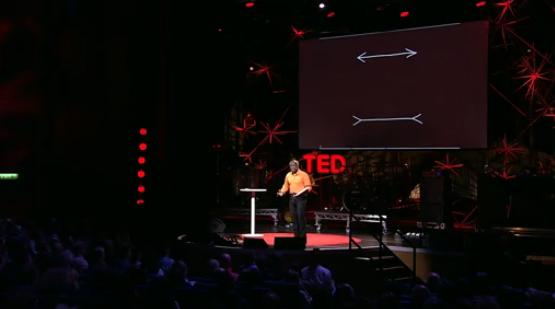
Wisdom about education comes at us from many sources these days. I found this on TED (no surprise there). What is a surprise is that the presenter is a former teacher, and what he learned about “smart failure” is a lesson that is not only relevant for education, it is relevant for everyone everywhere who was, as he says, “…asleep at midnight when all the rules changed.”

The implications are profound. Eddie Obeng is one of the few on this planet who can see the forest and the trees, who gets it – that we have moved from one paradigm to another and most of us still operate in the old one. To move forward – in the classroom, in the workplace, in our own lives – we need to accept that fact and begin to fail smartly if we are ever to succeed.

The world is changing much more rapidly than most people realize, says business educator Eddie Obeng — and creative output cannot keep up. In this spirited talk, he highlights three important changes we should understand for better productivity, and calls for a stronger culture of “smart failure.”